Unlocking M&A Value: A Guide to Seamless Accounting and Tech Integration

Mergers and acquisitions have evolved beyond their traditional role in driving growth. In fact, closing an M&A deal is really just the beginning. The real success delicately hinges on how seamlessly accounting functions and technology are integrated. When it’s done right, it sets the perfect stage for efficiencies, upholding compliance, and puts growth into hyperspeed. But done wrong, it can just as easily wipe out value before it’s even realized. That’s why understanding the role of accounting technology is more than just suggested or optional; it’s mission-critical.

This urgency is reflected within the insurance industry itself, which continues to experience high M&A activity as organizations adapt to changing economic conditions and strategic demands.

Recent M&A Trends and Statistics in the Insurance Industry

In just the U.S. and Canada, insurance agency M&A activity has reached a “new normal,” with 319 deals recorded in Q2 2025, projecting approximately 758 transactions annually since late 2023. This consistent volume highlights ongoing consolidation. 

Zooming out on a global scale, while M&A volumes declined by 9% in H1 2025 compared to the prior year, total deal value increased by 15%. This indicates a shift towards larger, more substantial transactions, with deals exceeding $1 billion rising by 19% year-over-year. For the six months ending May 15, 2025, the insurance sector saw $30 billion in disclosed deal value across 209 deals, up from $20 billion across 297 deals in the preceding period. This “flight to quality” suggests sustained investor demand for the insurance market’s stability.

Private equity-backed and hybrid brokers remain dominant, accounting for 73% of all transactions in H1 2025. Property/casualty (P/C) insurance agencies are consistently the primary sellers. The life and health (L&H) insurance M&A market saw a slight rebound in 2024, with 85 global transactions and deal values rising to US$21.6 billion.

These numbers highlight not only the volume of activity but also the overall shifting scale of insurance M&A. This means larger deal values, growing PE involvement, and the rebound of life and health transactions, indicating a market where precision, planning, and the ability to integrate complex operations are vital for capturing value.  The sector expansion and demands of the teams managing these deals are directly tied, meaning the stakes have never been higher.

Key Drivers of M&A Activity

Before diving into integration, it’s essential to understand why deals are happening in the first place. No M&A deal is random. In fact, they’re driven by a desire to grow faster, operate smarter, and gain an edge over the competition.

These drivers take several forms:

  • Growth and Competitiveness: Agencies and carriers pursue scale, diversifying their offerings, which in turn strengthens their position in an increasingly crowded industry.
  • Operational Efficiency and Cost Synergies: By pooling resources and expanding reach, organizations can cut costs (e.g., 10-20% from operational efficiencies, 5-15% from eliminating redundancies).
  • Digital Transformation and Technology Adoption: Acquiring digital assets, advanced data analytics, and InsurTech innovation sets the stage for improved productivity and new business opportunities.
  • Financial Stability and Capital Deployment: The sector’s stability attracts capital, with elevated interest rates in 2024 increasing carrier appeal.

Understanding the forces behind insurance M&A may clarify why these deals occur, but simply knowing the rationale isn’t enough. Capturing the full, intended value from a merger and acquisition depends on how effectively the transaction is executed. This groundwork is laid long before closing with intricate planning and a thoughtful approach to accounting functions, technology, and operations.

Strategic Foundations for Successful M&A Integration

Successful M&A requires meticulous planning and comprehensive due diligence, laying the foundation for seamless integration.

The recipe for an effective integration starts with a detailed pre-merger plan and rigorous due diligence. Beginning with an evaluation of financial performance, IT infrastructure, and regulatory compliance to pinpoint potential risks, liabilities, and opportunities for combined value.

Key areas of focus include:

  • Financial Performance: Validating revenue, cost structures, and assessing financial health, including asset quality, capital adequacy, and reserves.
  • IT Infrastructure & Systems: Evaluating hardware, software, data management, IT architecture, and identifying technical debt and cybersecurity risks.
  • Regulatory Compliance: Ensuring adherence to industry-specific regulations, including insurance laws, state approvals, and accounting standards like GAAP, SAP, and IFRS.

The Importance of Proactive Risk Mitigation through Due Diligence

Thorough assessment, especially in IT and regulatory accounting, prevents costly post-merger litigation and operational failures. Unforeseen issues can lead to cost overruns and disruptions. Collaboration across finance, IT, and legal teams is vital to identify system incompatibilities, data quality gaps, and compliance risks that could jeopardize financial reporting.

Merging Accounting Functions: Challenges, Best Practices, and Optimizing for Cash flow

When integrating accounting functions come into play with an M&A deal, the financial, regulatory, and operational integrity depends on it being executed properly. Keen precision here makes all the difference between a smooth transition that sets you up for growth vs a fractured process that drains resources as much as it does stakeholder confidence.

Financial Reporting and Process Integration

Merging accounting functions in an insurance M&A is one of the most necessary but complex aspects of a deal. Success is defined by aligning financial integrity, regulatory compliance, and operational continuity.

Financial Reporting and Process Integration:

Insurance businesses must navigate IFRS, GAAP, and often Statutory Accounting PrincipalsN (SAP) to maintain transparency and compliance. Merging accounting systems can be highly involved, requiring platform consolidation, mapping trial balances, and creating a unified close process. This includes harmonizing accounting principles, creating a new chart of accounts, and capitalization policies. Consulting a specialist can help prevent errors and accelerate the transition

Team Integration and Cultural Alignment

Merging teams requires a strategy, leadership, and attention to culture. Clearly defining roles and leadership responsibilities helps reduce uncertainty while workflow harmonizing eliminates potential inefficiencies.

In fact, smooth integration can reduce processing costs by 15-25% and cut processing time by 20-30%. The last major component (that is often overlooked) is cultural differences. Retention plans, skills assessments, training programs, and frequent communication help teams remain engaged and on the same page during the transition.

Optimizing Cash Flow

It’s no secret that operational stability rides on how smoothly accounts receivable (AR) and accounts payable (AP) run in an organization. Standardizing credit collections, procurement, and vendor payment processing keeps cash flowing seamlessly and reduces friction. For ongoing compliance and robust internal controls, relying on guidance from the NAIC Model Audit Rule (#205) makes AR/AP management both a driver of efficiency and a necessary piece of the regulatory compliance puzzle.

Technology Integration for Accounting Functions: A Critical Enabler

Imagine closing a huge M&A deal only to be met with your accounting and IT systems fighting each other instead of working together. Delayed payments and frustrated teams quickly replace the excitement of the acquisition. Now picture the opposite: every system talking to each other seamlessly, data is flowing cleanly, and approvals happen at warp speed. That’s the power of smart technology integration. And one tool that helps make it real is ePayPolicy.

From consolidating ERP systems to safeguarding data integrity and maintaining ironclad compliance, technology is truly the engine that drives post-merger efficiency. ePayPolicy, for example, automates premium billing, streamlines collections, and provides real-time reporting, freeing teams to focus on strategic growth rather than chasing manual payments.

Key pillars of integration include:

System Consolidation: Assess and unify accounting platforms, payment processors, and reporting tools to reduce friction and technical debt.

Data Integrity & Governance: Clean, map, and standardize legacy data while ensuring historical records remain audit-ready.

Cybersecurity & Compliance: Protect sensitive financial and client information while adhering to GDPR, CCPA, and NAIC Model Audit Rule requirements.

But integration doesn’t just come to a screeching halt once systems are live. To capture the full value of an M&A, organizations must continuously monitor and optimize performance. Establishing KPIs to measure success determines whether or not your M&A is truly delivering value overtime.

Some metrics to consider:

  • Financial Metrics: Consolidated revenue growth, realized cost savings, and ROI from tech investments.
  • Operational Metrics: Reduction in processing time for AR/AP, and customer satisfaction.
  • Cultural Metrics: Employee engagement and retention rates within accounting teams.

Combining technology, close monitoring, and continuous optimization results in fruitful and sustainable post-merger growth.  Payments run without cogs in the system, reporting is accurate, and teams are free to scale and shed the operational headaches.

Conclusion: Realizing Synergies and Sustained Growth in the Combined Entity

Investing in an M&A has never been merely transactional; it’s investing in a significant business transformation. Closing the deal is just the first step. The real value comes from how well accounting functions and technology are integrated, optimized, and continuously refined.

This is where real value takes off. Manual bottlenecks disappear, reporting becomes crystal clear, and strategic decisions can be made in real time instead of waiting for reconciliations and manual approvals. Organizations that master integration maximize the full value of their investment, rather than letting inefficiencies erode potential capital gains.

Works cited

  1. Tech Integration in Insurance M&A - Number Analytics, accessed July 31, 2025, https://www.numberanalytics.com/blog/tech-integration-in-insurance-ma
  2. Navigating Insurance M&A Challenges - Number Analytics, accessed July 31, 2025, https://www.numberanalytics.com/blog/ultimate-guide-insurance-ma-challenges
  3. The Impact of Mergers and Acquisitions in the Insurance Industry | The AI Journal, accessed July 31, 2025, https://aijourn.com/the-impact-of-mergers-and-acquisitions-in-the-insurance-industry/
  4. Insurance M&A Deal Structuring Guide - Number Analytics, accessed July 31, 2025, https://www.numberanalytics.com/blog/insurance-ma-deal-structuring-guide
  5. 'New Normal' Sets in as Pace of Insurance Agency M&A Becomes Clear, accessed July 31, 2025, https://www.insurancejournal.com/news/national/2025/07/30/833763.htm
  6. Global M&A industry trends: 2025 mid-year outlook - PwC, accessed July 31, 2025, https://www.pwc.com/gx/en/services/deals/trends.html
  7. Insurance: US Deals 2025 midyear outlook: PwC, accessed July 31, 2025, https://www.pwc.com/us/en/industries/financial-services/library/insurance-deals-outlook.html
  8. Global life and health insurance mergers and acquisitions (M&A) 2025 - Milliman, accessed July 31, 2025, https://www.milliman.com/en/insight/life-and-health-insurance-mergers-and-acquisitions-2025
  9. Insurance M&A Best Practices - Number Analytics, accessed July 31, 2025, https://www.numberanalytics.com/blog/insurance-ma-best-practices
  10. Mergers & Acquisitions in the Insurance Industry: Outlook for 2024, accessed July 31, 2025, https://inszoneinsurance.com/blog/mergers-insurance-outlook
  11. Navigating Mergers and Acquisitions: Concepts & Best Practices, accessed July 31, 2025, https://horganlawfirm.com/navigating-mergers-and-acquisitions-concepts-principles-and-best-practices/
  12. Accounting & Actuarial Expertise in Insurance M&A - Kerper Bowron, accessed July 31, 2025, https://kerper-bowron.com/facilitating-mergers-and-acquisitions/
  13. Insurance M&A Technology Guide - Number Analytics, accessed July 31, 2025, https://www.numberanalytics.com/blog/insurance-ma-technology-guide
  14. The Role of Insurance in a Post-Merger & Acquisition — A Risk Management Guide, accessed July 31, 2025, https://foundershield.com/blog/post-merger-acquisition-insurance-guide/
  15. Accounting for M&A with insurance intermediaries - PKF Littlejohn, accessed July 31, 2025, https://www.pkf-l.com/sectors/financial-services/insurance/insurance-intermediaries/accounting-ma/
  16. M&A Accounting Best Practices - Accounting Method, Mechanics, and More | Exitwise, accessed July 31, 2025, https://exitwise.com/blog/m-a-accounting
  17. How to Achieve Successful M&A Integration: Phases & Challenges - M&A Community, accessed July 31, 2025, https://mnacommunity.com/insights/ma-integration/
  18. Finance M&A Integration Checklist - Utilize Pre-built Playbook - DealRoom.net, accessed July 31, 2025, https://dealroom.net/template/finance-m-a-integration-checklist
  19. Nine steps to setting up an M&A integration program | EY - US, accessed July 31, 2025, https://www.ey.com/en_us/insights/mergers-acquisitions/nine-steps-to-setting-up-an-m-a-integration-program
  20. Insurance M&A: Integration Best Practices - Number Analytics, accessed July 31, 2025, https://www.numberanalytics.com/blog/insurance-ma-integration-best-practices
  21. PEOPLE RISKS IN M&A TRANSACTIONS - Marsh McLennan, accessed July 31, 2025, https://www.marshmclennan.com/web-assets/insights/publications/2020/october/gl-mergers-and-acquisitions-people-risks-report-mercer.pdf
  22. Mastering Merger Integration in Insurance M&A - Number Analytics, accessed July 31, 2025, https://www.numberanalytics.com/blog/mastering-merger-integration-in-insurance-ma
  23. Talent Management in M&A: Keys to Successful Integration - CPO Playbook, accessed July 31, 2025, https://www.cpoplaybook.com/insights/navigating-mergers-acquisitions-the-role-of-talent-management-be2af
  24. M&A Guide: Key Steps for a Seamless Financial Integration - Embark, accessed July 31, 2025, https://blog.embarkwithus.com/financial-integration
  25. guide to - compliance - NAIC, accessed July 31, 2025, https://content.naic.org/sites/default/files/publication-gca-zu-guide-compliance-requirements.pdf
  26. Mastering IT Integration in Insurance Mergers - Number Analytics, accessed July 31, 2025, https://www.numberanalytics.com/blog/mastering-it-integration-in-insurance-mergers
Insurance Mergers and Acquisitions Mastery - Number Analytics, accessed July 31, 2025, https://www.numberanalytics.com/blog/insurance-mergers-acquisitions-integration-guide

Facebook
Twitter
LinkedIn

ePayPolicy Joins NAMIC as a Corporate Member to Drive Innovation in Insurance Payments

Austin, TX – ePayPolicy, the leading provider of digital payment solutions for the insurance industry, is excited to announce its membership in the National Association of Mutual Insurance Companies (NAMIC). This strategic partnership aligns ePayPolicy with NAMIC’s mission to strengthen and support mutual insurers as they serve policyholders and communities across the nation.

As a corporate member of NAMIC, ePayPolicy is poised to contribute to the association’s efforts to modernize the insurance industry and improve operational efficiency. ePayPolicy’s secure, user-friendly platform simplifies premium collections and payables by enabling carriers, agencies, and MGA/wholesalers to send, accept, and reconcile credit card, ACH, and other digital payments with ease.

“Our mission at ePayPolicy is to make insurance payments fast, easy, and secure for everyone,” said Mark Engels, CEO of ePayPolicy. “By partnering with NAMIC, we are able to further this mission while engaging with an incredible network of mutual insurance companies dedicated to protecting their policyholders. We are excited to collaborate and innovate together.”

NAMIC represents over 1,500 mutual insurance companies, accounting for 66% of the U.S. property/casualty insurance market. ePayPolicy’s membership underscores its commitment to supporting mutual insurers with cutting-edge technology designed to streamline processes, enhance customer experiences, and improve cash flow.

Through this membership, ePayPolicy will participate in NAMIC events, contribute to industry discussions, and offer its expertise to help NAMIC members navigate the digital transformation in insurance payments.

ABOUT EPAYPOLICY

ePayPolicy is the leading provider of digital payment solutions tailored specifically for the insurance industry. Trusted by thousands of agencies, carriers, and MGAs, ePayPolicy provides an intuitive platform that accelerates receivables and simplifies the billing process. Headquartered in Austin, Texas, ePayPolicy is on a mission to modernize insurance payments.

ABOUT NAMIC

The National Association of Mutual Insurance Companies (NAMIC) is the largest property/casualty insurance trade association in the country, serving its member companies through advocacy, education, and networking. NAMIC’s members represent the diverse needs of mutual insurers and their policyholders.

Diversifying Insurance Offerings: Securing Future Growth

In an ever-evolving landscape of risks and uncertainties, insurance companies face the pressing need to re-evaluate their value propositions to ensure long-term profitability and sustainability. As traditional models of insurance become increasingly challenged by emerging risks and changing consumer expectations, companies must adapt by expanding their coverage options and venturing into new markets. 

The Need for Diversification

Insurance companies traditionally operate within well-defined sectors such as life, health, property, and casualty insurance. However, as the world becomes more interconnected and risks become more complex, the demand for specialized coverage is on the rise. From cyber threats to climate change-related perils, there’s a growing recognition that traditional insurance products may not adequately address modern risks.

Stagnant growth in mature markets and increasing competition have also compelled insurers to explore new avenues for revenue generation. Diversification offers insurance companies the opportunity to tap into underserved markets, differentiate themselves from competitors, and mitigate concentration risk.

Expanding Coverage Options

One of the most effective strategies for diversification is expanding coverage by developing innovative insurance products tailored to specific industries, professions, or lifestyle choices. Insurers can introduce policies covering cyber liability, reputation management, or even pandemics.

When certain policies do not cover an entire claim or casualty, there is opportunity to offer customers a marketplace of complementary services at lower prices to acquire substitute products. In this way, businesses can better serve customers while obtaining a new revenue stream.

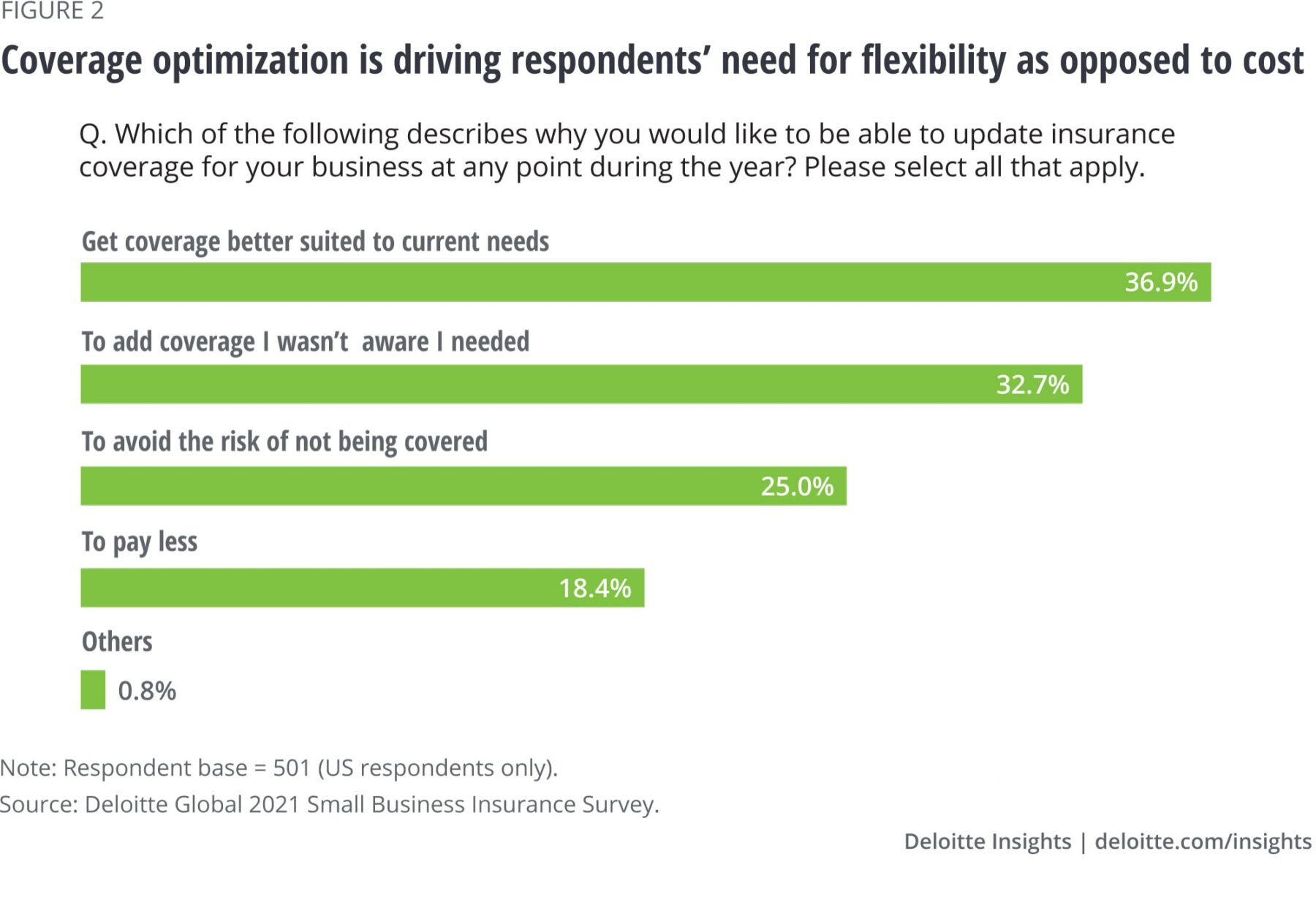
According to a recent Deloitte study, more business insurance customers are seeking greater levels of flexibility in their insurance products and policies. A significant portion express the desire to adjust coverage and premium rates periodically throughout the year, contingent upon business conditions. The traditional models of annual reviews and one-time coverage modifications are no longer considered viable.

The primary motivations behind desiring such flexibility do not revolve around cost reduction. Instead, respondents expressed a greater interest in optimizing their coverage. An example is having the ability to deactivate insurance coverage during periods of inactivity, such as with pay-as-you-go workers’ compensation policies. This approach enables adjustments to coverage when a company undergoes layoffs or experiences a seasonal downturn. 

Entering New Markets

Expanding into new geographic markets or demographic segments offer immense growth potential, driven by rising incomes, urbanization, and increasing awareness about the importance of insurance protection in emerging economies. 

Targeting underserved demographics such as millennials or gig economy workers can be lucrative, as these groups often have unique insurance needs and preferences, necessitating tailored products and distribution channels.

Insurance organizations should also look at rising trends within their markets, like electric vehicles and ride-sharing in the automotive industry, to assess opportunities for growth.These trending markets carry high avenues of expansion with possibly low competition. 

Re-evaluating Value Propositions

In the quest for diversification, insurers must re-evaluate their value propositions to align with changing customer expectations. This involves emphasizing transparency, simplicity, and customer-centricity. Transparent pricing, devoid of hidden fees or complex terms, fosters trust and enhances the perceived value of insurance products.

Furthermore, educating customers about risk mitigation strategies is paramount in today’s risk-prone environment. Insurers can leverage digital platforms, interactive tools, and personalized advice to empower customers to proactively manage risks and reduce potential losses. By positioning themselves as risk management partners rather than just providers of financial protection, insurers can deepen customer engagement and loyalty.

Challenges and Considerations

Despite the opportunities presented by diversification, insurers must navigate several challenges. Regulatory compliance, cultural differences, and operational complexities can pose hurdles when entering new markets. Moreover, developing innovative products requires substantial investment in research, technology, and talent.

Insurers must strike a balance between diversification and maintaining underwriting discipline. Overextending into unfamiliar territories or offering overly complex products can expose insurers to undue risks and erode profitability.

Implementing Diversification

Expanding coverage options, entering new markets, and re-evaluating value propositions are key strategies for meeting the evolving needs of customers and securing future growth.

By embracing innovation and transparency, as well as prioritizing customer-centricity, insurers can differentiate themselves in a crowded marketplace and build a resilient business model capable of withstanding the challenges of tomorrow. In doing so, they not only safeguard their own profitability and sustainability but also contribute to the overall resilience of the societies they serve.

How to Choose a Payment Processor for Your Insurance Organization

Choosing the right insurance payment processing solution is a critical decision for agencies and carriers alike. It affects everything from operational efficiency and compliance to customer satisfaction and cash flow.

Rather than settling for a generic solution, insurance companies should look for payment processing systems designed specifically for the insurance industry. Choose an insurance payment processor by considering how it handles regulations and integrations while accounting for cost and the quality of service. In this step-by-step guide, we’ll delve deeper into how to choose a payment processor that fits your agency’s specific needs and sets your team up for success.

1. Identify Your Needs and Match to Payment Processing System Features

The first step in choosing a payment processing integration is to define the features that you need. Not all payment integrations do the same thing, and not all are built for insurance. Look for payment processor must-haves including:

  • Specialized support for your workflows
  • Tailored offerings that meet the regulations of the insurance industry
  • Optimized processes that reduce manual labor


Based on your needs, evaluate processor options. During the research phase, ask key questions such as:

  • What does this integration actually do—and not do?
  • Which agency management systems is it compatible with?
  • What functionality is specific to insurance workflows?

Bonus Tip: Choose a processor that clearly documents its capabilities and limitations so you can avoid surprises down the road.

2. Choose a Payment Processing Solution That Meets Compliance Standards

Fulfilling compliance requirements is mandatory, so ensure the payment processor you choose is built to meet the standards of the insurance industry.

PCI DSS Regulations

Payment Card Industry Data Security Standard (PCI DSS) compliance is non-negotiable when it comes to handling sensitive financial information. Insurance companies must prioritize payment processors that adhere to PCI standards because:

  • It ensures your payment processor follows industry-standard security protocols.
  • It protects your agency—and your insureds—from data breaches.
  • It builds customer trust by safeguarding the confidentiality and integrity of their payment information.

State-Based Insurance Regulations

Each state has its own set of regulations for selling insurance, meaning the requirements in Ohio may be different from those in New York, California, or Florida. These differences make state-level alignment essential for any payment processor serving the insurance industry.

However, the big global payment processing solution companies are not operating at this micro (state regulations) level. That’s why state-level associations such as Trusted Choice/Big I are valuable—they keep you on track to maintain compliance with any and all state-specific mandates. Pick a processor affiliated with associations like these.

At ePayPolicy, we maintain close relationships with the Big I / Trusted Choice state insurance associations nationwide and are in the process of getting endorsements from all 50 states. Their stamp of approval is their way of saying, “This vendor gets it. We trust them. You should, too.”

3. Look for Processors That Integrate With Your Management Systems

Digital payment processing for insurance companies should make your life easy, and a smooth integration process should make it even easier. Ideally, this means the integration should be seamless with your agency management system. ePayPolicy integrates with many of the most popular management systems used in the industry, including AMS360 Powered by Vertafore, Applied CSR24, and Novidea.

Integration with your management system saves your team time and reduces errors, giving you and your employees more freedom to spend on the important things, like nurturing relationships with your insureds. With the right digital payment processor, invoices are sent on schedule and payments are collected on time, improving cash flow and driving value to the bottom line.

Bonus Tip: Choosing a processor like ePayPolicy that can operate in tandem with integrated management systems or as a stand-alone program improves technical reliability and supports a remote workforce. Standalone features are accessible from anywhere, giving your team the flexibility to use the processor remotely, and they continue operating even if your primary management system goes offline.

4. Compare Fees Between Processing Systems

Cost considerations are paramount for insurance companies when selecting a payment processor. It is crucial to evaluate the fee structure, including transaction fees, monthly subscription costs, and any additional charges. But while cost optimization is essential, it is equally important to assess the overall value provided by the payment processor.

When comparing pricing models, look for:

  • Transaction fees: Are they fixed or percentage-based per payment?
  • Subscription costs: Are there any monthly or annual platform fees?
  • Additional charges: What setup fees, integration fees, or support costs are there?


And measure them against value and features, such as:

  • Dependable security features (including PCI compliance)
  • Quality of customer support
  • Scalability to grow with your business

ePayPolicy allows companies to pass transaction fees to insureds, either wholly or partly. This works because the payment processor passes the fee, not you, the insurance company. A transparent fee structure allows insurance companies to manage their budget effectively and avoid unexpected expenses.

5. Review Each Platform’s Customer Experience Features

Customer convenience is often cited as the main reason businesses offer digital payments, and statistics bear that out. In a survey of billing executives, 97% reported higher customer satisfaction as a benefit of digitizing payments. The report, called “The Digital Edge,” also found other key business benefits, including:

  • Reduced collection times (86.5%)
  • Increased operational efficiency (90.8%)
  • Cost reductions (81.6%)
  • Improved competitive edge (92.3%)

Insurance companies should prioritize payment processors that offer a user-friendly interface for both customers and internal staff. Here are some benefits of a well-designed UI:

  • Enhanced customer satisfaction
  • Reduced likelihood of errors during payment processing
  • Expanded and more convenient payment options
  • Improved trust and reinforced brand identity
  • Streamlined and optimized processors for your team

6. Talk to a Rep and Book a Free Trial

Once you’ve narrowed your options, the final step is to connect with a provider and see the solution in action. Come prepared with a list of questions about integration, onboarding, support, and pricing, and ask whether a free trial or demo is available so you can explore how the payment processing system fits into your day-to-day workflows.

ePayPolicy offers a 60-day free trial that’s fully integrated, easy to implement, and completely risk-free. There are no contracts, no hidden fees, and setup is quick—so you can start seeing value right away. Request a demo or schedule a free 30-minute consultation and discover just how easy getting started with a digital payment processor can be.

ePayPolicy Wraps Up 2023 With Winning Multiple Badges from Gartner Digital Markets

ePayPolicy is thrilled to announce that we have been recognized as an impactful software solution for insurance organizations by Gartner Digital Markets. We are proud to serve the insurance industry in the best way possible, allowing companies to collect and send payments online to speed up receivables and streamline their operations.

ePayPolicy has been recognized in the following software categories:

Capterra Ease Of Use Badge and Best Value Badge for: Recurring Billing

Checkout some of our reviews:

“Engaging with ePayPolicy was a game changer in my agency. It provides for a much super-efficient way to bind new business and makes the renewal process much easier. In a world of customization, online payments is one more option we can offer to our clients.” – Holi M. [Capterra]

“St is very functional and easy to use. It gives instant notification to your email when a payment is received, and it processes the funds quickly through your bank.” – Alexa B. [Capterra]

Software Advice Customer Support Badge and Most Recommended Badge for: Recurring Billing

Check out these reviews:

“I have loved using ePayPolicy ever since I heard about it on a podcast years ago. I started my own Youtube channel and always recommend it to other agents/agencies out there!” – Chris C. [Capterra]

“The system and process is extremely user friendly. Moreover, the support (when needed) has been prompt and always helpful.” – Ashley B. [Capterra]

GetApp Functionality and Features Badge for: Recurring Billing

Here are some reviews:

“The customer service experience is exceptional and I couldn’t be more pleased with the decision to engage them for ePayment. As the only vendor at the time which integrated with our Vertafore product, I initially felt captive in selecting them, but they are a delight to work with and our customers love it as well!” – Melyssa M. [GetApp]

“The fact that it works exactly like they said it would is incredible. The features, integration, ease of use, and savings have taken my agency to another level.” – Diane T. [GetApp]

We have always strived to achieve higher customer satisfaction, which is why ePayPolicy has been a top-rated product on all Gartner Digital Markets sites, with an overall rating of 4.9 out of 5. We would like to thank all our users for supporting us and making this possible.

About ePayPolicy

Built by insurance professionals for the insurance industry, ePayPolicy is the fastest, easiest and most secure way to move money for insurance. ePayPolicy’s products bring insurance payments up to speed for agencies, carriers, MGAs and PFCs, with secure online payment pages and automated check processing, with CheckMate. 7,000+ insurance companies trust ePayPolicy to handle their payments every day. Learn more: ePayPolicy.com

About Gartner Digital Markets:

Gartner Digital Markets is the world’s largest platform for finding software and services. More than 100 million people visit Capterra, GetApp, Software Advice, and UpCity across over 70 localized sites every year to read objective research and verified customer reviews that help them confidently choose the right software and services. Thousands of B2B companies work with Gartner Digital Markets to build their brand, capture buyer demand, and grow their business. For more information, visit https://www.gartner.com/en/digital-markets