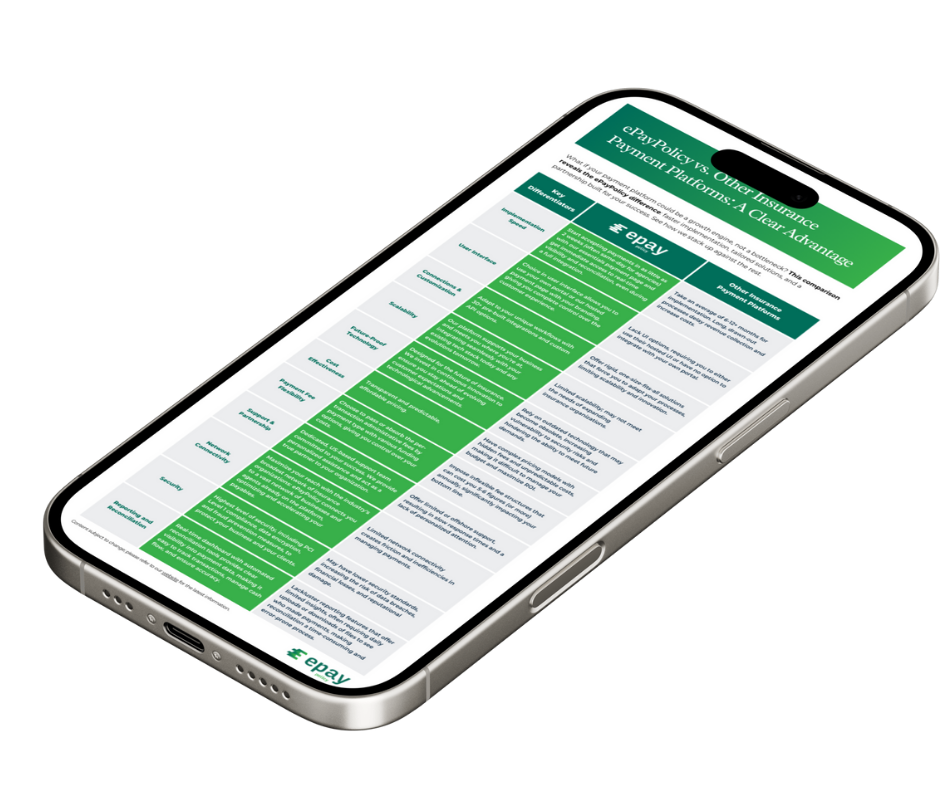

Your agency is probably losing six figures a year to workflows nobody has audited. Here is exactly where the hours go, and the automation tools built to stop the bleeding.
Most independent insurance agent / agency owners think automation tools are for the back-office of large carriers, not for a small or mid-size independent agency that just needs to get paid and move on. The reality is that most independent insurance agencies aren’t losing hours because their staff works slowly. They’re losing hours because their workflows were built around paper, and nobody has stopped to audit the cost.
The friction feels normal, so it gets absorbed. Businesses average $28,500 per employee annually. For a five-person agency, that’s a six-figure drag hiding inside what looks like ordinary operations.
Which workflows are burning the most hours is the question worth answering. See our insurance billing software for how this works in practice.
$28,500 Manual data entry cost per employee annually: The same pattern surfaces across agencies of every size. Staff hours disappear into submission data entry, renewal follow-up, and policy document routing.
These aren’t edge cases. They’re the daily schedule. The Parseur report makes a point worth sitting with: manual error rates between 1% and 4% per field mean that mis-entered data in claims intake or underwriting routinely triggers rework across multiple departments. Manual errors don’t stay contained. They travel. An underwriting delay caused by a re-keying error pushes the bind date. A late bind date delays the invoice. A delayed invoice means the payment chase starts a week behind schedule. That’s the compounding cost most agency owners never trace back to its source.

Agencies will invest in a document processing tool, upgrade their AMS, and still have a CSR manually chasing premium checks at month-end.: Payment collection is the step that gets skipped when agencies evaluate automation tools, so the hours lost there persist even after every other workflow has been modernized.
Platforms like ePayPolicy close this specific gap, functioning as the automation layer that makes every other workflow investment complete.
Key takeaways
- Most agencies lose hours because their workflows were built around paper and nobody rebuilt them when the work moved digital.
- Insurance automation tools fall into six functional categories: AMS/CRM, document processing, underwriting AI, claims and fraud detection, enterprise RPA suites, and payment collection, and a gap in any one of them stalls everything that depends on it.
- Underwriting AI can compress the submission-to-bind cycle from days or weeks down to minutes, but that speed gain disappears the moment a paper check enters the payment step.
- Fraud-scoring platforms like modern claims tools actually accelerate settlements rather than slow them down, the assumption that more fraud controls mean slower payouts is backwards.
- Agencies that automate quoting, document intake, and underwriting but leave premium collection on paper are running a fast assembly line that stops cold at the last station.
- epaypolicy.com closes that gap, it gives independent agencies a digital payment layer with connected accounting, so premium collection runs on the same automated logic as the rest of the stack instead of breaking it.
How Insurance Automation Tools Are Organized – The 2 Functional Categories You Need to Know
Think of your automation stack less like a menu and more like an assembly line. Every station hands something to the next one, and a single idle station backs up everything behind it. Most independent insurance agents and agency owners think automation tools are for the back-office of large carriers, not for a small or mid-size independent agency that just needs to get paid and move on. That assumption is worth examining directly, because the agencies that hold onto it are often the ones leaving the most efficiency and revenue on the table.
That distinction matters because most independent agencies build their automation stack by grabbing the tool that solves the loudest immediate pain, usually claims intake or document processing, and then stopping. According to VantagePoint Insurtech Trends 2026, insurtech automation spans multiple operational layers, and a gap in any one layer undermines efficiency gains achieved in the others. That is the pattern agencies hit after their first automation investment starts paying off, and it shows up most visibly in two places: document workflows and payment reconciliation.
Take document verification. Manual PDF verification of insurance documents after every policy creation or modification is one of the most consistent workflow bottlenecks QA teams inside independent agencies face. It is a daily drag that compounds whenever policy volume rises. This is precisely why a dedicated Document Verification and Validation functional category belongs in any serious discussion of insurance automation as a core requirement rather than an optional extra. A gap there creates exactly the kind of hold-up that slows everything that followsam.
The same logic applies to payment workflows. Agencies that invest in claims or underwriting automation but leave payment operations on manual rails are essentially digitizing their front door while keeping a paper log at the register. com addresses this directly.
Our suite, spanning our integrated platform, CheckMate, Finance Connect, Payables Connect, Quotes & Invoices, Network Payables, and AutoPay, is built around a core expertise point that the rest of the stack cannot afford to ignore: ensuring payments are compliant and properly reconciled. CheckMate, for instance, targets the reconciliation bottleneck specifically. Network Payables and Payables Connect enable agencies, MGAs, and carriers to send electronic payments (commissions, refunds, or fund transfers) to any other agency, broker, MGA, or premium finance company in the industry directly from the ePayPolicy dashboard, a meaningful reduction in manual work.
Clients set up their account once to automatically pay due invoices as soon as they are posted from the agency’s management system, no manual action required per invoice.
One credibility point worth naming directly: agencies evaluating automation platforms sometimes encounter tools built on no-code or low-code frameworks and reasonably question whether those platforms are dependable enough for serious commercial operations. That skepticism is legitimate. When assessing any automation tier, including payment automation, the question to ask is whether the platform is purpose-built for insurance compliance and reconciliation requirements, or whether it is a general-purpose workflow builder dressed in insurance language. epaypolicy.com is purpose-built for insurance payment operations, which is a meaningful distinction when compliance and audit trails are non-negotiable.
1. Claims Processing Automation Tools – AI-Driven Triage and Settlement

Claims automation handles the highest-volume, highest-stakes decisions in the insurance workflow. AI-powered triage tools read incoming FNOL submissions, extract structured data from unstructured documents, and route claims to the correct adjuster queue without a human sorting through the inbox.
Key takeaway: AI-powered claims resolution is 75% faster than traditional manual processing, according to VantagePoint’s 2026 research, yet industry benchmarks place the realistic straight-through processing ceiling for claims at roughly 60 to 70 percent, meaning a meaningful share still requires human review.
75% Faster claims resolution with AI
Industry benchmarks place the realistic straight-through processing ceiling for claims at roughly 60 to 70 percent, as defined by Infrrd’s 2024 automation guide, meaning a meaningful share of claims still require human review. Claims automation ensures adjusters only touch the cases that genuinely need them.
2. Underwriting Automation Tools – Risk Scoring and Appetite Matching
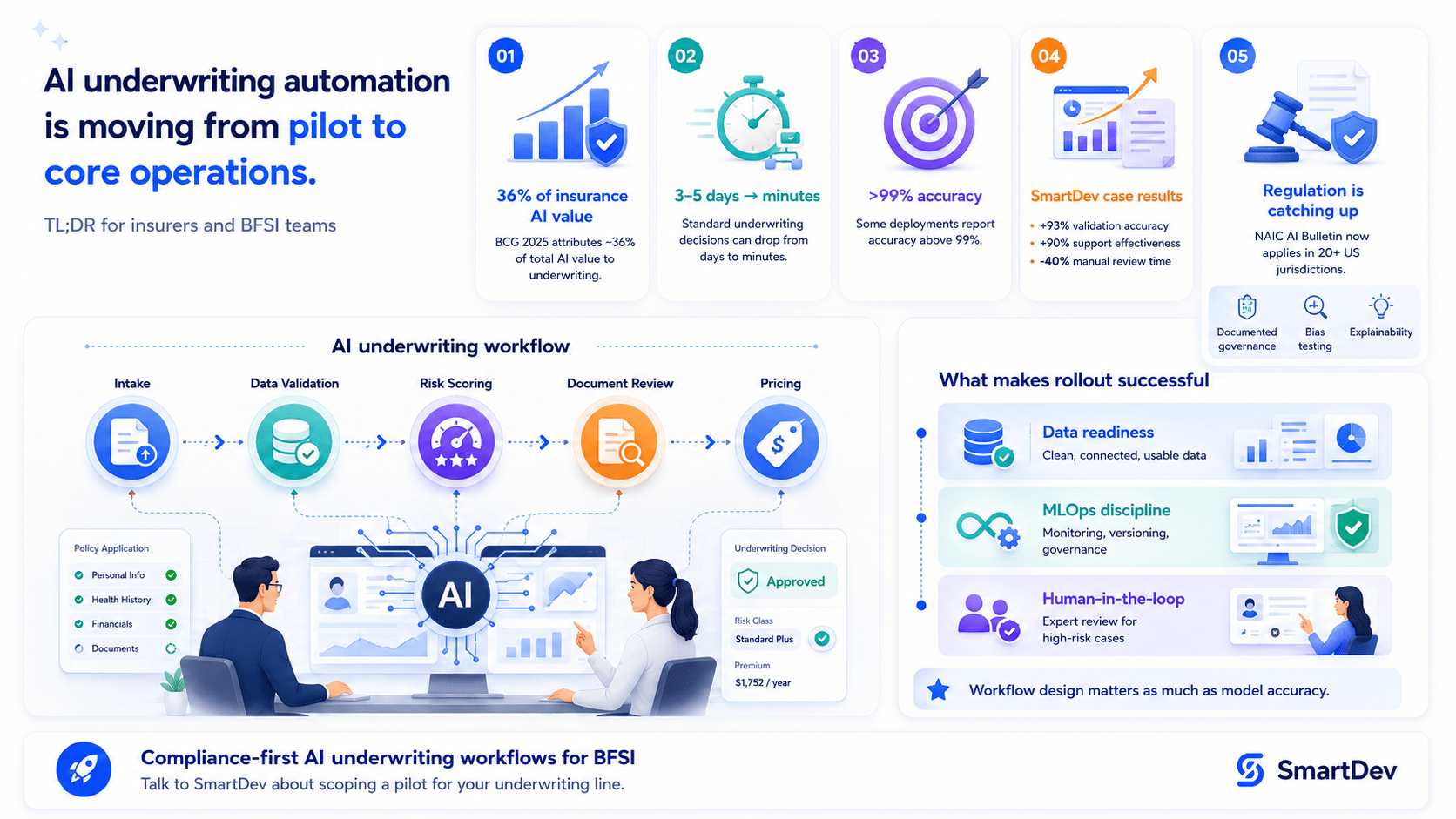
Underwriting automation compresses what was once a multi-day workflow into a near-instant decision. AI risk-scoring tools ingest submission data, match it against appetite rules, and surface a recommended action before an underwriter has finished their first coffee. According to VantagePoint Insurtech Trends 2026, AI underwriting tools can now assess and price risk in minutes rather than days. That speed advantage is also fragile: if the policy quoted does not flow into a payment and reconciliation layer that is equally automated and compliance-ready, the underwriting gain stalls at the point of collection, which is exactly the gap epaypolicy.com’s Quotes & Invoices and Finance Connect products are designed to close.
3. Policy Management Automation Tools – Lifecycle Issuance and Endorsement Processing
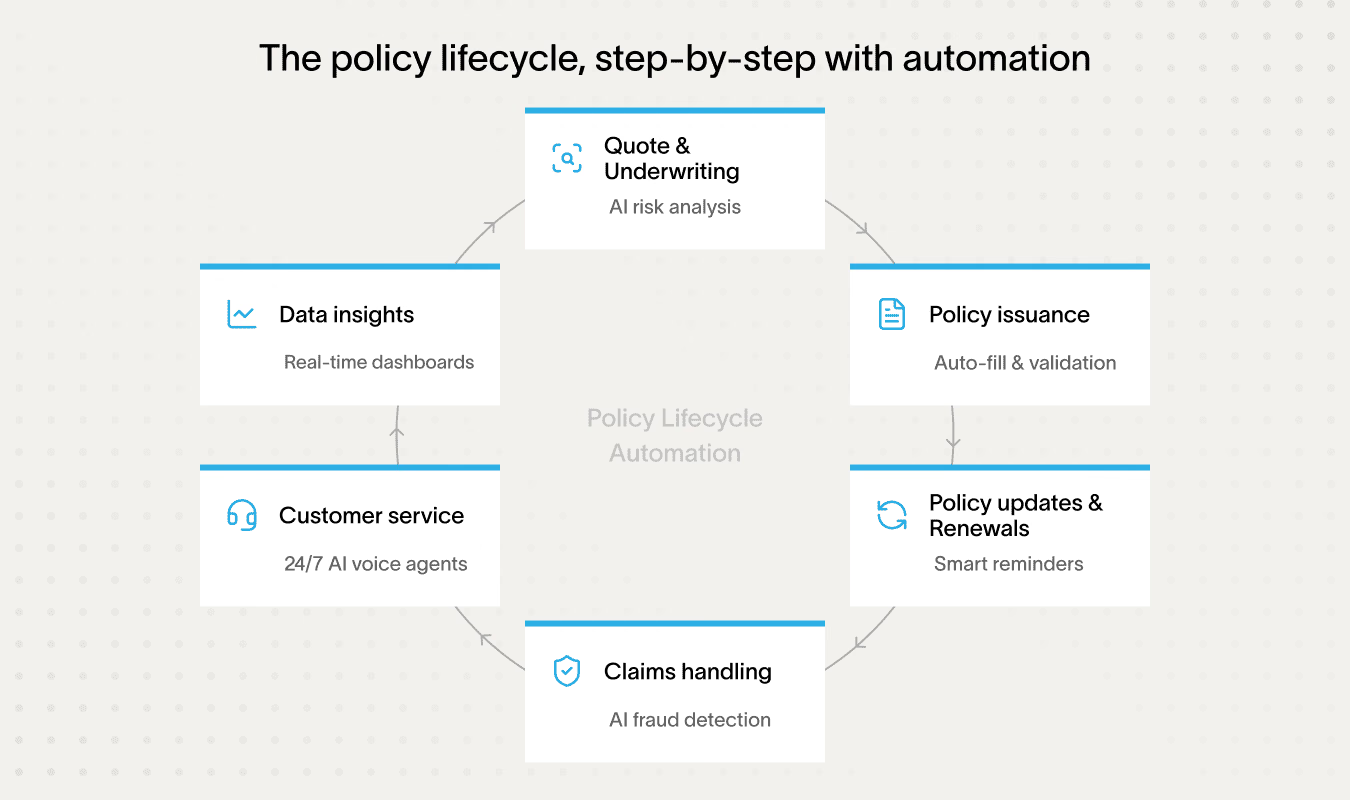
Policy management automation tools handle new business issuance, mid-term endorsements, renewals, and cancellations by extracting intent from unstructured requests and updating core systems without manual rekeying. They are the right fit for carriers still running legacy policy admin systems where manual endorsement queues create backlogs. The tradeoff is integration complexity, connecting intelligent document processing layers to aging mainframe PASSs often requires significant IT runway before ROI materializes.
4. Insurance Billing and Payments Automation Tools – Premium Collection and Reconciliation

Billing automation tools manage installment scheduling, payment posting, NSF handling, and commission reconciliation across multiple payment channels without manual intervention. P&C carriers with complex agency billing arrangements gain the most, as automated reconciliation eliminates the float and error rates endemic to manual cash application. The primary limitation is that highly customized billing plans, common in specialty and surplus lines, often require rule-engine configuration that rivals the complexity of the original manual process.
5. Insurance Workflow Automation Tools – Cross-Functional Process Orchestration
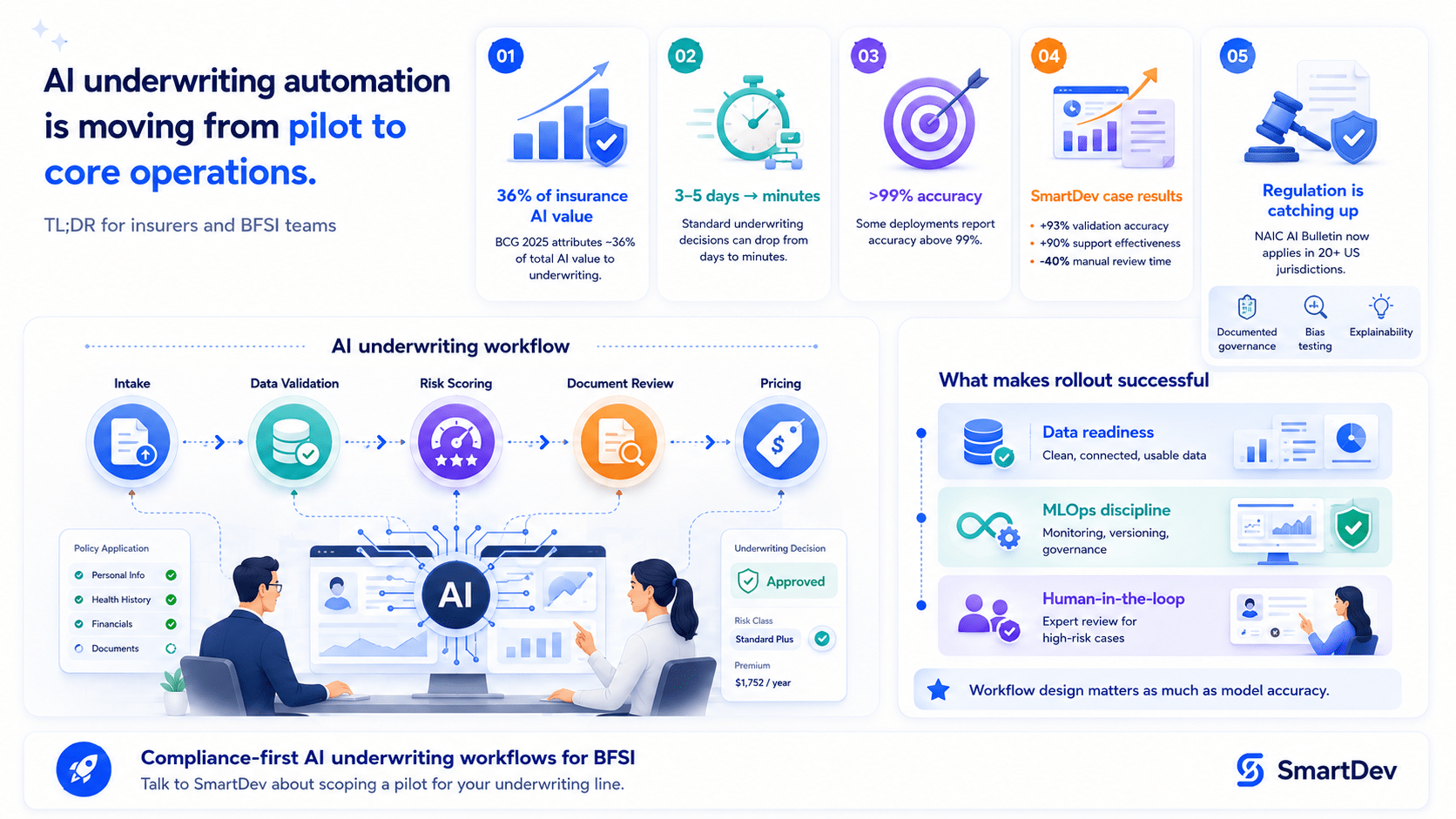
Workflow automation tools, often built on RPA or low-code BPM platforms, connect siloed departments by automating handoffs between new business intake, underwriting, policy issuance, and billing without replacing core systems. They are ideal for mid-market insurers that cannot afford a full core system replacement but need to eliminate manual re-entry across five or more systems. The real tradeoff is fragility: bot-based integrations break when UI or API contracts change, demanding ongoing maintenance investment.
6. Customer Communication Automation Tools – Omnichannel Policyholder Engagement
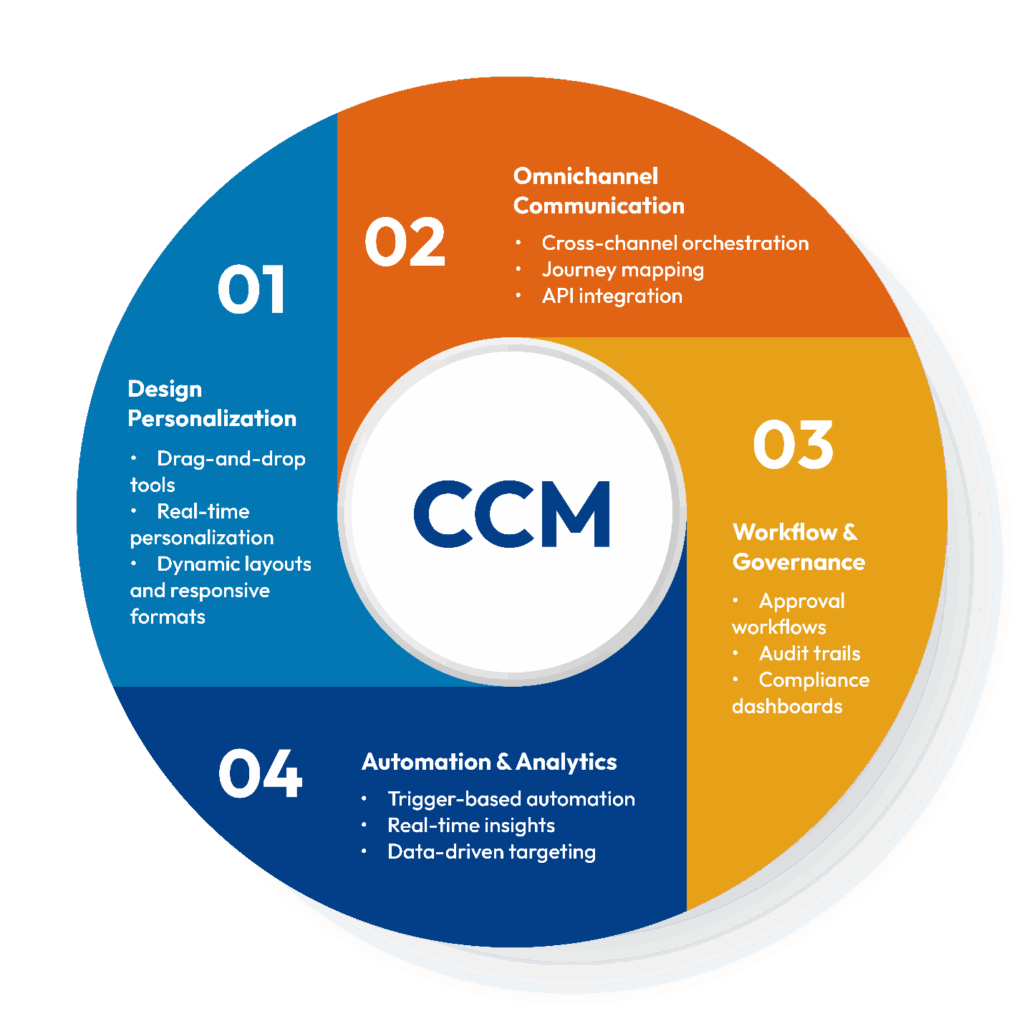
Customer communication management (CCM) automation tools personalize and deliver policy documents, renewal notices, claims status updates, and billing alerts across print, email, SMS, and portal channels from a single content engine. Carriers focused on retention and NPS improvement find these tools directly move the needle on policyholder satisfaction scores. The limitation is content governance: highly regulated communications like cancellation notices require legal review workflows that slow the speed advantage these platforms promise.
Agency Management Systems (AMS) and CRM Automation Tools for Insurance
Agency Management Systems (AMS) and CRM automation tools are the operational foundation every other automation category in your stack depends on. An AMS handles the core functions: client records, policy management, quoting, renewals, and carrier communications. A CRM layer sits on top to manage the sales side: lead tracking, pipeline visibility, renewal campaigns, and client follow-up. The two are complementary, and AMS integration is a prerequisite for payment and commission automation. When billing tools don’t connect to the AMS, policy data, payment records, and client files fall out of sync, and every downstream workflow that depends on confirmed premium stalls.
The AMS is rarely the bottleneck. The disconnected billing layer sitting outside it is. Agencies chasing automation gains often assume they need a better management system. In practice, the AMS they already have is doing its job. What it cannot do is close the revenue loop when payment collection runs through a generic processor that doesn’t talk back to it. The moment a policyholder pays should be the moment the record updates, binding proceeds, and reconciliation closes automatically.
When it isn’t, a staff member absorbs that gap manually, turning every confirmed-bound policy into a follow-up task. One pattern we see repeatedly: older agencies that have operated on paper-based or siloed workflows lack properly structured digital data, which makes it extremely difficult to add automation or a CRM later. The data foundation simply isn’t there to support it. Insurance billing software built specifically for this workflow, like ePayPolicy, connects insurance-native digital payments directly inside the AMS so that reconciliation gap disappears rather than getting assigned to someone’s to-do list.
ePayPolicy’s integrated platform connects to agency management systems (AMS360, Applied, BindHQ, AIM, NowCerts) plus a custom API. It is also designed to streamline and standardize payment collection across the agency and lets agencies customize the payment experience to reflect their own brand, so what the client sees feels deliberate rather than tacked on. For agencies that regularly issue high volumes of outbound payments to agents or partners, Payables Connect removes the time and cost of printing and mailing paper checks. Together, these capabilities mean the billing layer stops being the weak link between the AMS and confirmed revenue.
A second struggle worth naming directly: independent agents, especially solo or early-stage operators, frequently find that popular AMS and CRM platforms, including AgencyZoom, are priced for larger agencies, leaving them absorbing manual work that enterprise shops automate by default. The right payment tools don’t require a full enterprise system. It requires tools built specifically for insurance workflows rather than adapted from general-purpose software.
1. ePayPolicy – Insurance-Native Payment Automation Platform
Epaypolicy.com is the only payment platform built exclusively for insurance, automating trust accounting, premium financing, and paper check digitization natively inside your agency management system. It eliminates manual reconciliation and binding delays by connecting payments directly to your AMS workflow. Ideal for agencies drowning in paper checks and reconciliation errors. The tradeoff: it’s payment-focused, so agencies needing a full AMS must pair it with another system.
2. HawkSoft – COI and Commercial Workflow AMS for Mid-Size Agencies

HawkSoft is a strong fit for mid-size independent agencies that issue certificates of insurance frequently and want commercial workflow support without the price tag of an enterprise system. Its COI generation and batch processing are well-regarded among agents who have used both HawkSoft and larger platforms, a pattern consistently surfaced in agency technology reviews on G2 and Capterra. The tradeoff: its integrations ecosystem is narrower than Applied Epic or EZLynx, so agencies with complex third-party tool stacks should audit compatibility before committing, including confirming that their payment layer connects cleanly, since a billing tool outside the AMS ecosystem reintroduces the manual reconciliation problem the AMS was supposed to solve.
3. AgencyBloc – Insurance Automation Software for Health and Benefits Agencies
AgencyBloc is purpose-built for life, health, and benefits agencies, with commission tracking, compliance tools, and group policy management that general-purpose AMS platforms handle poorly, a limitation documented in independent AMS comparison reviews on G2 and reinforced by agent feedback across the industry. If your book is primarily individual health or employer benefits, AgencyBloc’s vertical focus pays off in workflows that actually match how those policies are structured. It is a poor fit for P&C-heavy agencies, where its policy management capabilities fall short.
4. Salesforce Financial Services Cloud – CRM Automation for Enterprise Insurance Operations

Salesforce Financial Services Cloud delivers the most configurable CRM automation available for large insurance carriers and brokerages, with AI-driven lead scoring, pipeline management, and omnichannel client engagement. It integrates with virtually every AMS on the market. Best for enterprise operations with dedicated IT resources to configure and maintain it. The critical tradeoff: implementation complexity and licensing costs make it impractical for independent agencies or small brokerages.
5. Creatio – No-Code CRM and Process Automation for Insurance Agencies
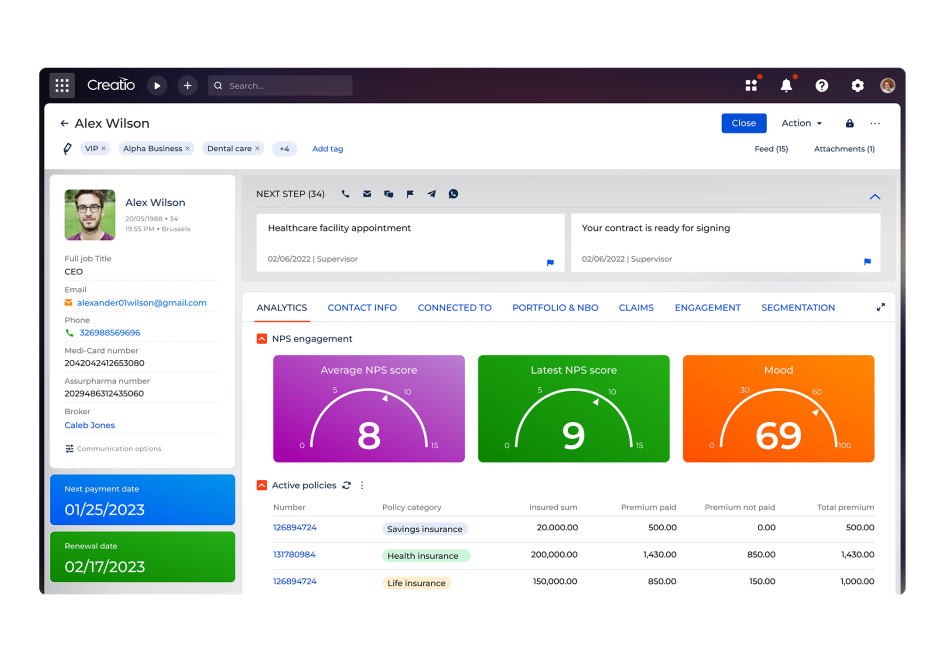
Creatio combines CRM and business process automation on a no-code platform, allowing insurance agencies to build custom workflows without developer resources. Its insurance-specific templates cover lead management, policy renewals, and claims follow-up. It’s the right pick for mid-size agencies that have outgrown generic CRMs but can’t afford enterprise Salesforce implementations. The tradeoff is that deep AMS integration requires additional configuration effort compared to insurance-native platforms.
6. Vertafore AMS360 – Cloud AMS for Independent Agency Networks
Vertafore AMS360 is a cloud-based agency management system widely adopted across independent agency networks for its deep accounting, policy management, and carrier connectivity. It handles both personal and commercial lines with greater depth than EZLynx while remaining more accessible than Applied Epic for mid-market agencies. Its integration with the broader Vertafore ecosystem, including QQ Catalyst, is a key advantage. The tradeoff is pricing that still runs significantly higher than newer AMS entrants.
7. QQ Catalyst – User-Friendly AMS for Small Independent Agencies

QQ Catalyst, part of the Vertafore family, delivers an intuitive dashboard experience that agents describe as having the feel of a consumer app, making it one of the easiest AMS platforms to onboard staff onto. It handles commercial lines competently and costs roughly half of AMS360, making it the value pick for small agencies that need professional-grade management without enterprise pricing. The limitation is that it lacks the depth of Applied Epic for complex commercial accounts.
8. Folio – CRM Platform for Insurance Brokers Focused on Client Relationship Automation
Folio (Foliume) is a CRM platform designed specifically for insurance brokers and agents, automating client relationship touchpoints including follow-ups, pipeline tracking, and renewal outreach. It’s built to replace generic CRMs like HubSpot for agencies that need insurance-context workflows out of the box. Best for brokerages prioritizing client retention and cross-sell automation. The tradeoff is that it functions as a CRM layer rather than a full AMS, requiring integration with a separate policy management system.
9. HubSpot CRM – General-Purpose CRM Automation Adaptable for Insurance Agencies

HubSpot CRM is the most widely adopted general-purpose CRM among independent insurance agencies seeking marketing automation, lead nurturing, and pipeline visibility without insurance-specific pricing. Its free tier and scalable paid plans make it accessible for agencies of any size, and its email automation and workflow builder are genuinely powerful. The core limitation for insurance is the absence of native policy management, AMS integration, or trust accounting, requiring significant customization to fit agency workflows.
10. Radiusbob – Lightweight CRM and Lead Management Tool for Life and Health Agents
Radiusbob is a purpose-built CRM and lead management platform for life and health insurance agents, combining contact management, automated drip campaigns, and VoIP calling in a single affordable tool. It’s the right pick for individual agents or small teams focused on lead conversion rather than full policy lifecycle management. Its simplicity is its strength, agents are productive within hours of setup. The tradeoff is limited scalability and no meaningful commercial lines or AMS functionality.
11. Jenesis Software – AMS for Small Independent P&C Agencies Seeking Simplicity
Jenesis Software is a straightforward, affordable agency management system built for small independent P&C agencies that need core policy management, client records, and basic automation without the complexity of enterprise platforms. It offers a clean interface, solid carrier download support, and responsive customer service that larger vendors can’t match. Best for agencies under 10 staff. The tradeoff is limited advanced automation, reporting depth, and integration options compared to mid-market AMS platforms.
12. NowCerts – Cloud-Based AMS with Built-In Automation for Independent Agencies
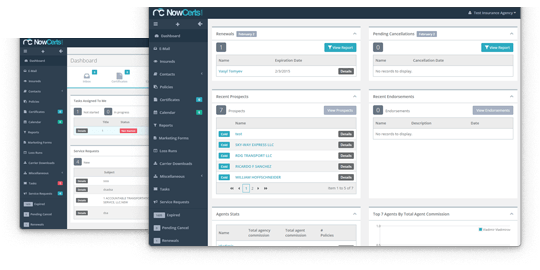
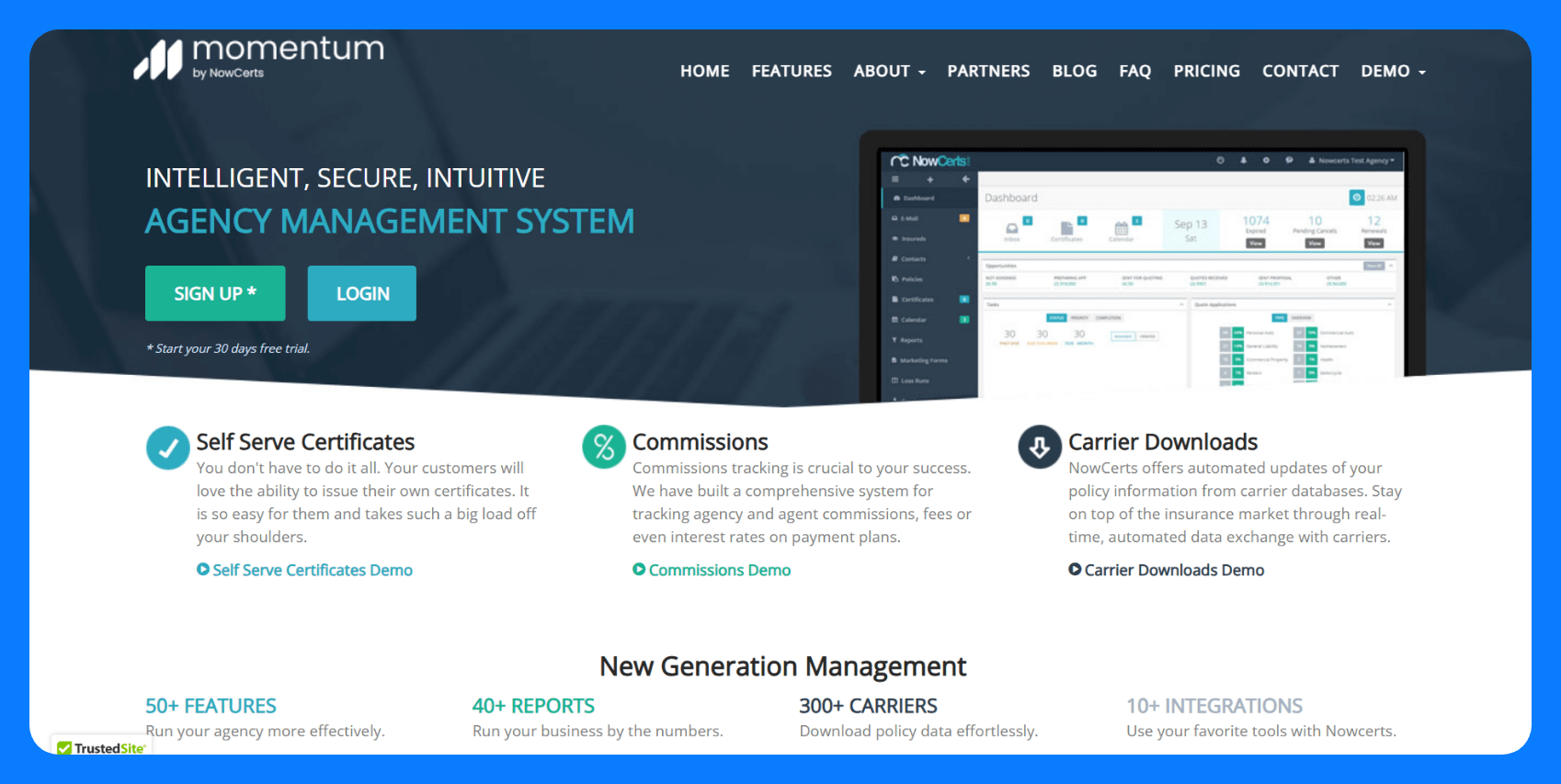
NowCerts is a modern cloud-based AMS that bundles policy management, COI generation, ACORD forms, and automated client communication into a competitively priced platform. Its automation workflows for renewals and follow-ups are accessible without technical expertise, making it a strong choice for growing independent agencies. It integrates with several popular raters and CRMs. The tradeoff is that its commercial lines depth still lags behind Applied Epic and HawkSoft for complex accounts.
13. AgencyMate – AMS for Australian and Asia-Pacific Insurance Brokers
AgencyMate is an agency management system built specifically for the Australian and Asia-Pacific insurance brokerage market, addressing local compliance requirements, insurer connectivity, and policy management workflows that US-centric platforms don’t support. It’s the natural choice for brokers operating under ASIC and AFSL obligations who need a system that understands their regulatory environment. The tradeoff is limited relevance for North American agencies and a smaller integration ecosystem than global AMS platforms.
14. US Tech Automations – Renewal Reminder Automation Service for Insurance Agencies
US Tech Automations provides multi-touch renewal reminder automation specifically designed for insurance agencies, using sequenced email, SMS, and call workflows to reduce policy lapse rates. Agencies using structured renewal reminder automation report significant reductions in lapse rates and measurable retention improvements. It’s best for agencies that lack built-in renewal automation in their current AMS. The tradeoff is that it’s a point solution, it doesn’t replace AMS functionality and requires clean data to perform well.
15. Zywave – Insurance Agency Automation Platform for Benefits and Risk Management Brokers

Zywave delivers a broad suite of automation tools for insurance agencies and brokers, including benefits administration, risk management content, proposal generation, and client communication automation. It’s particularly strong for employee benefits brokers who need to deliver compliance resources and renewal proposals at scale. Its content library and benchmarking tools differentiate it from pure AMS platforms. The tradeoff is that its breadth can feel unfocused for P&C-only agencies that don’t need benefits functionality.
16. Rocket Referrals – Automated Client Communication and Referral Tool for Insurance Agencies
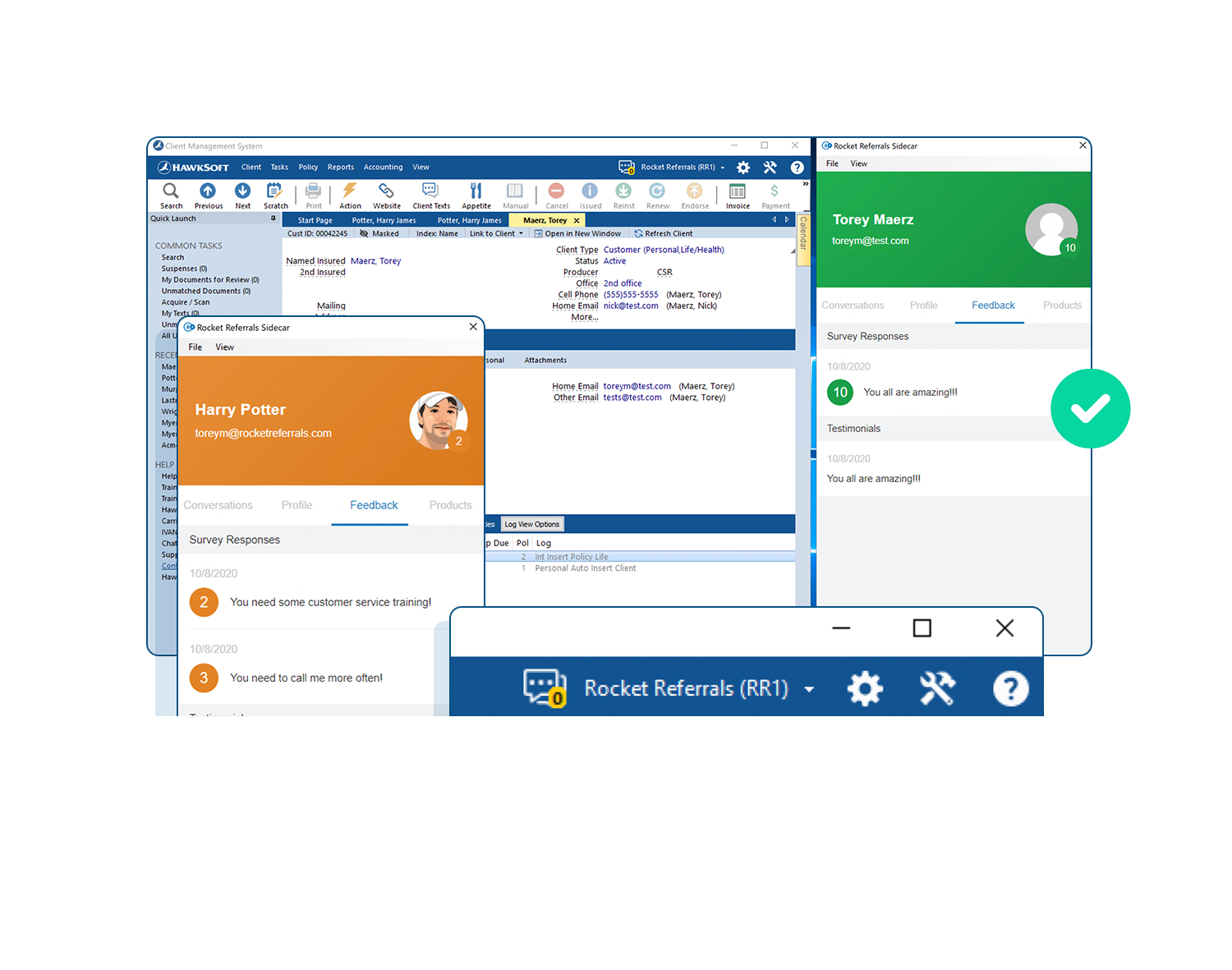
Rocket Referrals automates client satisfaction surveys, referral requests, and retention-focused communication for insurance agencies, turning passive policyholders into active referral sources. It integrates with major AMS platforms to trigger communications based on policy events. Best for agencies that have strong retention but underutilize their existing book for organic growth. The tradeoff is narrow scope, it’s a client communication and referral tool, not a CRM or AMS replacement.
17. Canopy Connect – Automated Insurance Data Collection Tool for Agencies
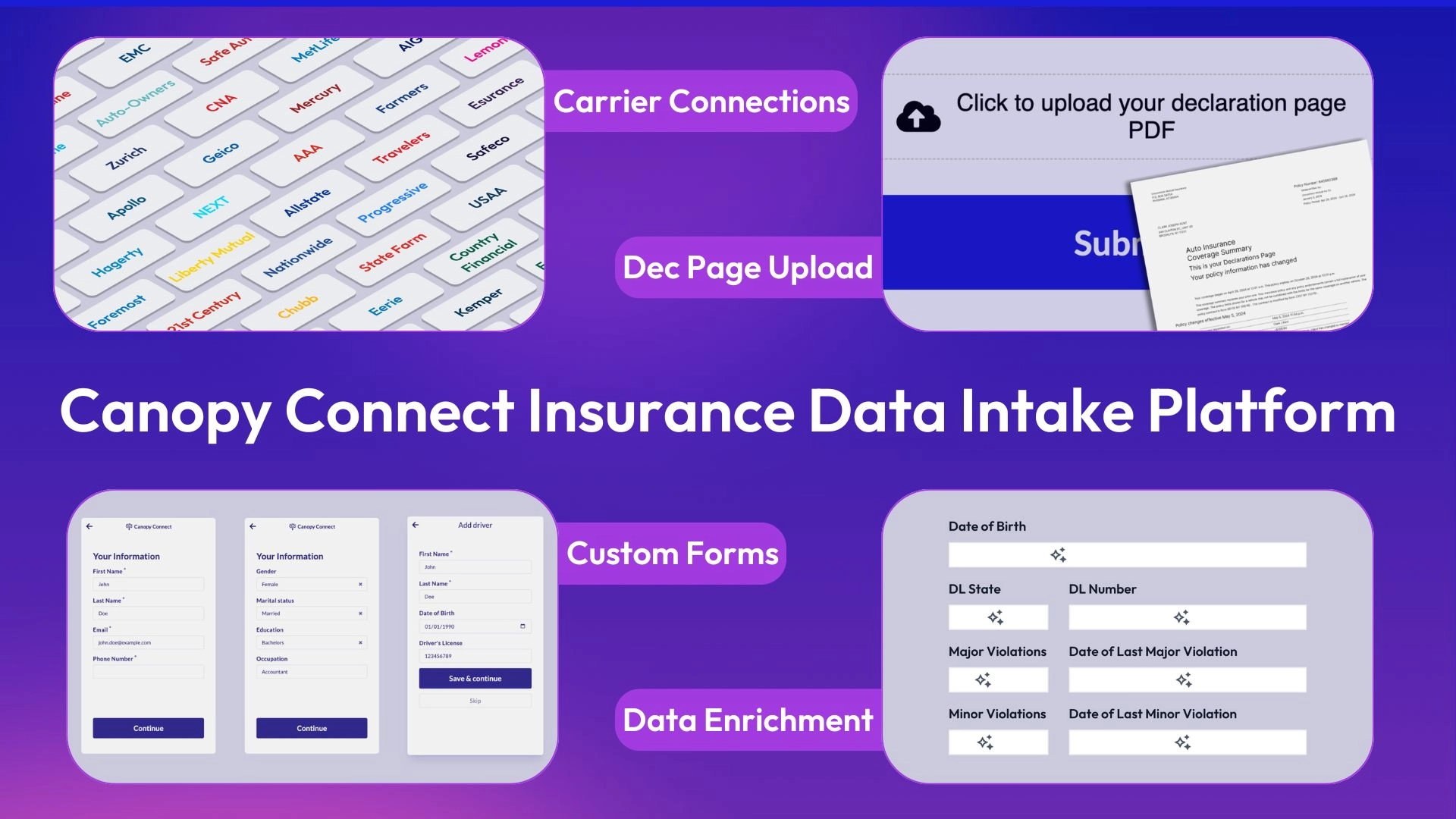
Canopy Connect automates the collection of existing insurance policy data directly from carriers on behalf of prospects and clients, eliminating manual data entry during the quoting and onboarding process. Agents send a secure link, and the platform pulls current coverage details automatically. It’s the right tool for agencies focused on reducing friction in the new business process. The tradeoff is that it’s a data collection utility, it doesn’t manage policies, automate renewals, or replace CRM functions.
18. Tarmika – Comparative Commercial Lines Rater for Independent Agencies
Tarmika is a commercial lines comparative rating platform that allows independent agents to quote multiple carriers simultaneously for small commercial accounts, dramatically reducing the time spent on submissions. It’s the right pick for agencies looking to grow their small commercial book without adding staff. It integrates with several AMS platforms for data pre-fill. The tradeoff is that it’s optimized for small commercial and doesn’t support the complexity of middle-market or specialty lines accounts.
19. Pipedrive – Sales Pipeline CRM for Insurance Agencies Scaling New Business Production
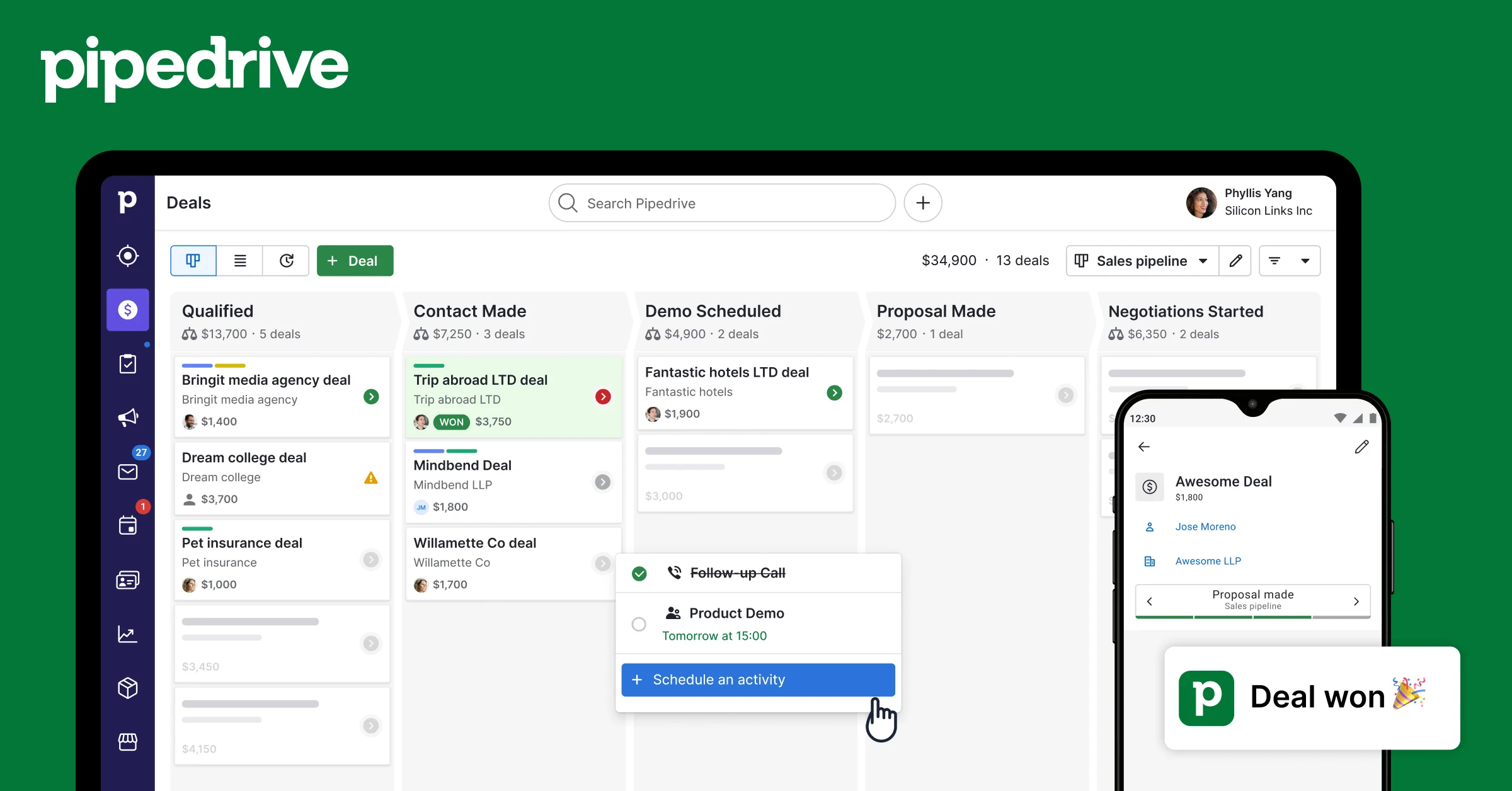
Pipedrive is a sales-focused CRM that insurance agencies use to manage new business pipelines, track producer activity, and automate follow-up sequences for prospects. Its visual pipeline interface and activity-based selling methodology make it intuitive for producers without CRM experience. It’s the right pick for agencies prioritizing new business growth over retention management. The tradeoff is that it has no insurance-native features, policy data, AMS integration, and trust accounting all require custom configuration or third-party connectors.
Intelligent Document Processing (IDP) and Submission Triage Tools for Insurance
Unstructured documents are where insurance automation stacks quietly fall apart. A submission arrives as a PDF email attachment, an ACORD form, or a broker packet assembled across three different file formats. Someone on your team opens it, reads it, and types the relevant fields into your agency management system by hand. That single step, repeated dozens of times a day, is the intake valve the rest of your workflow depends on, and it is almost always the slowest point in the chain.
The scale of this problem is larger than most operations teams want to admit. Manual document processing in insurance workflows is slow and error-prone by nature; employees must read, interpret, and re-enter data from scanned PDFs, financial forms, and ACORD packets into systems that have no idea those documents exist until a human bridges the gap. Intelligent document processing in insurance automates the extraction of data from unstructured and semi-structured documents, including ACORD forms, loss runs, policy documents, and submission packets, eliminating the need for manual re-keying by underwriters entirely.
The reason that matters goes beyond speed. Every downstream tool, your underwriting AI, your claims system, your payment workflow, runs on the structured data that intake produces. Feed it noise, and the whole stack processes noise.
IDP tools address this by converting paper and PDFs into clean, structured fields before any human touches the data. Sortspoke reports that its Submission Triage feature helps teams prioritize high-potential submissions first and explicitly maintains 100% human oversight on every field; it does not remove the need for manual review entirely. That changes how work enters the process in the first place.
Pros and cons at a glance
| ✓ Pros | ✗ Cons |
| Converts unstructured documents into clean, structured fields automatically | Demo-to-production gap is real with degraded scans and non-standard formats |
| 85% time savings on document intake | 85% time savings only survives if downstream workflow is equally automated |
| Prioritizes high-potential submissions first | IDP results in production are often mixed compared to vendor promises |
| Maintains 100% human oversight on every field | Becomes expensive front-end to the same slow back-end without payment automation |
The critical caveat, and one that IDP vendors rarely lead with, is that the 85% time savings only survives if the workflow downstream is equally automated. Agencies we work with consistently find that IDP results in production are often mixed compared to what is promised in demos and sales decks. The gap between a polished vendor demonstration and a live environment full of degraded scans, non-standard broker formats, and edge-case documents is real, and it shows up fast after go-live. When extracted policy or submission data still requires a human to manually initiate payment or reconcile a commission statement, IDP becomes an expensive front-end to the same slow back-end. The intake valve works, but the pipe it feeds is still clogged.
That downstream gap is exactly where most agencies feel the pain last and fix it last. The document gets processed cleanly, the quote goes out fast, the policy binds, and then someone chases a check. The hidden cost covers both the time spent on payment follow-up and the reconciliation work that follows, where staff manually match payments against bound policies inside the agency management system. Reducing the time spent chasing checks and on manual payment processing is where the real operational leverage lives once IDP is in place.
ePayPolicy closes that downstream gap through features designed for the insurance payment workflow. AutoPay eliminates check-chasing entirely: during onboarding or at the payment page, when a client opts in, payments run automatically each billing cycle with no manual triggering required. This is most effective when an agency has a management-system integration in place and clients have predictable recurring invoices, the conditions where automation compounds rather than just substitutes for effort.
For agencies that regularly issue high volumes of outbound payments to agents or partners, Payables Connect eliminates paper-check printing and mailing on the disbursement side, so the back-end of the payment cycle matches the front-end efficiency IDP creates at intake. CheckMate converts inbound paper checks to digital, routed and reconciled in the dashboard, so the structured data IDP tools produce does not get lost to manual handling at the point of getting paid.
The tools below cover the full IDP and submission triage category, from enterprise platforms handling millions of documents to API-first tools built for insurtech developers assembling custom extraction pipelines.
1. ePayPolicy
Digital insurance payment solution that helps insurance companies accept secure online payments with connected accounting The only insurance-built payment platform natively automating trust accounting, premium financing, and paper check digitization
2. Indico Data – IDP Platform for Unstructured Insurance Document Extraction

Indico Data is the strongest choice for carriers and MGAs processing high volumes of complex, unstructured documents where field extraction accuracy is non-negotiable. The platform uses large language model-based document understanding to extract structured fields from loss runs, submission packets, and policy forms without requiring rigid templates. The real tradeoff: implementation complexity is real, and the demo-to-production gap noted above applies here as with any IDP platform; plan for a calibration period before extraction accuracy reaches the levels shown in vendor benchmarks.
3. SortSpoke – AI Submission Triage System for Carriers and MGAs
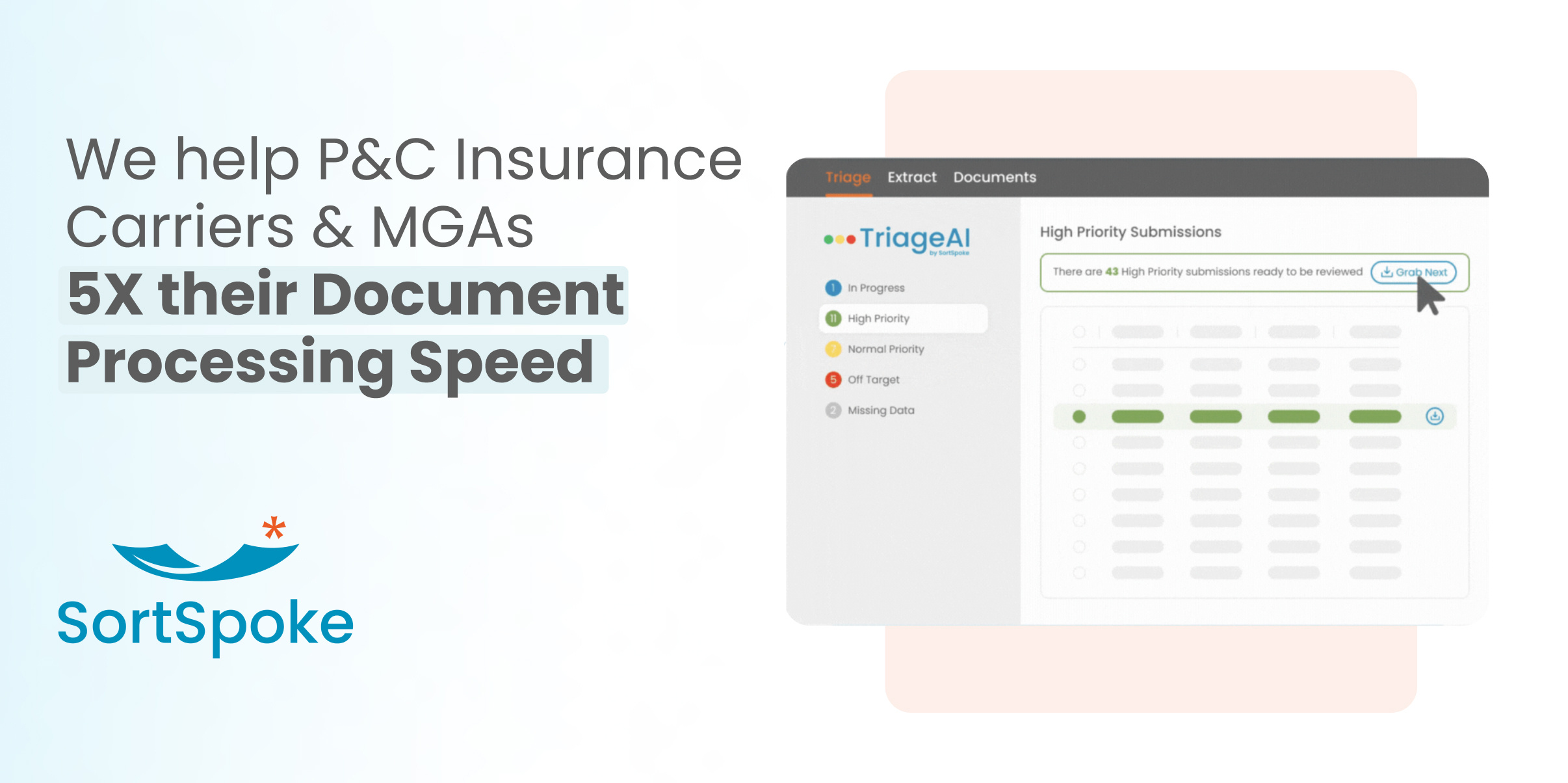
SortSpoke automates insurance submission triage, enabling carriers and MGAs to process more submissions with existing staff by classifying, extracting, and routing incoming documents automatically. It is best suited for commercial lines teams overwhelmed by email-based submission volume. Its no-code configuration makes onboarding faster than most IDP tools. The tradeoff: it is optimized for submission intake specifically, so teams needing broader claims or policy document automation will need supplementary tools.
4. Further AI – Agentic Submission Intake Automation for MGAs

Further AI deploys AI agents that autonomously extract, validate, and enrich insurance submissions from email and attachments, reducing intake time dramatically for MGAs. Its agentic approach goes beyond static IDP by reasoning across multi-document submissions. Best for MGAs scaling submission volume without adding headcount. The tradeoff: agentic AI introduces occasional unpredictability in edge-case documents, requiring human review protocols to maintain underwriting data quality.
5. Affinda – Multi-Format Insurance Document Automation API
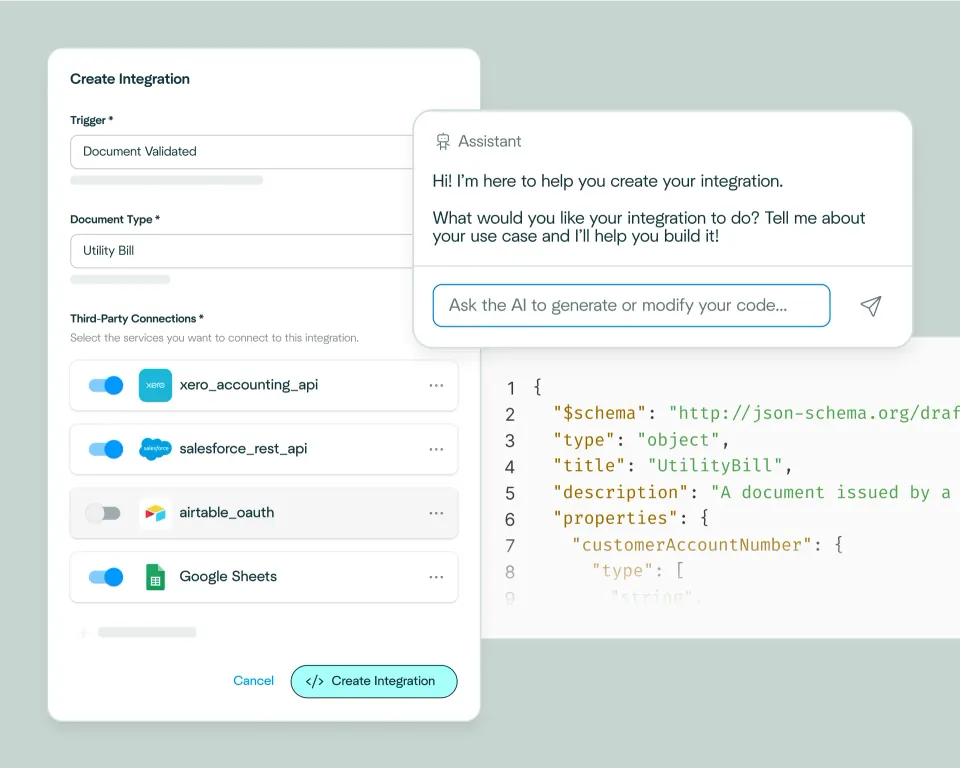
Affinda provides an API-first document automation platform that handles diverse insurance document types including policies, certificates, and claims forms across multiple formats. It is the right choice for insurtech developers and carriers building custom automation pipelines who need flexible, high-accuracy extraction without building OCR from scratch. The tradeoff: its API-first design means non-technical insurance operations teams will need developer support to deploy and maintain integrations effectively.
6. Owl.co – AI Document Classification Tool for Insurance Intake

Owl.co focuses on AI-powered document classification for insurance, automatically identifying and categorizing incoming documents by type before routing them to the correct workflow. It is ideal for carriers and brokers dealing with mixed inbound document streams where misrouting creates downstream processing errors. Its classification accuracy reduces manual sorting labor significantly. The tradeoff: classification alone does not extract data, so Owl.co works best as part of a broader IDP stack rather than a standalone solution.
7. LlamaIndex LlamaParse – RAG-Ready Claims Document Parser for AI-Native Workflows

LlamaParse by LlamaIndex delivers high-fidelity document parsing and schema extraction optimized for retrieval-augmented generation workflows in insurance claims management. It is the right pick for insurtech engineering teams building AI-native claims pipelines that need structured, queryable output from complex PDFs and forms. The tradeoff: it is a developer-facing tool with minimal out-of-the-box insurance workflow configuration, requiring significant engineering investment to operationalize for non-technical claims teams.
8. AltexSoft IDP Consulting – Custom IDP Design for Complex Insurance Environments

AltexSoft offers technology consulting and custom IDP design for insurance organizations that need tailored document processing solutions rather than off-the-shelf tools. It is best suited for large carriers with legacy systems, complex document taxonomies, or regulatory requirements that commercial IDP platforms cannot accommodate out of the box. The tradeoff: custom-built solutions carry higher upfront cost and longer delivery timelines compared to SaaS IDP alternatives.
9. Hyperscience – Enterprise IDP Platform for High-Volume Insurance Forms Processing

Hyperscience delivers enterprise-grade intelligent document processing with strong performance on structured and semi-structured insurance forms including applications, endorsements, and renewal documents at scale. It is the right fit for large carriers processing millions of documents annually who need SLA-backed accuracy guarantees. Its human-in-the-loop automation model reduces error rates significantly. The tradeoff: enterprise pricing and implementation complexity make it less accessible for mid-market MGAs or regional carriers.
10. Reducto – Precision Document Extraction Tool for Insurance Underwriting Data
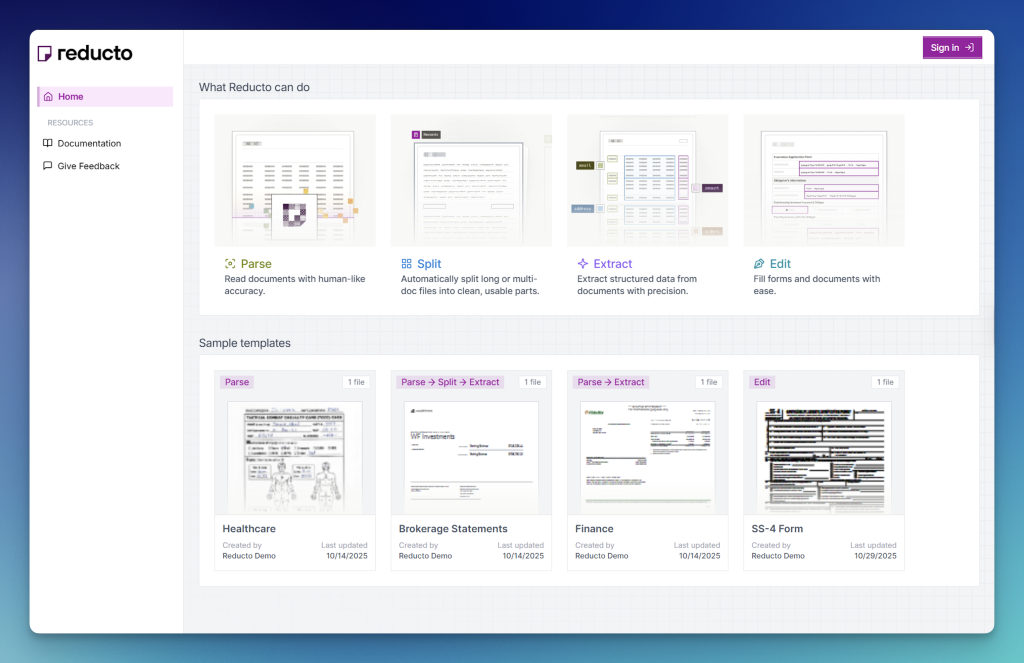
Reducto specializes in precision extraction of underwriting-relevant data fields from complex insurance documents including loss runs, schedules of values, and supplemental applications. It is best for underwriting teams that need clean, structured data output for risk scoring models without manual rekeying. Its focus on accuracy over speed makes it well-suited for complex commercial lines. The tradeoff: processing speed is slower than bulk-oriented IDP tools, making it less ideal for high-frequency, lower-complexity personal lines submissions.
11. Zipari – Insurance-Specific Document and Member Communication Automation Platform
Zipari provides a consumer experience platform for health insurers that automates document generation, member communication, and policy document processing within a single insurance-native environment. It is the right pick for health carriers and benefits administrators needing to automate outbound document workflows alongside inbound processing. The tradeoff: its health insurance focus means P&C and commercial lines carriers will find limited applicability for their specific document types and regulatory requirements.
12. Docsumo – Submission Data Extraction Tool for Specialty Insurance Lines

Docsumo offers AI-powered document data extraction with pre-built models for insurance-specific document types including ACORD forms, certificates of insurance, and loss summaries. It is well-suited for specialty lines MGAs and wholesale brokers processing diverse, non-standard submission packages. Its pre-trained insurance models reduce setup time significantly. The tradeoff: accuracy on highly customized or non-standard document formats may require additional model fine-tuning that adds implementation time.
13. Nanonets – No-Code IDP Workflow Builder for Mid-Market Insurance Teams
Nanonets provides a no-code intelligent document processing platform that allows mid-market insurance operations teams to build custom extraction and classification workflows without developer involvement. It is the right pick for regional carriers and brokers that need IDP capabilities but lack dedicated engineering resources. Its drag-and-drop workflow builder accelerates deployment. The tradeoff: no-code flexibility comes with accuracy ceilings on highly complex documents that enterprise IDP platforms with custom model training can overcome.
14. Camunda – Process Orchestration Engine for Insurance Automation Workflow Integration
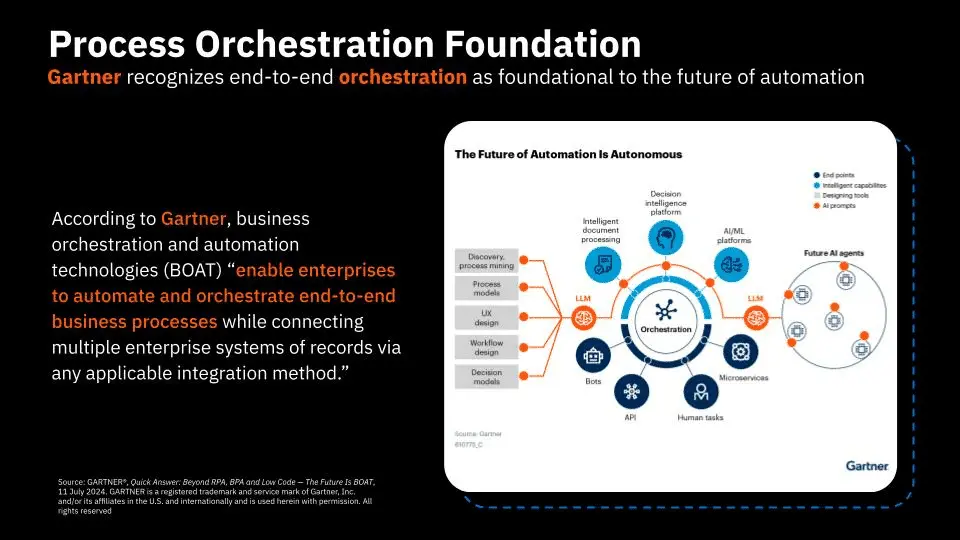
Camunda provides a process orchestration platform that connects IDP tools, core insurance systems, and human review queues into unified, auditable automation workflows. It is best for carriers and MGAs that have already invested in point-solution IDP tools but need a layer to coordinate document processing steps, approvals, and system handoffs. The tradeoff: Camunda is an orchestration layer, not an IDP tool itself, so it requires existing extraction and classification capabilities to deliver value.
15. Gradient AI – Predictive Submission Scoring Tool for Underwriting Triage Prioritization
Gradient AI applies machine learning to score and prioritize insurance submissions based on predicted profitability and risk, enabling underwriters to focus attention on the most valuable opportunities first. It is the right fit for commercial lines carriers looking to move beyond document extraction into intelligent submission prioritization. The tradeoff: its predictive models require sufficient historical data to train effectively, making it less immediately useful for newer MGAs or carriers entering new lines of business.
16. Instabase – Flexible Document Understanding Platform for Insurance Document Variety
Instabase offers a document understanding platform with strong capabilities across the full spectrum of insurance document types, from handwritten applications to complex multi-page endorsements. It is best for carriers dealing with extreme document variety across multiple lines of business who need a single platform rather than multiple point solutions. The tradeoff: its broad capability set comes with a steeper configuration and pricing curve than tools optimized for a narrower set of insurance document types.
17. Ushur – Conversational AI Platform for Insurance Submission Intake Automation
Ushur combines conversational AI with document automation to collect, process, and triage insurance submissions through intelligent email and SMS interactions with brokers and agents. It is the right pick for carriers wanting to automate the submission intake conversation itself, not just the document extraction step. The tradeoff: its conversational intake model works best when brokers are willing to engage digitally, which may face adoption resistance from traditional wholesale distribution channels.
18. Majesco – Core Insurance Platform with Embedded Document Automation Capabilities
Majesco provides a cloud-native core insurance platform with embedded document processing and submission management capabilities natively integrated into policy administration and underwriting workflows. It is best for carriers seeking to consolidate core system and document automation investment rather than managing separate vendor relationships. The tradeoff: carriers already committed to a different core system will find Majesco’s document automation capabilities difficult to extract and use independently.
19. Appian – Low-Code Insurance Automation Platform for Complex Submission Workflows

Appian delivers a low-code automation platform that insurance carriers use to build complex submission intake, document processing, and underwriting workflow applications with configurable business rules and audit trails. It is the right choice for carriers with unique workflow requirements that off-the-shelf IDP tools cannot accommodate without heavy customization. The tradeoff: Appian’s power comes with platform licensing costs and implementation complexity that can be prohibitive for smaller insurance organizations.
Underwriting and Risk Scoring AI Platforms – Faster Decisions Without the Manual Review Pile
Underwriting AI compresses the submission-to-bind cycle faster than most agency owners expected when they first evaluated these platforms. According to VantagePoint Insurtech Trends, AI-powered underwriting can reduce that cycle to minutes compared to days or weeks under traditional manual review. That is a genuine operational shift. But here is the part the vendor demos rarely show: when the underwriting decision lands in minutes and the payment collection step still runs on mailed checks or manually initiated ACH, the agency has not eliminated the bottleneck. It has relocated it.
1. ePayPolicy – Insurance-Native Payment Automation for Eliminating Manual Reconciliation

Epaypolicy.com is the only payment platform built exclusively for insurance, natively automating trust accounting, premium financing, and paper check digitization inside your existing management system. It’s the right pick for agencies and carriers drowning in manual reconciliation and binding delays. The one tradeoff: its deep insurance-specific focus means it’s not a fit for general-purpose payment needs outside the industry.
2. Guidewire InsuranceSuite – End-to-End Core Platform for Large Carrier Underwriting Automation
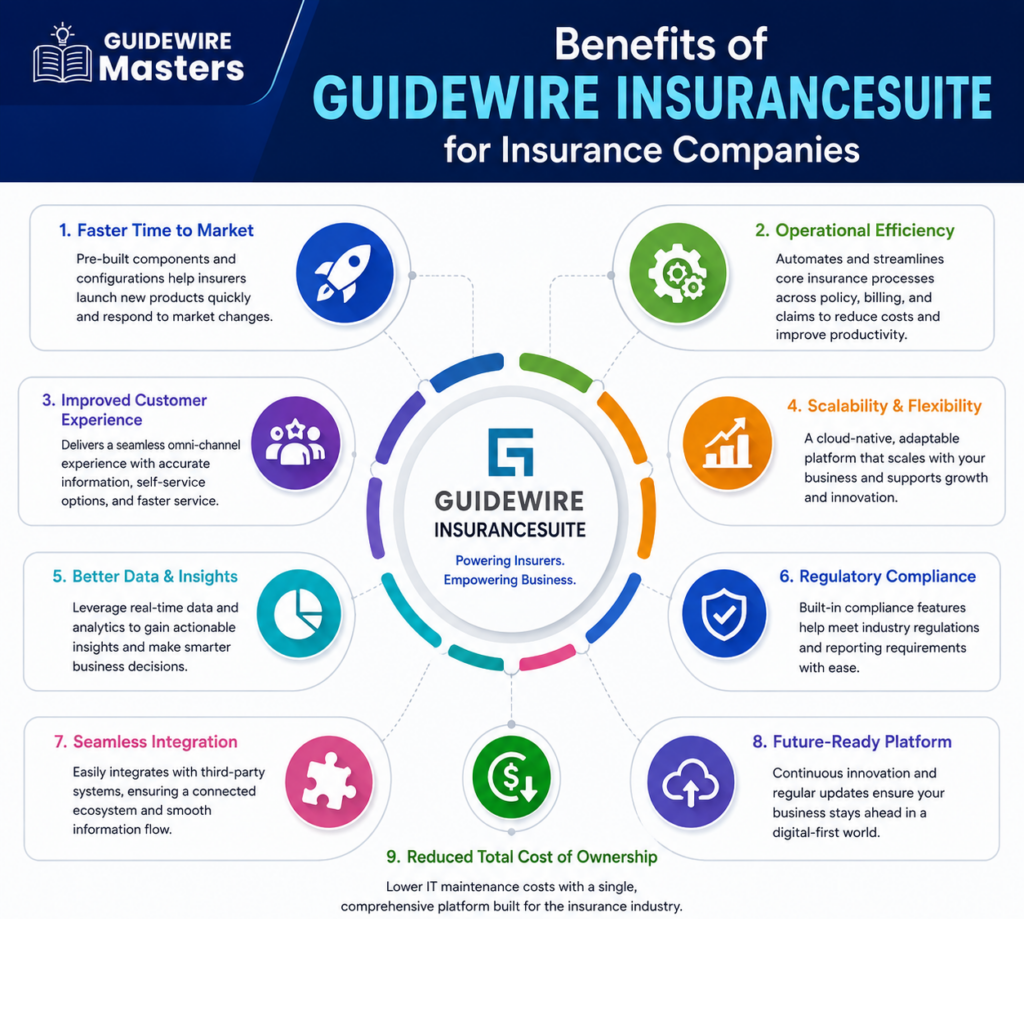
Guidewire InsuranceSuite delivers machine learning-powered underwriting decisioning embedded within a full policy, billing, and claims core system. It’s the right pick for large P&C carriers that want a single platform rather than point solutions. The tradeoff is significant implementation complexity and cost, mid-market carriers often find the lift disproportionate to their volume.
3. Send Technology – Underwriting Workbench for Commercial and Specialty Lines Workflow Automation
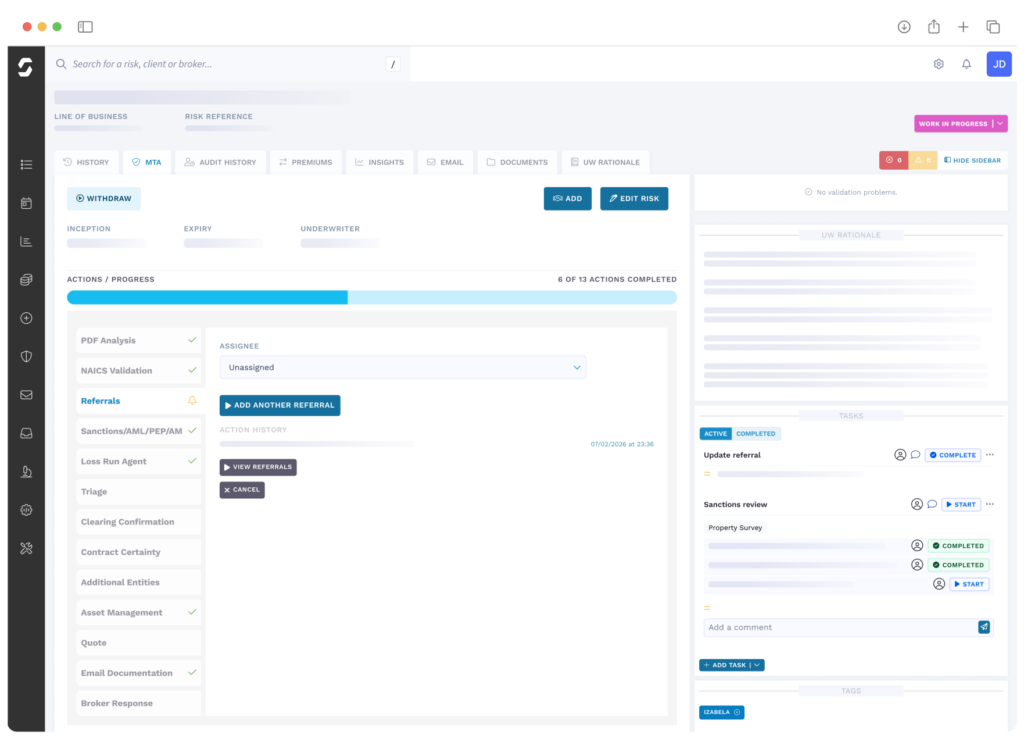
Send is an award-winning underwriting platform purpose-built for commercial and specialty insurers, connecting underwriting data, workflows, and decisions in one place. It excels at reducing manual touchpoints across complex, multi-line submissions. Best for MGAs and specialty carriers managing high-touch risks. The tradeoff is that it’s less suited to personal lines carriers seeking high-volume, straight-through processing.
4. Pinpoint Predictive – Predictive Loss Ratio Scoring for Personal Lines Carriers
Pinpoint Predictive uses behavioral data science and AI triage to score applicants on predicted loss ratios before binding, helping underwriters prioritize the riskiest submissions. It’s ideal for personal lines carriers looking to improve loss ratios without adding headcount. The key limitation is that its models require substantial historical loss data to calibrate accurately, making it less effective for newer or niche carriers.
5. Archipelago – AI-Powered Property Risk Assessment Platform for Commercial Brokers

Archipelago uses AI to standardize, enrich, and analyze property data for commercial real estate risks, giving brokers and underwriters one authoritative record for complex property portfolios. It’s the right pick for brokers managing large, data-heavy property schedules where inconsistent data causes pricing errors. The tradeoff is that it’s narrowly focused on property risk and doesn’t extend to casualty or specialty lines.
6. ScienceSoft AI Underwriting Solutions – Custom AI Development for Insurers Needing Bespoke Risk Models

ScienceSoft offers custom-built AI underwriting solutions tailored to an insurer’s specific risk appetite, data sources, and regulatory environment. It’s the right pick for carriers whose unique book of business makes off-the-shelf models a poor fit. The tradeoff is that custom development timelines and costs are substantially higher than deploying a pre-built SaaS platform, requiring strong internal data governance.
7. Jinba.io – Automated Underwriting System Evaluation Platform for Carrier Technology Selection

Jinba.io provides structured, auditability-focused evaluations of automated underwriting systems, helping carriers cut through vendor marketing to assess real deployment complexity and time-to-value. It’s best for technology leaders at insurance carriers who need a rigorous framework before committing to an AUS vendor. The limitation is that it functions as an advisory and evaluation layer rather than a deployable underwriting engine itself.
8. Acuvate Predictive Analytics Platform – BI-Integrated Underwriting Intelligence for Mid-Market Insurers

Acuvate’s predictive analytics platform integrates with existing BI stacks to deliver underwriting intelligence, fraud signals, and risk scoring without requiring a full core system replacement. It’s well-suited for mid-market insurers that have data but lack the analytical infrastructure to act on it. The tradeoff is that integration complexity with legacy policy admin systems can extend deployment timelines significantly.
9. Verisk Underwriting Solutions – Data Enrichment and External Risk Signal Platform for P&C Underwriters
Verisk provides industry-standard external data enrichment, including ISO loss costs, aerial imagery, and telematics signals, that feeds directly into underwriting scoring models. It’s the right pick for carriers that need authoritative third-party risk data to supplement internal models. The tradeoff is that Verisk’s data licensing costs are substantial, and smaller carriers may find the ROI harder to justify at lower submission volumes.
10. Majesco Underwriting 360 – Cloud-Native Underwriting Automation Suite for Growth-Stage Carriers
Majesco Underwriting 360 delivers cloud-native, AI-assisted underwriting automation with configurable rules engines and straight-through processing for standard risks. It’s ideal for growth-stage carriers and MGAs that need to scale submission capacity without proportional headcount growth. The tradeoff is that highly complex or manuscript risks still require significant manual underwriter intervention outside the platform’s automation scope.
11. Cytora – AI Risk Digitization Engine for Automating Commercial Lines Submission Intake
Cytora uses AI to digitize and enrich unstructured submission data, emails, PDFs, broker submissions, transforming them into structured risk profiles for underwriter review. It’s the right pick for commercial lines insurers overwhelmed by manual submission intake and data re-keying. The key limitation is that Cytora functions as an intake and enrichment layer, requiring integration with a separate underwriting workbench or core system for decisioning.
12. Shift Technology – AI Fraud Detection and Risk Scoring Platform Embedded in Underwriting Workflows
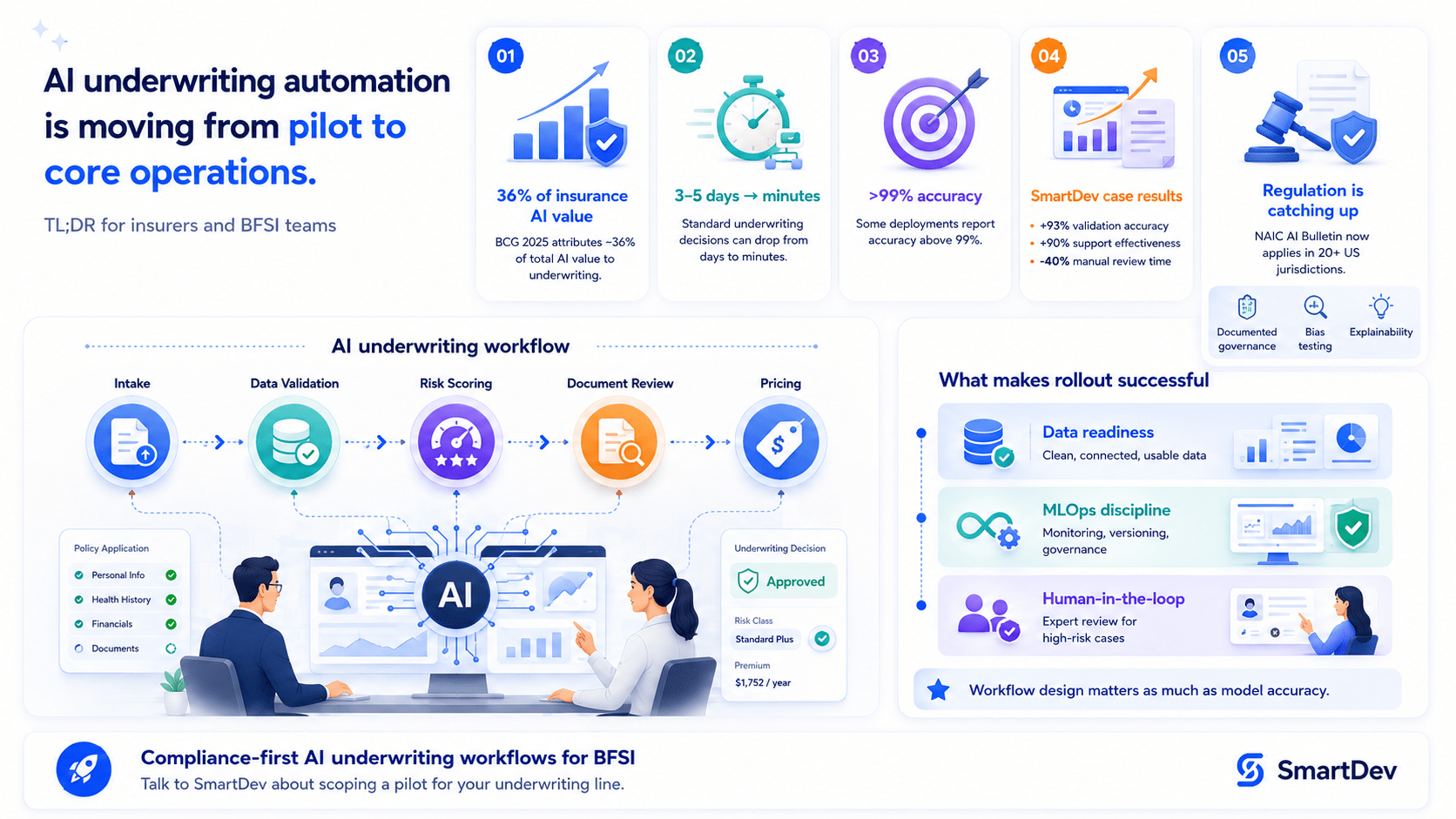
Shift Technology applies AI to detect fraud signals and anomalous risk patterns at the underwriting stage, not just at claims, giving carriers earlier intervention points. It’s best for carriers with significant fraud exposure in high-volume personal or commercial lines. The tradeoff is that Shift’s fraud-first orientation means its underwriting risk scoring is narrower than full-spectrum predictive underwriting platforms.
13. Socotra – API-First Policy Administration Platform Enabling Custom Underwriting Automation Pipelines

Socotra’s modern, API-first policy administration platform allows carriers and MGAs to build custom underwriting automation pipelines by connecting best-of-breed AI scoring tools via open APIs. It’s ideal for insurtech-forward carriers that want to own their underwriting logic rather than rely on a vendor’s black-box model. The tradeoff is that this flexibility demands strong internal engineering resources to build and maintain integrations.
14. Cape Analytics – Geospatial AI Platform for Property Underwriting Risk Scoring at Scale

Cape Analytics uses computer vision and geospatial AI to analyze aerial and satellite imagery, generating property condition scores and risk attributes for underwriting without requiring physical inspections. It’s the right pick for home and commercial property insurers seeking to reduce inspection costs while improving risk accuracy. The tradeoff is geographic coverage gaps in rural or international markets where imagery resolution is lower.
15. Unqork – No-Code Underwriting Workflow Automation Platform for Rapid Product Launches
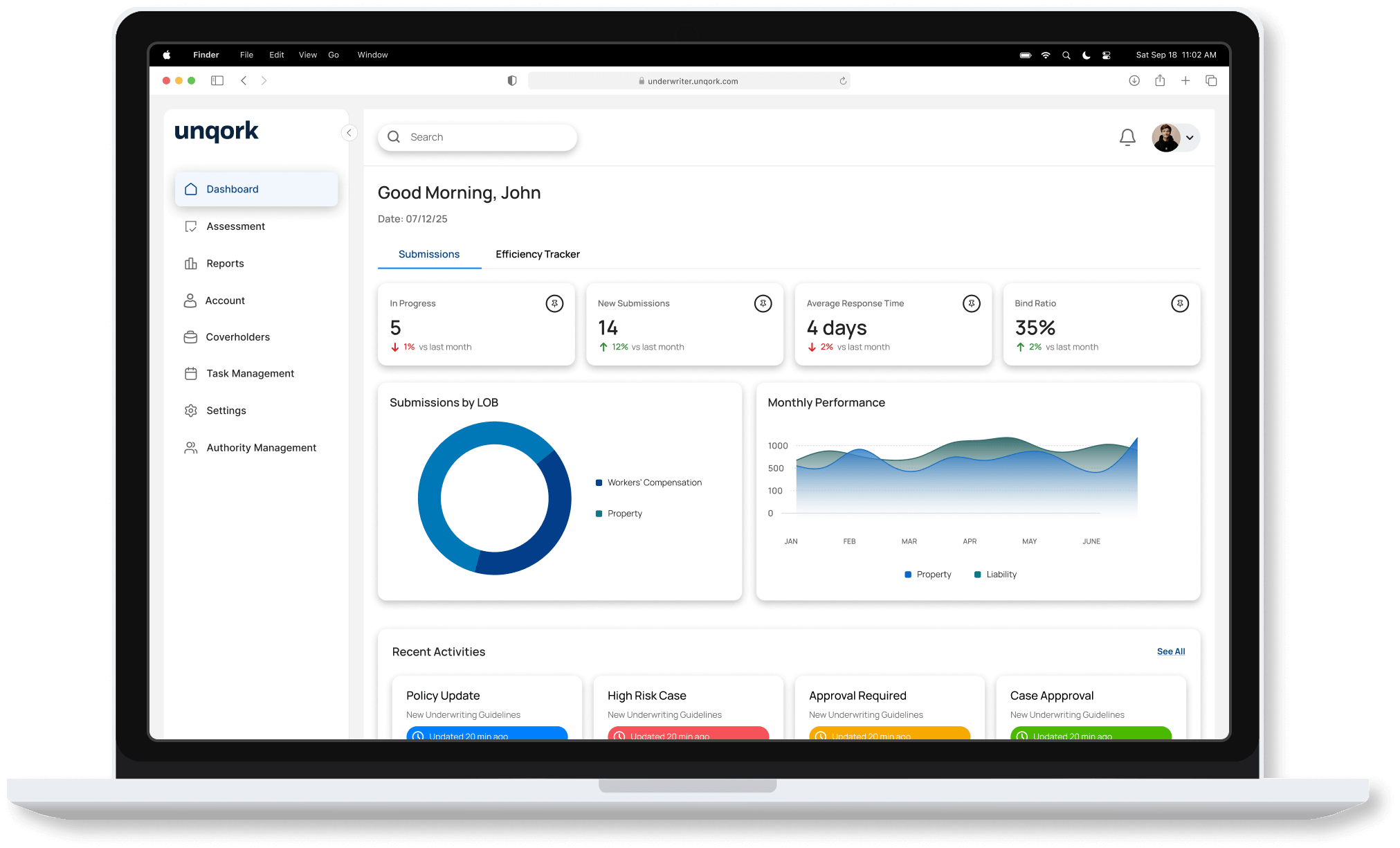
Unqork’s no-code enterprise platform lets insurance product teams build and deploy underwriting workflows, eligibility rules, and risk questionnaires without writing code, dramatically compressing time-to-market for new products. It’s best for carriers and MGAs launching new lines where speed matters more than deep AI model sophistication. The tradeoff is that complex, data-intensive risk scoring still requires integration with external AI engines.
16. Gradient AI – Machine Learning Underwriting and Loss Prediction Platform for Group Benefits and Workers’ Comp

Gradient AI specializes in machine learning models trained on large insurance datasets to predict underwriting risk and loss outcomes specifically for group health, benefits, and workers’ compensation lines. It’s the right pick for carriers in these segments seeking actuarially grounded AI rather than generic ML. The tradeoff is its specialization, carriers writing diverse commercial or specialty lines will find limited applicability outside its core segments.
17. Planck – AI Commercial Underwriting Data Platform for Automated Business Risk Intelligence
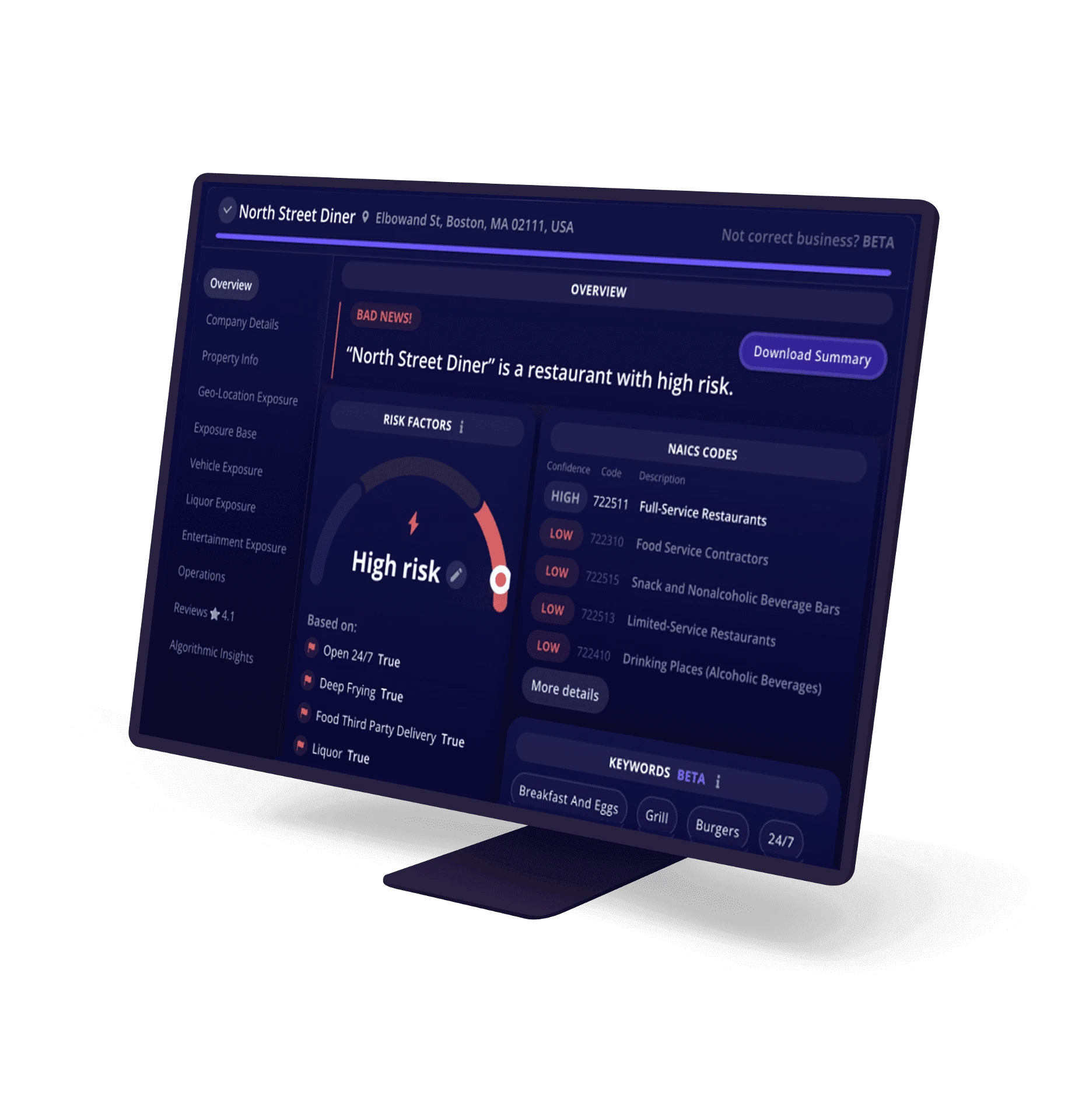
Planck uses AI to automatically gather and analyze publicly available data about commercial businesses, websites, social media, permits, reviews, to generate risk intelligence for underwriters without requiring applicants to fill out lengthy questionnaires. It’s ideal for small commercial lines where submission data is sparse. The tradeoff is that data quality depends on the applicant’s digital footprint, creating blind spots for businesses with minimal online presence.
18. Zywave – Insurtech Data and Analytics Platform for Agency-Side Underwriting Support and Market Access

Zywave provides agencies and brokers with data analytics, risk benchmarking, and market access tools that support the underwriting submission process from the distribution side. It’s best for independent agencies that want to present better-quality, data-enriched submissions to carriers to improve bind rates. The tradeoff is that Zywave operates on the agency side of the transaction and doesn’t replace carrier-side underwriting AI.
19. RiskGenius (now Cotality): Best AI Policy Language Analysis Tool for Underwriting Coverage Consistency
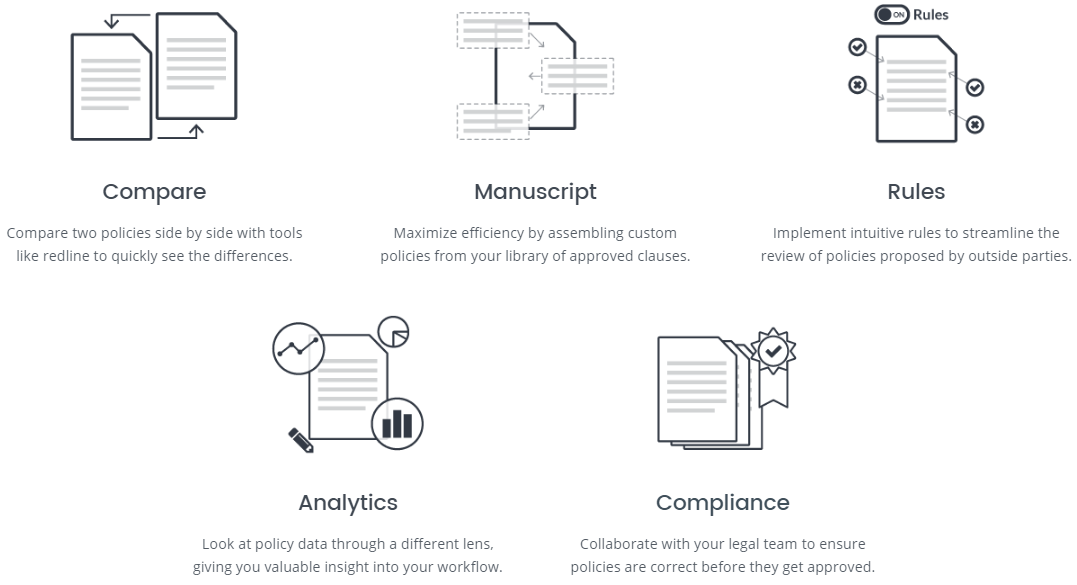
RiskGenius, now part of Cotality, uses AI to analyze and compare policy language, helping underwriters identify coverage gaps, inconsistencies, and non-standard terms that create unexpected risk exposure. It’s the right pick for carriers and MGAs that write manuscript or specialty policies where language variation creates material underwriting risk. The tradeoff is that it’s a specialized tool focused on policy text analysis rather than quantitative risk scoring.
20. HSB (Munich Re) AI Underwriting – Specialty AI Liability Risk Assessment for Emerging Technology Risks

HSB, a Munich Re specialty insurer, has developed AI liability underwriting frameworks specifically for businesses exposed to AI technology risks, combining actuarial depth with emerging risk modeling. It’s the right pick for carriers and MGAs entering the AI liability market who need a reinsurance-backed risk scoring foundation. The tradeoff is that this is a nascent product category with limited historical loss data, making pricing models inherently less stable than mature lines.
Related Reading
- Insurance Premium Payment Automation
- Insurance Premium Collection Process
- Insurance Agency Efficiency
Claims Processing and Fraud Detection Automation Tools – Faster Settlements, Fewer Bad Actors
Fraud detection has a reputation problem inside most claims operations. The assumption runs like this: more fraud controls equal more review steps, more review steps equal slower settlements, and slower settlements are the price of keeping bad actors out. That logic feels airtight until you look at what modern fraud-scoring platforms actually do.
The real sequence is the opposite. Tools like Shift Technology and Tractable score claims for fraud risk at first notice of loss, which means the large majority of clean claims get identified immediately and routed to touchless settlement. Human review concentrates on the small fraction that actually warrants it.
Key takeaway: Fraud automation is the mechanism that makes speed safe.
The financial stakes justify the investment. Fraud costs carriers enormous sums annually, as documented by law enforcement and industry anti-fraud organizations.
The competitive argument extends beyond loss prevention. Better fraud scoring means fewer clean claims get caught in manual review queues, which shortens cycle times for the policyholders who did nothing wrong. Riskonnect identifies straight-through processing, claims that move from intake to resolution without manual touchpoints, as one of the highest-leverage improvements a carrier can make to customer experience, precisely because it compresses the gap between a clean claim being filed and a policyholder receiving resolution.
There is one bottleneck the fraud layer cannot fix on its own. Once a legitimate claim clears automated review in minutes, the policyholder still has to wait for disbursement. If that final payment step runs on manual ACH batches or paper checks, the carrier has delivered speed to its own workflow and friction to the customer. Retail agents feel this acutely: slow or bounced checks generate call volume, erode trust, and slow down the onboarding of new clients, a pattern ePayPolicy was built to eliminate. Platforms like ePayPolicy close that last-mile gap by automating the payment leg of the claims workflow with insurance-native trust accounting and connected reconciliation, so the speed that fraud automation unlocks at intake is felt by the policyholder at settlement.
For operations that regularly issue high volumes of outbound payments to agents or partners, ePayPolicy’s Payables Connect and Network Payables products eliminate paper-check printing and mailing entirely, converting a manual, error-prone step into a connected, auditable disbursement workflow. For agencies with management-system integrations in place and clients on predictable recurring billing, AutoPay removes the manual collection loop: clients opt in at the payment page or during onboarding, and payments run automatically each billing cycle thereafter. CheckMate addresses the bounced-check problem at the source, reducing the back-and-forth that stalls settlements and frustrates agents.
And for carriers and agencies that need a unified view across premium finance and payment activity, Finance Connect and Quotes & Invoices bring those data streams into a single, reconciled environment. As Riskonnect notes, straight-through processing gains are only realized end-to-end when every handoff in the workflow, including the final payment, is automated; a fast claims decision followed by a paper check is still a broken experience.
The 17 tools below cover the full claims and fraud detection stack, from computer vision damage assessment to enterprise fraud suites to virtual appraisal platforms. Each entry is written for the buyer who needs to match a specific workflow gap to the right tool rather than scan a feature checklist.
1. ePayPolicy – Insurance-Native Payment & Reconciliation Automation
Built exclusively for insurance, epaypolicy.com eliminates paper checks, manual reconciliation, and binding delays by natively automating trust accounting, premium financing, and payment collection inside your existing management system. It’s the right pick for agencies and carriers tired of duct-taping generic payment tools to insurance workflows. The one tradeoff: its deep insurance specificity means it’s not a fit for businesses outside the industry.
2. Appian Connected Claims – Low-Code Claims Orchestration Platform
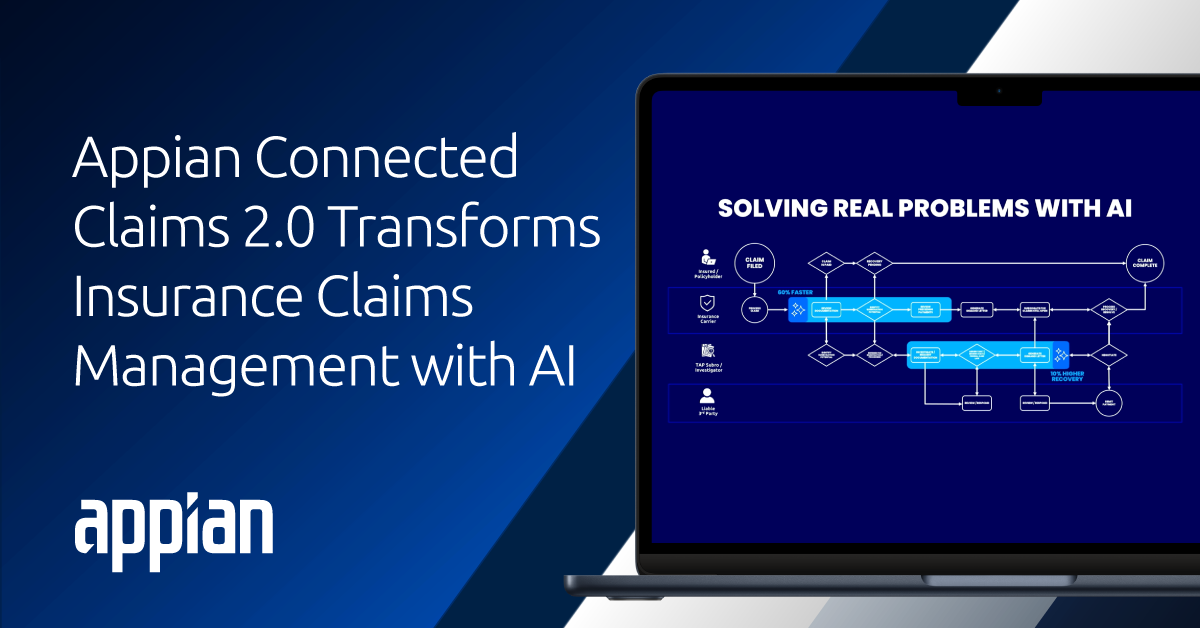
Appian’s Connected Claims platform unifies data, people, and systems across the entire claims lifecycle using low-code automation and AI. It’s ideal for mid-to-large carriers that need to reduce claims leakage and improve adjuster efficiency without ripping out legacy systems. The platform’s breadth is a strength, but smaller insurers may find the implementation complexity and enterprise pricing a barrier to fast deployment.
3. SAS Fraud & Financial Crimes Compliance – AI-Powered Insurance Fraud Detection

SAS delivers advanced machine learning and network analytics to detect insurance fraud patterns that rules-based systems miss, including organized fraud rings and soft fraud. It’s the right choice for large carriers with high claim volumes where false negatives carry significant financial risk. The tradeoff is a steep implementation investment and the need for skilled data science resources to tune and maintain the models over time.
4. Blue Prism RPA for Claims – Robotic Process Automation for Claims Back-Office

Blue Prism’s intelligent automation platform deploys software robots to handle repetitive claims tasks, data entry, status updates, document routing, freeing adjusters for complex decisions. It’s best suited for carriers with high-volume, structured claims workflows where manual processing creates bottlenecks. The key limitation is that RPA alone struggles with unstructured data like handwritten notes or complex medical records without additional AI layering.
5. Fygurs AI Claims Triage – Computer Vision & NLP Claims Classification Tool
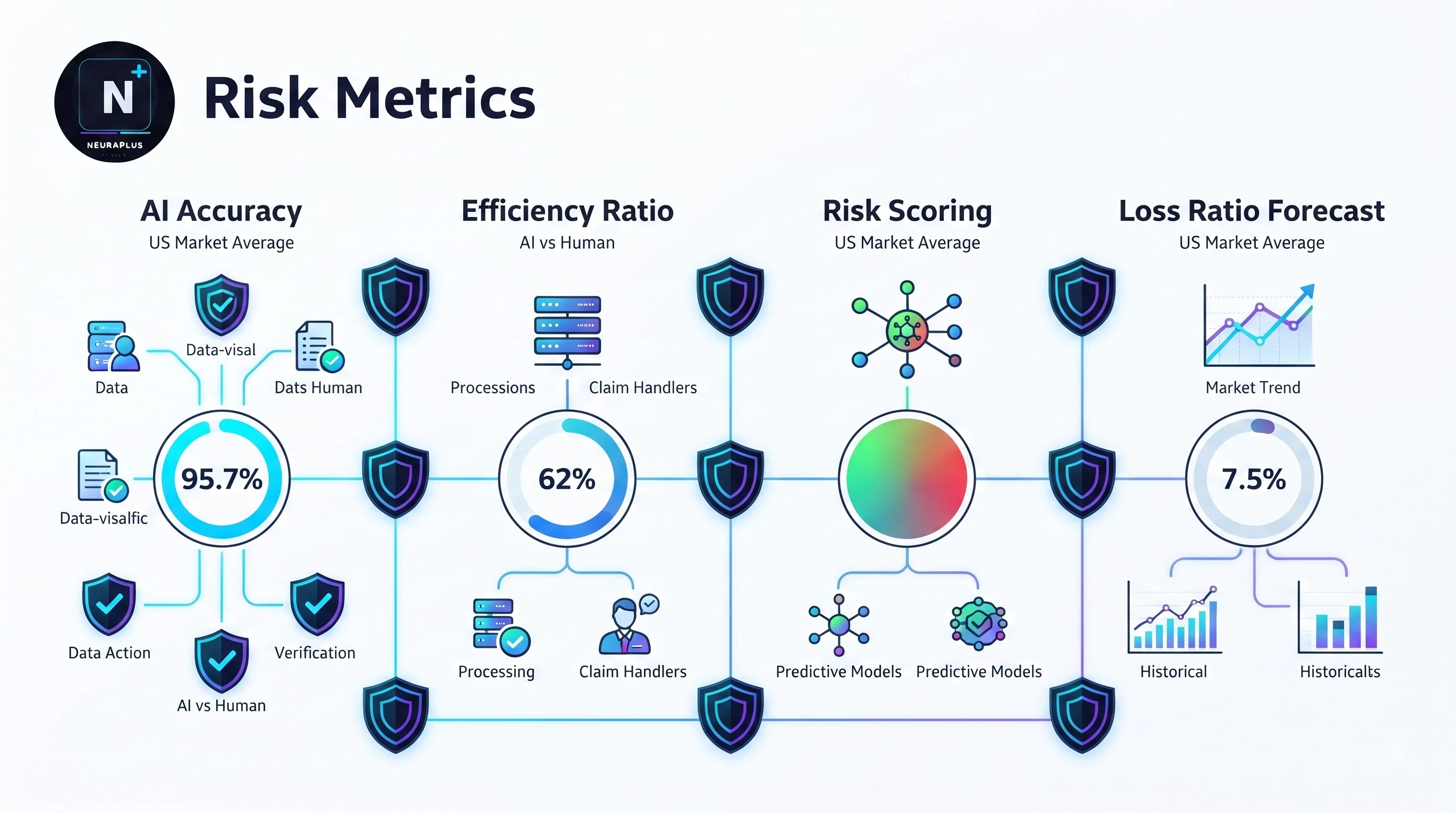
Fygurs uses computer vision and NLP to automatically assess, classify, and route incoming insurance claims to the right handler or workflow without manual intervention. It’s a strong fit for insurers dealing with high intake volumes across multiple claim types who need faster first-touch triage. The tradeoff is that accuracy depends heavily on training data quality, so carriers with niche or low-volume claim types may see lower out-of-box performance.
6. DocLens.ai – NLP Engine for Complex P&C Claims Document Extraction
DocLens.ai specializes in extracting structured data from the messy, unstructured documents that define complex P&C claims, medical records, legal correspondence, police reports, and handwritten forms. It’s the right pick for carriers whose adjusters spend hours manually reviewing document stacks before they can even begin adjudication. The limitation is that it’s a document intelligence layer, not a full claims management system, so integration work is required.
7. Verisk Claims Analytics – Predictive Analytics Platform for Claims Severity Scoring

Verisk’s claims analytics suite uses predictive models to score incoming claims for severity, litigation likelihood, and fraud risk at first notice of loss, enabling smarter triage and reserve-setting. It’s ideal for P&C carriers that want to move from reactive to proactive claims management. The tradeoff is that Verisk’s data ecosystem creates dependency on their proprietary data assets, which can limit flexibility for carriers wanting to use their own data models.
8. Tractable AI – Computer Vision Tool for Auto Damage Assessment Automation

Tractable applies deep learning computer vision to analyze vehicle damage photos and generate repair cost estimates in seconds, dramatically accelerating auto claims settlement. It’s the right tool for auto insurers and body shop networks looking to cut cycle times and reduce the need for in-person appraisals. The limitation is that edge cases, unusual vehicles, severe structural damage, or poor photo quality, still require human adjuster review to avoid estimate errors.
9. Shift Technology – AI Fraud Detection Suite for End-to-End Claims Integrity
Shift Technology delivers AI-native fraud detection and claims automation purpose-built for insurers, combining anomaly detection, network link analysis, and natural language processing across the full claims workflow. It’s best for carriers that want a single fraud and automation vendor rather than assembling point solutions. The tradeoff is that Shift’s pricing is enterprise-tier, making it less accessible for regional or specialty carriers with tighter technology budgets.
10. Guidewire ClaimCenter – Core Claims Management System with Embedded Automation
Guidewire ClaimCenter is the market-leading core claims management platform, offering embedded automation rules, workflow orchestration, and a rich ecosystem of insurtech integrations. It’s the right foundation for carriers undergoing digital transformation who need a proven, scalable system of record. The key limitation is implementation cost and timeline, ClaimCenter deployments are significant undertakings that require experienced SI partners and multi-year commitment.
11. Lumenalta Computer Vision Insurance Solutions – Custom CV Build Partner for Damage Assessment

Lumenalta helps insurers design and deploy custom computer vision solutions for property and auto damage assessment, fraud image analysis, and telematics-based risk scoring. It’s the right partner for carriers that need bespoke AI capabilities not available off-the-shelf. The tradeoff is that custom builds require longer timelines and ongoing model maintenance investment compared to buying a pre-trained vendor solution.
12. LatentView NLP Analytics – NLP Analytics Consultancy for Insurance Sentiment & Claims Text Mining
LatentView Analytics applies NLP to insurance use cases including claims text mining, customer sentiment analysis, underwriting document review, and fraud narrative detection. It’s a strong fit for carriers that have rich unstructured data assets but lack the internal data science capacity to extract value from them. The limitation is that as a consultancy-led model, ongoing support and iteration depend on continued engagement rather than a self-serve product.
13. One Inc Digital Payments – Digital Premium Payment Platform for Carrier Disbursements

One Inc provides a digital payments network for insurance carriers focused on claims disbursements and premium collections, supporting multiple payment rails including ACH, virtual card, and digital wallets. It’s best for carriers that need to modernize outbound claims payments alongside inbound premium collection. The tradeoff compared to insurance-native platforms is that trust accounting automation and agency management system integration depth may require additional configuration.
14. Snapsheet – Virtual Appraisal & Touchless Claims Settlement Platform
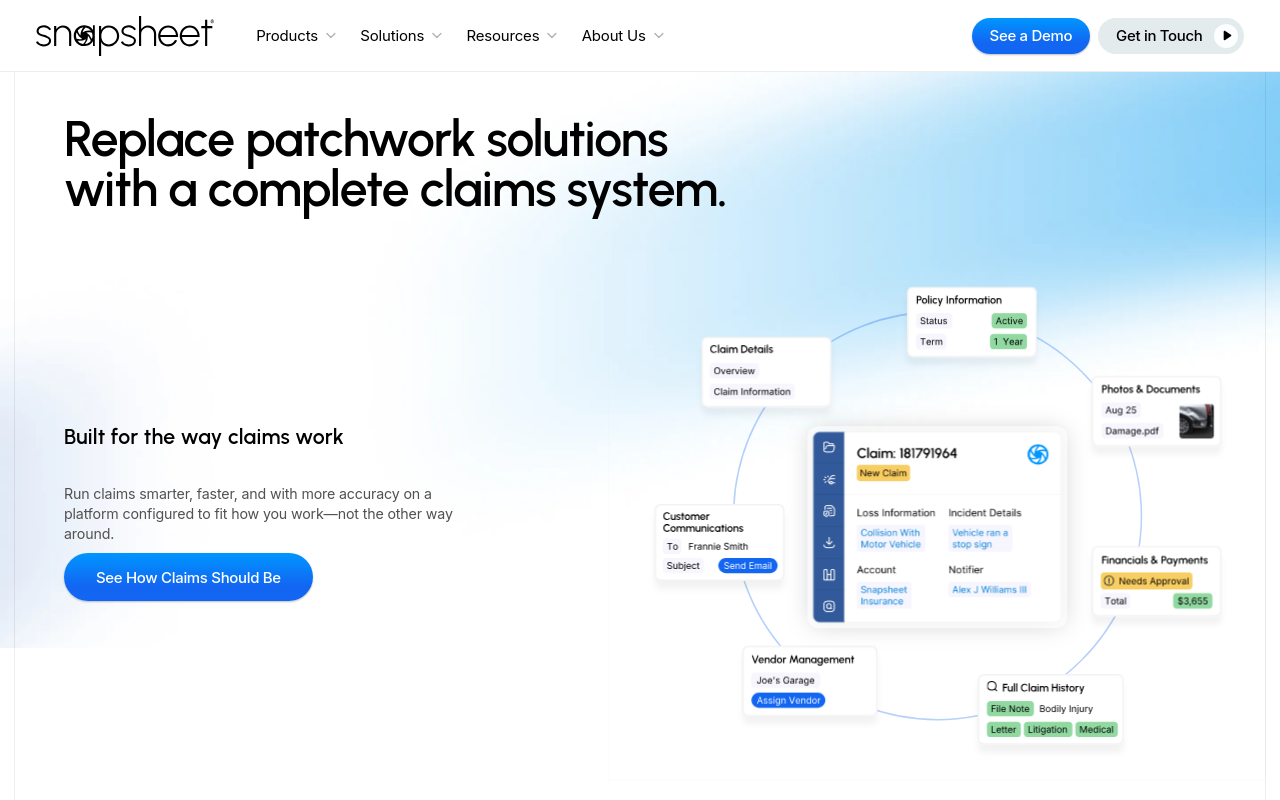
Snapsheet pioneered virtual appraisal technology, enabling policyholders to submit vehicle damage photos via mobile app for AI-assisted estimate generation and rapid settlement without a physical inspection. It’s ideal for auto insurers prioritizing customer experience and cycle time reduction. The limitation is that its strength is in auto physical damage, carriers with complex liability or bodily injury claims will need complementary tools for those workflows.
15. Palantir Foundry for Insurance – Enterprise Data Integration Platform for Claims Intelligence
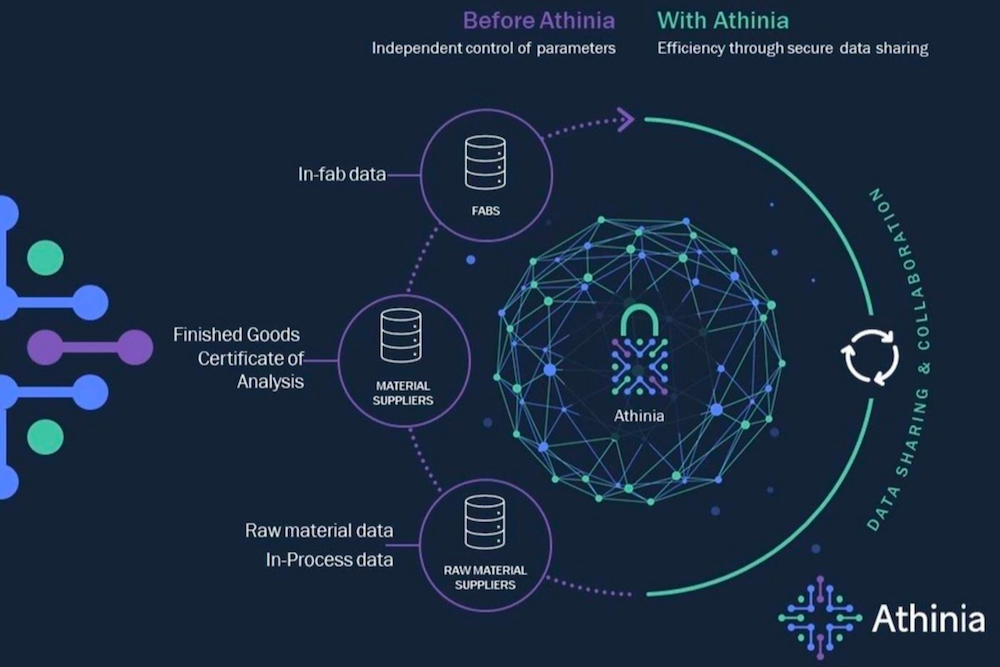
Palantir Foundry enables large insurers to integrate siloed claims, policy, and external data sources into a unified ontology, powering advanced fraud detection, reserve modeling, and operational analytics. It’s the right fit for carriers with complex data environments and the appetite for a strategic data platform investment. The tradeoff is significant: Palantir requires substantial implementation resources and executive commitment, making it unsuitable for carriers seeking quick wins.
16. Zelros AI – AI Recommendation Engine for Claims Handler Decision Support

Zelros delivers an AI-powered recommendation layer that sits alongside claims handlers, surfacing next-best-action guidance, coverage verification, and fraud alerts in real time during claim adjudication. It’s best for carriers that want to augment adjuster performance without replacing their existing claims system. The limitation is that recommendation quality depends on the richness of historical claims data fed into the model, which can be a challenge for newer or smaller carriers.
17. Gradient AI – Machine Learning Underwriting & Claims Severity Prediction Tool
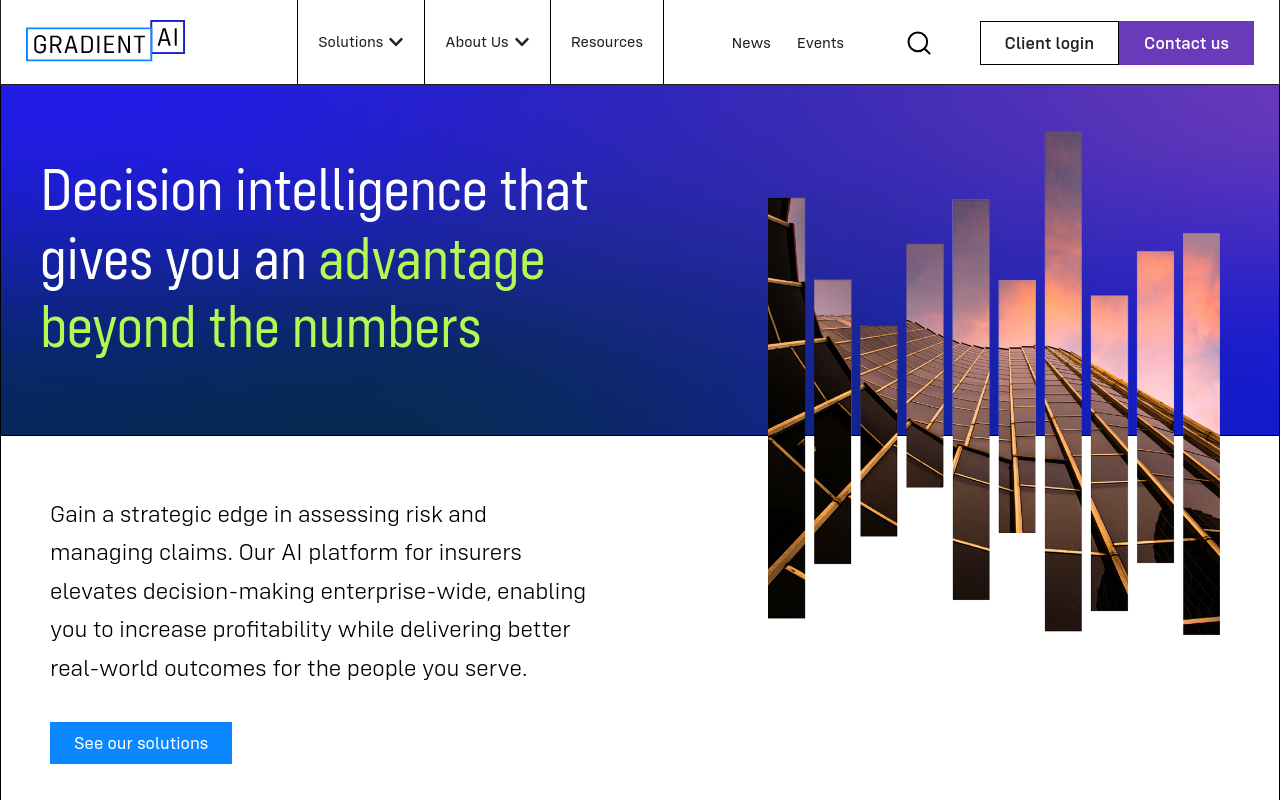
Gradient AI applies machine learning to predict claims severity, loss ratios, and underwriting risk using both structured carrier data and external data signals. It’s a strong fit for commercial lines carriers looking to improve pricing accuracy and proactively flag high-severity claims for early intervention. The tradeoff is that model performance improves significantly with larger historical datasets, so carriers with thin loss histories in niche lines may see limited initial lift.
18. EXL Insurance Analytics – BPO-Plus-AI Hybrid for Claims Processing Transformation
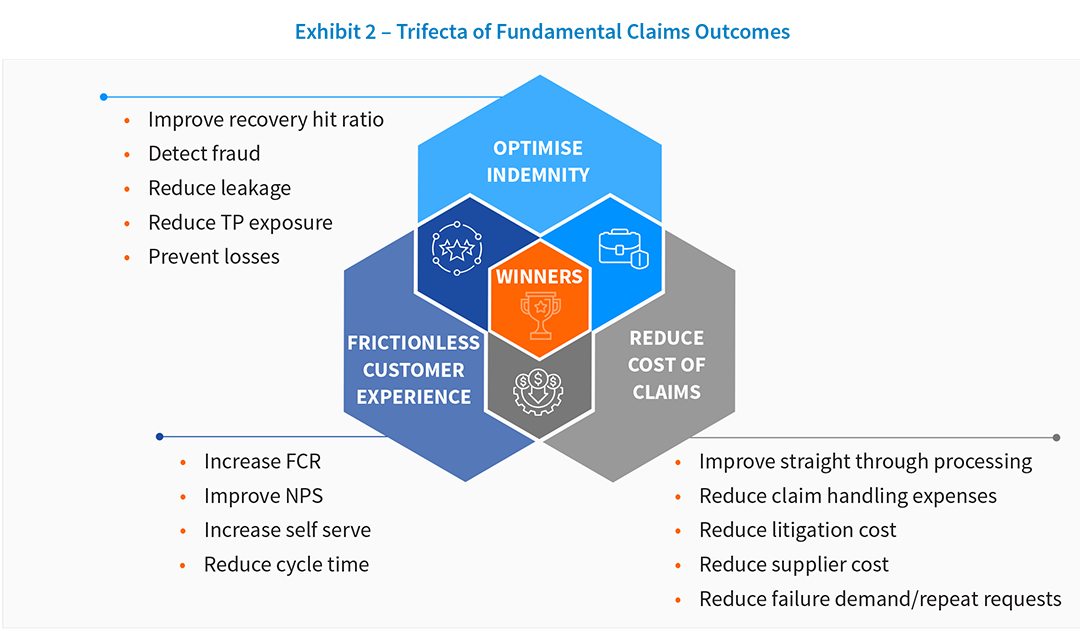
EXL combines business process outsourcing expertise with proprietary AI and analytics tools to deliver end-to-end claims processing transformation, including fraud detection, subrogation identification, and medical bill review. It’s the right choice for carriers that want to outsource claims operations while embedding AI capabilities rather than building them in-house. The tradeoff is that the BPO model means less direct control over day-to-day processing decisions compared to a fully internalized technology platform.
Enterprise Core Suites and RPA Platforms for Insurance Carriers – Orchestrating the Whole Stack
Enterprise core suites and RPA platforms represent the most sophisticated automation infrastructure the insurance industry has built. For large P&C carriers running millions of policies, platforms like Guidewire InsuranceSuite, Duck Creek Technologies, and UiPath’s insurance automation layer have proven that end-to-end orchestration across policy administration, claims, and underwriting is operationally viable at scale. The question independent agencies and mid-market MGAs should ask is not whether these platforms work. They do. The question is whether they were built for you, and whether they close the workflow gaps you actually have.
Broader industry trends make clear that InsuranceSuite is designed explicitly for enterprise P&C carriers requiring deep integration across core operational systems. That design assumption matters. It means the platform’s billing module, its reconciliation logic, and its payment workflows were engineered for carrier-scale environments with dedicated IT teams, multi-year implementation budgets, and legacy mainframe migration capacity.
For independent agencies and smaller MGAs, that design works against them rather than for them. As Decerto’s analysis of core insurance software selection notes, the fit between a platform’s design assumptions and an organization’s operational profile is often the decisive factor, and mid-market agencies routinely find that enterprise suites leave their actual payment collection and reconciliation workflows unaddressed.
The RPA layer tells a similar story. UiPath’s insurance automation deployments have delivered measurable reductions in claims processing time across large carrier back-offices. What most teams report are double-digit percentage reductions in manual processing hours in P&C claims operations from RPA deployments, with bots handling document routing, data extraction, and status updates at volume. The tradeoff is that RPA bots are only as useful as the structured workflows they can touch, and premium collection, trust accounting reconciliation, and paper check digitization consistently fall outside the clean data pathways bots require. The manual exception handling that remains after an RPA deployment is often concentrated exactly there: at the payment collection step.
A compounding problem for agencies trying to close that gap with custom integrations: engineering teams frequently struggle with brittle, hand-rolled webhook code and polling mechanisms when connecting ERP platforms like NetSuite into broader enterprise automation stacks. Built-in connectors, rather than custom one-off builds, are what make those connections stable. ePayPolicy’s Finance Connect addresses this directly, providing a native connector that brings payment data into ERP and agency management systems without the ongoing maintenance that custom-built connections require.
This is the gap that most enterprise automation conversations skip. Agencies and carriers investing in insurance billing software that connects directly to their existing agency management systems can convert that last manual handoff into a connected, auditable payment workflow without launching a separate enterprise implementation project. ePayPolicy’s product suite is built precisely around this: Quotes & Invoices, AutoPay, CheckMate, Network Payables, and Payables Connect each address a specific point in the receivables and payables cycle that enterprise platforms leave exposed.
AutoPay is most beneficial when the agency has a management-system integration in place and clients have predictable recurring invoices. Once a client opts in at the payment page or during onboarding, it runs automatically each billing cycle without further manual touchpoints. CheckMate digitizes inbound paper checks, which is most beneficial when the agency or carrier currently collects payments by paper check or phone and wants to digitize receivables quickly. Payables Connect and Network Payables address the outbound side: most beneficial when the business regularly issues high volumes of outbound checks to agents or partners and wants to eliminate paper-check printing and mailing.
The thirteen platforms below span the full carrier-grade spectrum, from cloud-native policy suites to compliance-focused intelligent automation. Each entry identifies the specific carrier profile, use case, and honest tradeoff that should drive the shortlist decision.
1. ePayPolicy – Insurance-Native Payment Automation for Carriers

Epaypolicy.com is the only payment automation platform built exclusively for insurance, natively handling trust accounting, premium financing reconciliation, and paper check digitization inside your existing management system. Carriers and MGAs eliminating manual reconciliation and binding delays will find no closer fit. The tradeoff: its deep insurance-specificity means it is not a general-purpose payment processor, so organizations outside insurance gain little from it.
2. Guidewire InsuranceSuite – End-to-End Core Platform for Tier-1 P&C Carriers

Guidewire InsuranceSuite bundles PolicyCenter, BillingCenter, and ClaimCenter into a unified cloud platform, giving large P&C carriers a single orchestration layer across the full policy lifecycle. It is the benchmark choice when enterprise scale, deep configurability, and a massive partner ecosystem are non-negotiable. The real tradeoff is implementation complexity and cost, mid-market carriers often find the TCO prohibitive without a dedicated integration team.
3. Duck Creek Technologies – Cloud-Native Suite for Agile Product Launches

Duck Creek Technologies delivers a cloud-native policy and billing platform built for carriers that need to move new insurance products from concept to market without the multi-year configuration cycles traditional core systems require. Its low-code product configuration layer is the core differentiator. The real tradeoff: Duck Creek’s depth rewards carriers with dedicated product management teams; smaller operations without that internal capacity often find the configurability harder to extract than the vendor materials suggest.
4. Sapiens ALIS – Life & Annuity Policy Administration for Complex Product Portfolios

Sapiens ALIS handles the actuarial and regulatory complexity of life and annuity product portfolios that generic policy administration systems were never designed to process accurately.
5. UiPath Insurance Automation – RPA Orchestration Platform for Claims and Underwriting Bots

UiPath provides the most mature RPA orchestration layer for insurance carriers deploying attended and unattended bots across claims intake, underwriting data extraction, and regulatory reporting. Its AI-powered document understanding handles unstructured insurance documents at scale. The tradeoff: UiPath is a horizontal platform requiring significant insurance-specific configuration and bot development investment before delivering ROI, it is a building block rather than a ready-to-use insurance solution.
6. Automation Anywhere Insurance Cloud – Hyperautomation Platform for Carrier Back-Office Scale
Automation Anywhere’s cloud-native bot platform targets large carrier back offices running high-volume, repetitive processes like policy endorsements, premium audits, and compliance reporting. Its AARI (Automation Anywhere Robotic Interface) enables attended automation directly within agent desktops. The key limitation is that its insurance-specific pre-built bot library is thinner than competitors, meaning carriers must budget for custom bot development to cover niche insurance workflows.
7. Majesco CloudInsurer – Integrated Core Suite for Mid-Market Carriers Modernizing Legacy Systems
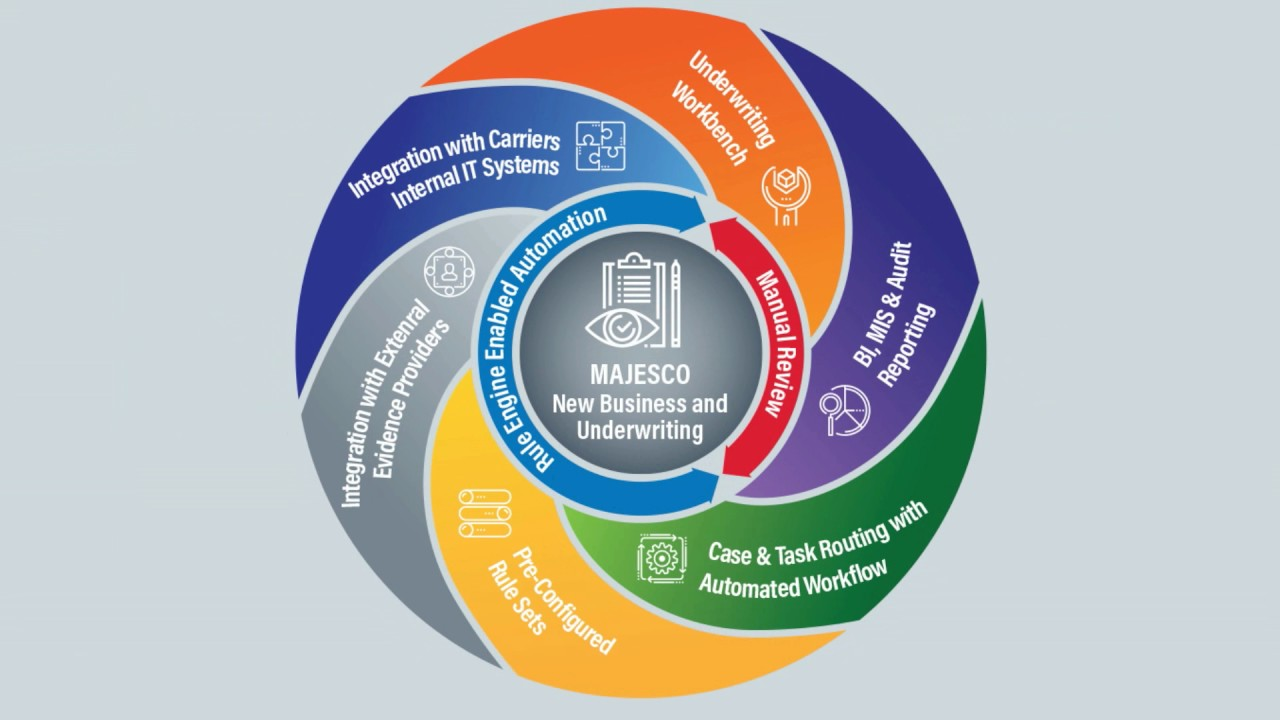
Majesco CloudInsurer targets mid-market P&C and L&A carriers migrating off legacy mainframe systems, offering a pre-integrated suite of policy, billing, claims, and distribution management on AWS. Its migration accelerators and pre-built data conversion tools reduce the risk of legacy lift-and-shift projects. The tradeoff is that its ecosystem of third-party integrations is narrower than Guidewire’s, which can constrain carriers with complex existing vendor relationships.
8. Insurity Policy Decisions – SaaS Policy Administration for Specialty and Surplus Lines Carriers
Insurity Policy Decisions is optimized for specialty, E&S, and program business carriers that need flexible rating and form management outside standard admitted markets. Its cloud SaaS delivery model and pre-built state compliance content reduce time-to-compliance for non-standard lines. The limitation is scalability at the very top end, carriers exceeding certain transaction volumes may run into performance limits that require a deeper technical conversation with Insurity.
9. Equisoft/manage – Life Insurance Policy Administration for Digital Transformation Roadmaps
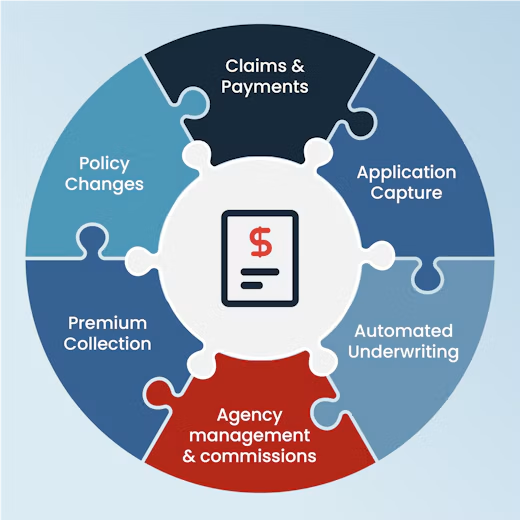
Equisoft/manage is a modern life insurance policy administration system designed to replace aging legacy platforms while preserving business continuity through phased migration. Its API-first architecture enables carriers to layer digital distribution, advisor portals, and analytics tools without a full rip-and-replace. The tradeoff is that it is primarily focused on life and wealth, making it a poor fit for P&C or health carriers seeking a unified multi-line platform.
10. SS&C Blue Prism – Intelligent Automation for Regulated Insurance Compliance Workflows
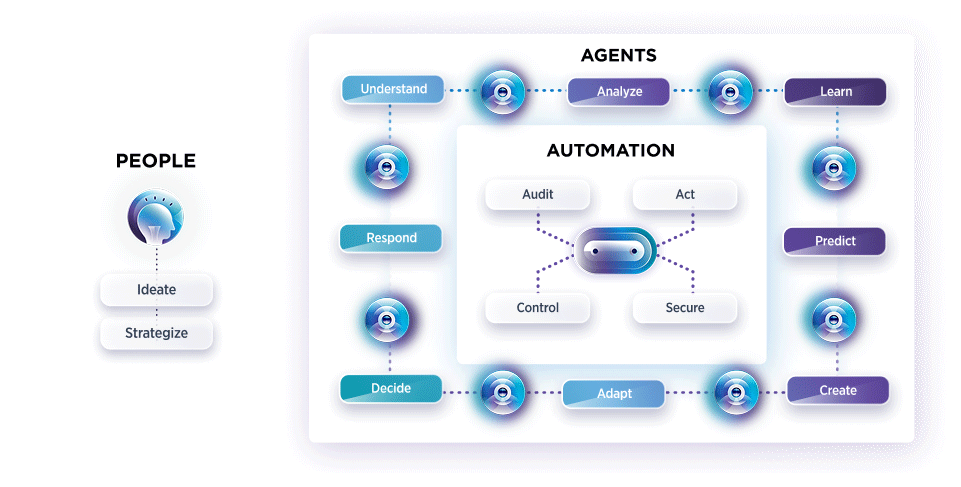
SS&C Blue Prism is the enterprise RPA platform most frequently deployed in heavily regulated insurance environments where audit trails, role-based access controls, and compliance documentation are non-negotiable. Its centralized control room and detailed process logging satisfy internal audit and regulatory examination requirements. The tradeoff is its steeper learning curve and higher licensing cost compared to newer RPA entrants, making it less accessible for carriers without dedicated automation COEs.
11. Pegasystems Insurance Platform – AI-Decisioning Suite for Underwriting and Claims Triage Automation
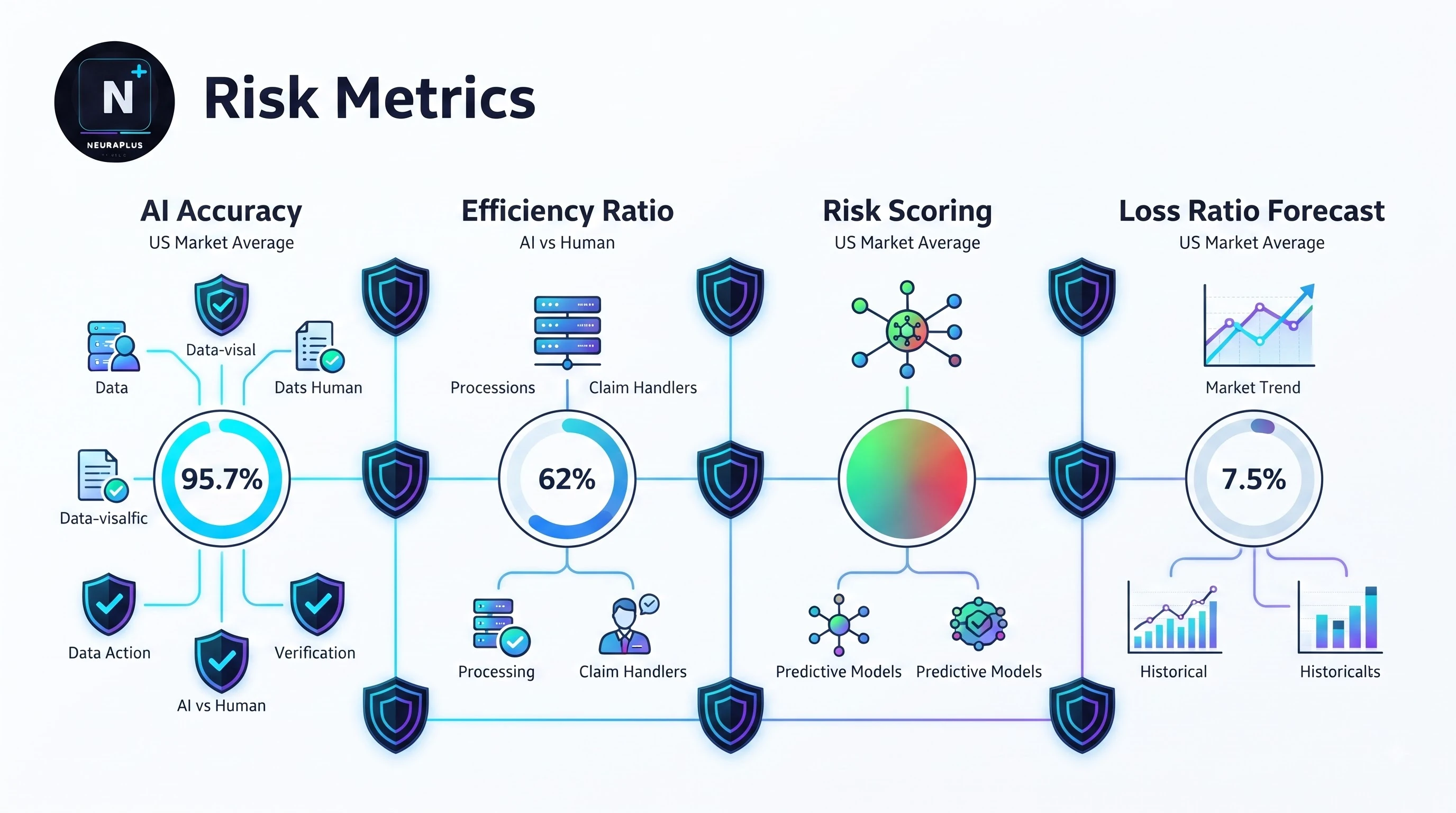
Pega’s insurance platform combines case management, AI-powered decisioning, and process automation into a single layer that sits across policy, claims, and customer service operations. Its real-time AI triage capabilities are particularly strong for complex commercial lines underwriting and multi-step claims adjudication. The limitation is that Pega’s value is maximized only when deployed broadly across multiple insurance functions, point deployments for a single process rarely justify the platform investment.
12. Weecover Insurance Core Platform – Embedded Insurance Automation Suite for MGAs and Program Administrators
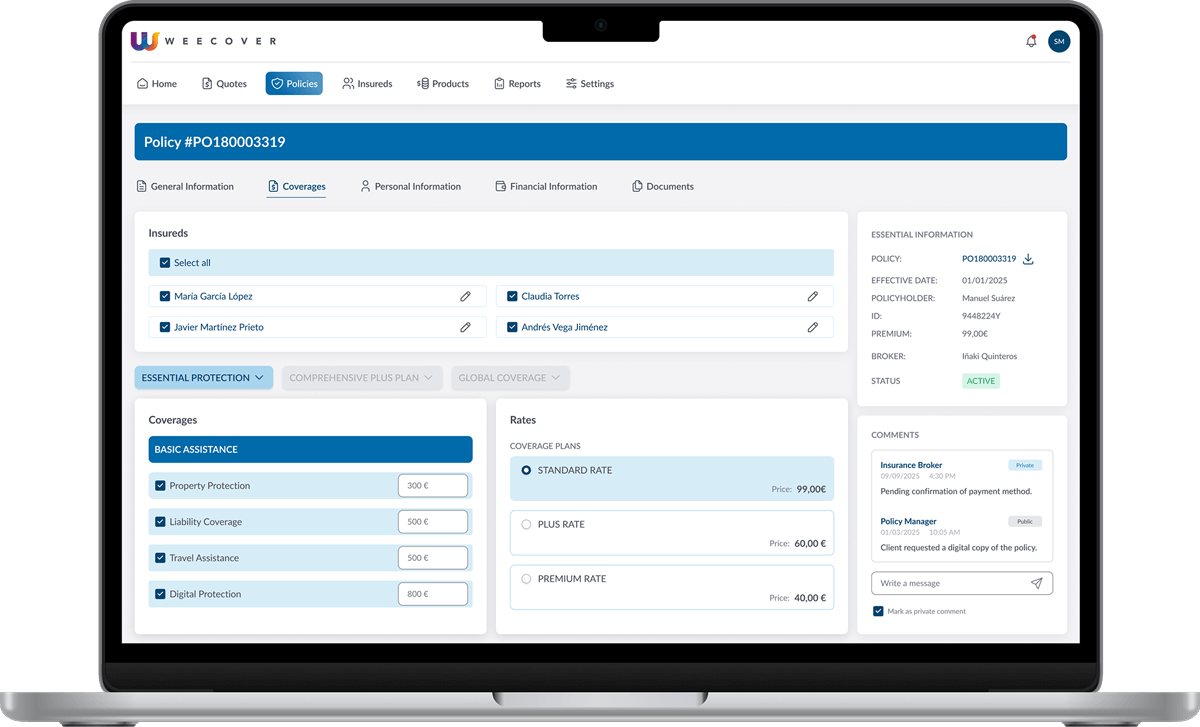
Weecover provides a modular insurance core platform purpose-built for MGAs, program administrators, and embedded insurance distributors that need to automate policy issuance, endorsements, and bordereaux reporting without building carrier-grade infrastructure. Its API-driven architecture enables rapid embedding into partner ecosystems. The tradeoff is that it is not designed for direct-writing carriers managing complex actuarial or reserving workflows, its sweet spot is distribution-layer automation.
13. Decerto Insurance Platform – Core System Modernization Suite for European Carriers Entering US Markets

Decerto delivers a modern insurance core platform with a strong track record across European tier-1 carriers including Allianz and Generali, now targeting US market expansion. Its low-code configuration layer and 5-year TCO framework make it a credible alternative to incumbent US platforms for carriers evaluating greenfield builds. The tradeoff is its limited US regulatory content library and smaller domestic implementation partner network compared to Guidewire or Duck Creek.
14. Regure Compliance Operations Platform – Automated Compliance and Audit Trail Tool for Brokers and TPAs
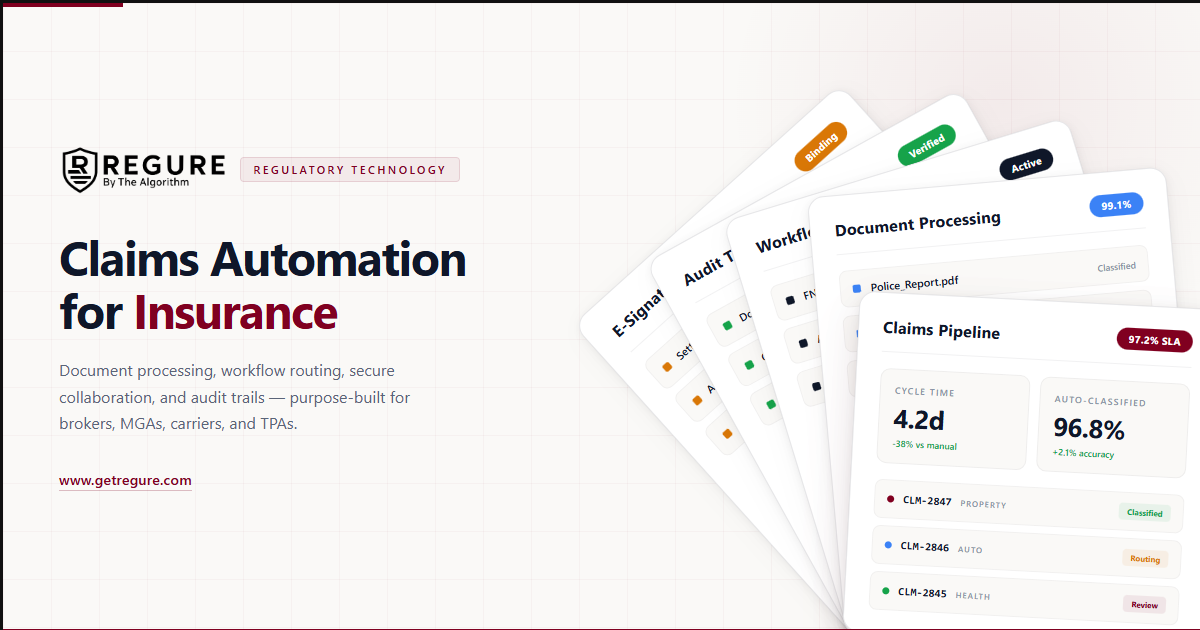
Regure is a compliance-ready operations platform built for insurance brokers, MGAs, carriers, and TPAs that need automated document workflows, routing rules, and defensible audit trails without a full core system replacement. It fills the gap between heavyweight PAS platforms and manual compliance processes. The limitation is scope, Regure automates compliance and document operations but does not replace rating, billing, or claims systems, so it must be layered on top of existing infrastructure.
15. Cognizant Intelligent Process Automation for Insurance – SI-Led RPA Strategy for Large Carrier Transformations
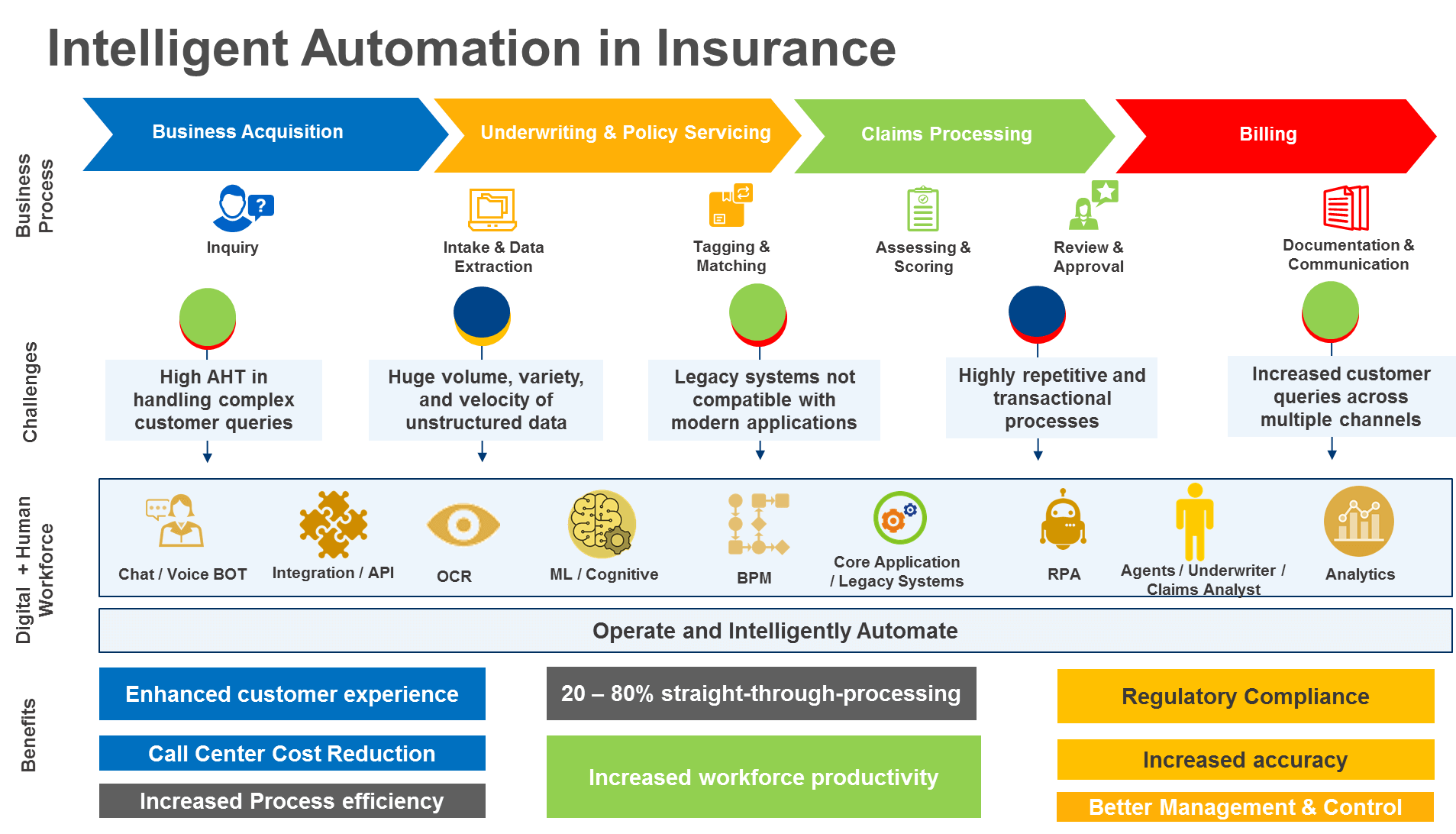
Cognizant’s insurance-focused intelligent process automation practice combines RPA platform deployment (UiPath, Blue Prism, Automation Anywhere) with insurance domain expertise and managed services, making it the right choice for carriers that lack internal automation COE capacity and need a systems integrator to own the full automation roadmap. Its pre-built insurance bot library accelerates time-to-value. The tradeoff is SI dependency, carriers building long-term internal automation capability may find managed service models create vendor lock-in.
Payment Collection Automation – The Insurance Automation Category Every Agency Stack Is Missing
Paper checks don’t just slow down cash flow. They mathematically cancel out every automation investment a carrier made before the payment step.
“We rely on fragmented tools and manual review processes that slow down payment and settlement approvals, increasing errors and missed risks. : : : :”
Independent agencies that automate quoting, document processing, and underwriting but leave premium collection on paper checks don’t just slow down their cash flow; they erase the time savings every other tool in their stack produced. The final manual step reintroduces the same human bottleneck the earlier automation was designed to remove. According to the Big ‘I’ Market Share Report, independent agencies placed 61.5% of all property and casualty insurance, meaning payment collection inefficiencies at the agency level represent a systemic drag on the dominant distribution channel, not a niche back-office problem.
The assumption most agency owners carry is that payment collection is a commodity step. Stripe works. The AMS billing module works.
Something handles it. In practice, generic processors don’t understand trust accounting separation, premium financing rules, or AMS reconciliation. Insurance teams routinely rely on fragmented tools and manual review processes that slow down payment and settlement approvals, increasing errors and compounding the risk of missed or misapplied premiums.
Every dollar collected still triggers a manual posting step somewhere downstream. Binding delays, lapsed policies, and reconciliation backlogs don’t disappear when you automate everything else. They just migrate to the one workflow nobody touched.
1. epaypolicy.com

Most beneficial when the agency or carrier currently collects payments by paper check or phone and wants to digitize receivables quickly, the platform accepts secure online credit card and ACH payments through a professional, branded payment page, so clients interact with a polished experience that reflects the agency, not a generic third-party portal. Its features integrate directly into existing agency workflows: the Payment Page & Dashboard gives staff a single place to monitor incoming funds, while AutoPay eliminates the manual follow-up cycle by running automatically each billing cycle after a client opts in during onboarding or at the payment page.
For agencies that regularly issue high volumes of outbound payments to agents or partners, Payables Connect eliminates paper-check printing and mailing entirely. CheckMate, Finance Connect, and Network Payables extend that coverage to check processing, premium financing, and network-level payables, respectively, so the platform’s depth scales with an agency’s transaction mix rather than forcing separate point solutions for each payment type. Quotes & Invoices rounds out the workflow by letting agencies generate and send invoices without leaving the payment environment.
The result is that a policyholder can pay online through a branded payment page while the transaction reconciles inside the agency’s management system, eliminating the manual check-posting step that breaks so many otherwise-automated workflows. Most beneficial when an agency has a management-system integration in place and clients have predictable recurring invoices, ePayPolicy’s integrated platform brings those capabilities together in a single ready-to-use solution that does not require developer resources to set up. The real trade-off: agencies with very low monthly transaction volume may find the platform’s depth exceeds their immediate need.
2. InvoiceCloud – For Carrier-Scale Policyholder Payment Portals
InvoiceCloud is built for carrier and large MGA billing operations that need enterprise-grade policyholder payment portals with high configurability and compliance controls. The trade-off for independent agencies is clear: the platform’s scale and implementation complexity make it a poor fit for a 5- to 15-person shop that needs a payment solution running in days, not months.
3. Dwolla – For Insurtech Teams Building ACH Payment Infrastructure
Dwolla is an ACH infrastructure layer for insurtech developers and in-house engineering teams that want to build custom payment flows from the ground up. It offers programmable money movement with strong API depth. The limitation is equally clear: it requires meaningful developer resources to implement and maintain, making it the wrong category for an independent agency owner who needs a configured solution, not a construction kit.
4. Riskonnect – For Enterprise Insurance Billing Workflow Automation
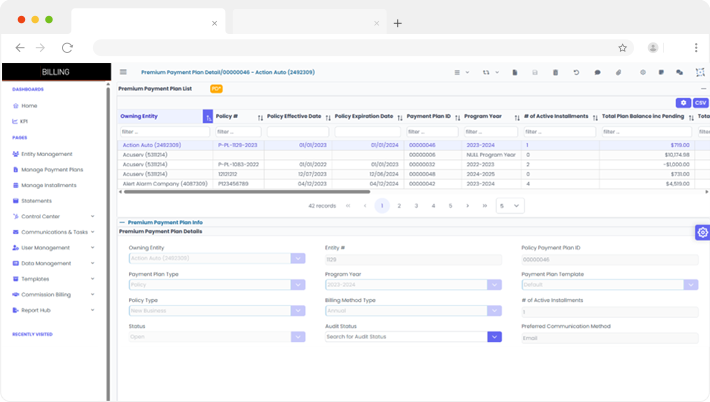
Riskonnect’s insurance billing software targets large carriers and self-insured enterprises needing end-to-end billing lifecycle automation, including installment scheduling, delinquency management, and audit-ready reporting. It integrates billing automation into a broader risk management platform. The tradeoff: its enterprise scope and pricing make it overkill for independent agencies or MGAs, and implementation timelines are significantly longer than point solutions.
5. InsurePay – For Workers’ Comp Pay-As-You-Go Premium Collection

InsurePay specializes in payroll-integrated, pay-as-you-go workers’ compensation premium collection for small businesses, automatically adjusting premiums each payroll cycle based on actual wages. The constraint is narrow specialization: InsurePay solves one specific billing model in one line of business, so agencies with broader commercial or personal lines payment needs will require a separate solution alongside it.
6. RemindCal – For Automated Insurance Renewal Payment Reminder Workflows
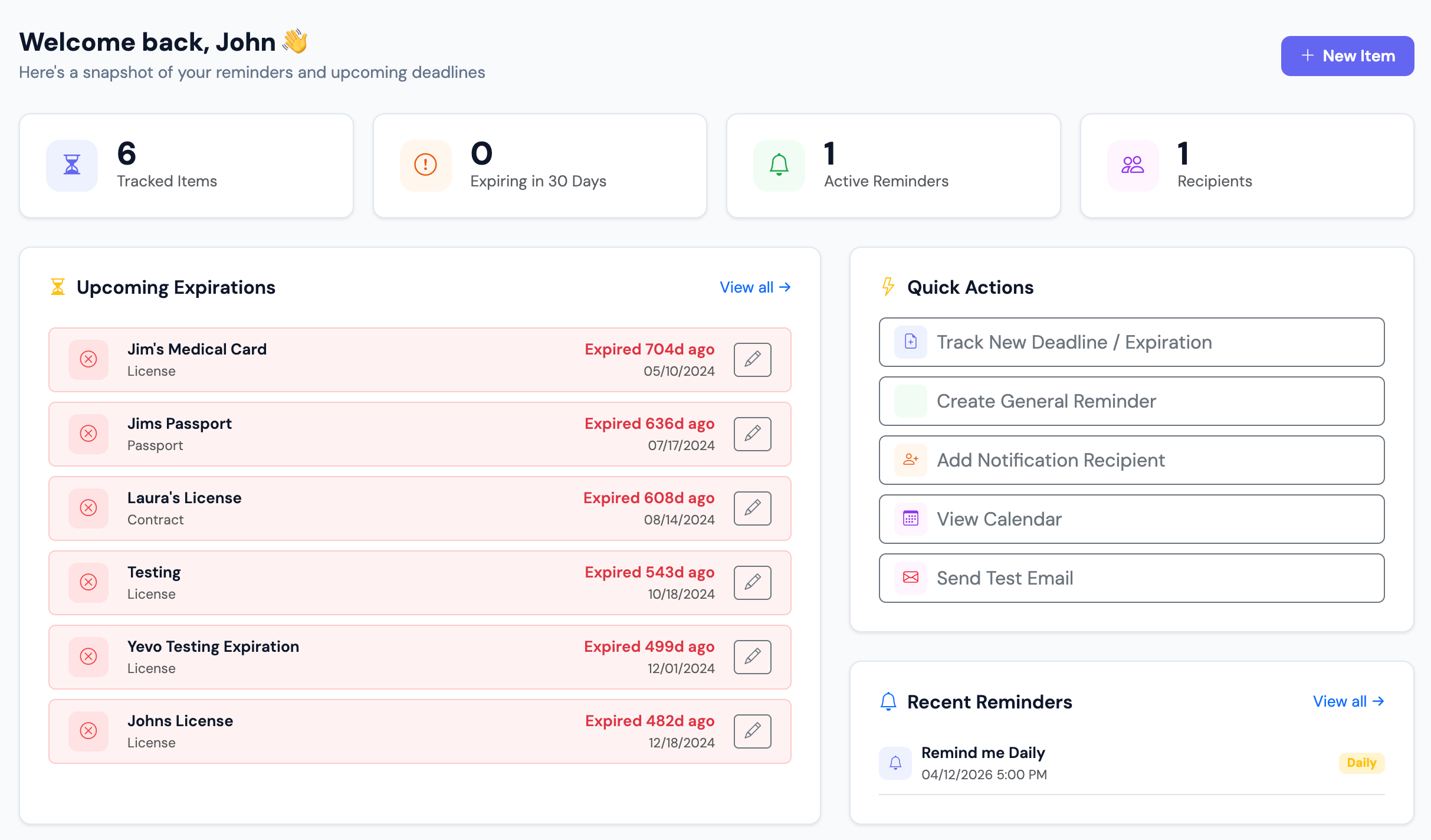
RemindCal provides automated renewal reminder scheduling that helps agencies trigger payment collection outreach at the right moment in the policy lifecycle, reducing lapsed policies caused by missed renewal payments. It’s a lightweight, accessible tool for smaller agencies that need renewal-linked payment nudges without a full AMS overhaul. The tradeoff: it lacks native payment processing capability, functioning as a reminder layer rather than a complete payment collection automation solution.
7. Catalyit Automated Renewal Stack – For Agency Tech-Stack Payment Workflow Guidance
Catalyit’s insurance automation advisory platform helps independent agencies identify and implement the right combination of renewal and payment collection tools within their existing tech stack. Rather than a single product, it provides structured guidance on connecting AMS, payment, and communication automation into a cohesive workflow. The tradeoff: it’s a consultative resource and technology advisor, not a payment processor, agencies still need to select and integrate individual payment tools.
Related Reading
- Insurance Payment Processing Companies
- Payment Processing For Insurance Companies
- Insurance Remittance Processing Systems
How to Choose the Right Insurance Automation Tools for Your Agency – A Practical Matching Guide
Choosing the right automation tool is only half the problem. The harder question is choosing in the right order, because a stack built without a sequencing logic leaves gaps that quietly consume every hour the upstream tools saved.
The Self-Diagnostic – Which Workflow Category Is Actually Eating Your Week?

Before evaluating any platform, track where your staff’s time actually goes. Manual PDF verification of insurance documents, payment follow-up calls, and reconciliation corrections consistently surface as the top three time sinks, yet most agencies prioritize AMS upgrades or underwriting AI first because those feel more strategic. They are not always more urgent. If your team spends more than three hours a week chasing payment status or correcting receivables entries, the payment workflow is your real bottleneck, not your submission pipeline.
Agency Type to Tool Category – The Starting-Point Map
Agency size and structure determine which automation category delivers the fastest relief. A three-person independent agency typically needs AMS integration and digital payment collection before anything else. A mid-size MGA with strong document processing and underwriting tools but no automated payment reconciliation is a different case: 10 or more hours per week can disappear into manual matching of carrier payment statements against policy records, a burden that broader industry trends have documented as a genuine cash flow risk when errors go undetected.
How to Sequence Your Automation Stack, and Why Most Agencies Get the Order Wrong
Most agencies sequence by perceived complexity, deferring payment automation until the “real” workflows are sorted. That logic is backwards. As most teams report, payment reconciliation should be among the first automations an agency builds because it prevents the most damaging error (chasing a client for money already received) and produces clean data that every subsequent automation depends on.
Key takeaway: Payment reconciliation should be among the first automations an agency builds. It prevents the most damaging error (chasing a client for money already received) and produces clean data that every subsequent automation depends on.
Next steps
If your agency is still chasing premium checks after investing in quoting tools, document processing, or underwriting AI, the path forward starts with treating payment collection as its own automation category, not an afterthought bolted onto everything else.
AI underwriting platforms that compress submission-to-bind cycles to minutes create a new, previously invisible bottleneck: the manual payment step that follows now accounts for a disproportionately larger share of total policy-lifecycle time than it did when underwriting itself was slow. At the same time, intelligent document processing only delivers its advertised time savings if it feeds into an equally automated downstream workflow. When extracted policy data still requires a human to manually initiate payment or reconcile a commission statement, IDP becomes an expensive front-end to the same slow back-end. Together, these two dynamics point to the same correction: automate the payment layer with the same intention you brought to everything upstream.
Start with insurance billing software built specifically for this workflow. Connect it to your AMS, turn on AutoPay for clients with recurring invoices, and let CheckMate and Payables Connect close the inbound and outbound gaps your current stack leaves open. When the payment step finally moves at the pace of everything above it, the time savings you already invested in are real.
Frequently Asked Questions
If my agency already upgraded its AMS, why are we still losing time on manual work?
The AMS is rarely the bottleneck, the disconnected billing layer sitting outside it is. When payment collection runs through a tool that doesn’t talk back to the AMS, a staff member has to manually bridge that gap after every confirmed-bound policy, turning each one into a follow-up task.
How does a single data-entry mistake at intake end up causing problems weeks later?
Manual errors don’t stay contained, they travel. A re-keying error in underwriting can push the bind date, which delays the invoice, which means the payment chase starts a week behind schedule. One manual step at the front of the workflow becomes three problems at the back.
Can ACORD forms and broker submission packets actually be processed automatically, or does someone still have to key them in?
Intelligent document processing (IDP) tools automate the extraction of data from unstructured and semi-structured documents, including ACORD forms, loss runs, policy documents, and submission packets, eliminating the need for manual re-keying by underwriters entirely. Every downstream tool in your stack, from underwriting AI to your payment workflow, then runs on that structured data.
How much of claims processing can realistically run without a human touching it?
Industry benchmarks place the realistic straight-through processing ceiling for claims at roughly 60 to 70 percent, meaning a meaningful share still requires human review. The value of claims automation isn’t eliminating adjusters, it’s making sure adjusters only touch the cases that genuinely need them.
How does payment reconciliation get handled automatically instead of landing on someone’s to-do list?
The moment a policyholder pays should be the moment the record updates, binding proceeds, and reconciliation closes automatically, and that only happens when the payment layer connects directly inside the AMS. ePayPolicy’s AMS integrations connect to agency management systems including AMS360, Applied, BindHQ, AIM, and NowCerts, and its AutoPay feature lets clients set up their account once to automatically pay due invoices as soon as they are posted from the agency’s management system, with no manual action required per invoice.