Inc. today announced that ePayPolicy is No. 2267 on the annual Inc. 5000 list, the most well-known ranking of the fastest-growing private companies in America.
Comparison: ePayPolicy vs. Stripe
This comprehensive overview compares an industry-specific financial hub, ePayPolicy, against generic all-purpose payment processors like Stripe.
Insurance Workflow Automation Platform That Cuts Manual Work
Manual payment collection and reconciliation are not a permanent fact of agency life. They are solvable process problems, and the fix rarely requires replacing a single system you already use.
Most independent insurance agency owners believe that the manual payment grind is simply how insurance operations work, rather than a process problem they can solve, because every agency around them operates the same way and no one has offered a credible alternative that fits inside their existing systems. That belief is wrong, and it’s costing them real money every week.
“Insurance claims processing takes weeks to months, and any resubmission or error extends that timeline significantly, highlighting the operational burden that workflow automation in the field aims to address. Insurance workflow automation is the targeted replacement of repetitive, rule-based tasks with software that runs those steps automatically, payment collection, document routing, renewal reminders, and reconciliation. Across the market, administrative overload and manual process bottlenecks span the full insurance lifecycle, and most of them can be addressed without replacing core systems at all. See our insurance billing software for how this works in practice.”

It does not mean ripping out your AMS, retraining your entire staff, or hiring a systems integrator. It means identifying the specific step where a human is doing something a rule could do, matching a payment to a policy, routing a document to the right folder, firing a renewal notice 30 days before expiration, and replacing that step with software. A targeted automation touches one workflow.
It goes live in days. Agencies that try to automate everything at once end up in exactly the IT-project territory they were trying to avoid. The smarter move is sequencing by pain. Payment collection and reconciliation sit at the top of that list for most independent agencies: high daily friction, low technical complexity, fast to fix. AI and OCR handle one job extremely well: reading documents so humans don’t have to.
Key takeaways
- Many independent agencies have a payment operations problem that feels like a daunting IT project, so it rarely gets addressed.
- Six workflows drive the majority of manual labor in a typical agency, but they have very different deployment timelines, some go live this week, others take quarters, and conflating them is why most automation initiatives stall before they start.
- Paper checks are not a legacy quirk; they’re an active cost center that most agency owners have stopped noticing because the losses don’t surface cleanly in any single report.
- Payment collection, reconciliation, and check processing are the highest-ROI entry points for automation, not claims, not FNOL, because they bleed time and margin every week with no visibility.
- Straight-through claims processing and automated renewal orchestration are independently deployable modules, not one tangled system, you don’t have to automate everything to get real operational leverage from any of them.
- Compliance documentation gaps only become visible when a regulator asks for records you have to reconstruct from memory, automated audit trails eliminate that exposure without requiring a new core system.
- ePayPolicy closes the payment loop directly: agencies can accept secure online payments with connected accounting that auto-reconciles, replacing the manual check-and-post cycle without touching existing agency management systems.
Key Insurance Workflows Ready for Automation – Starting With the Ones That Hurt Most
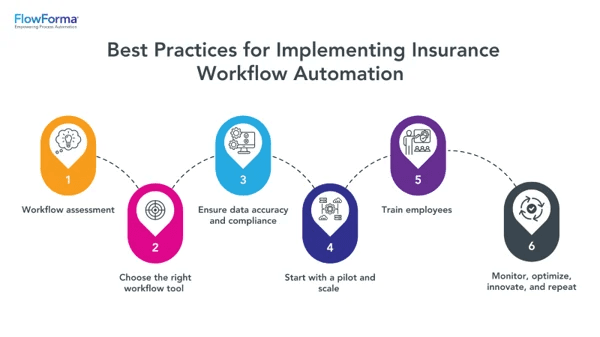
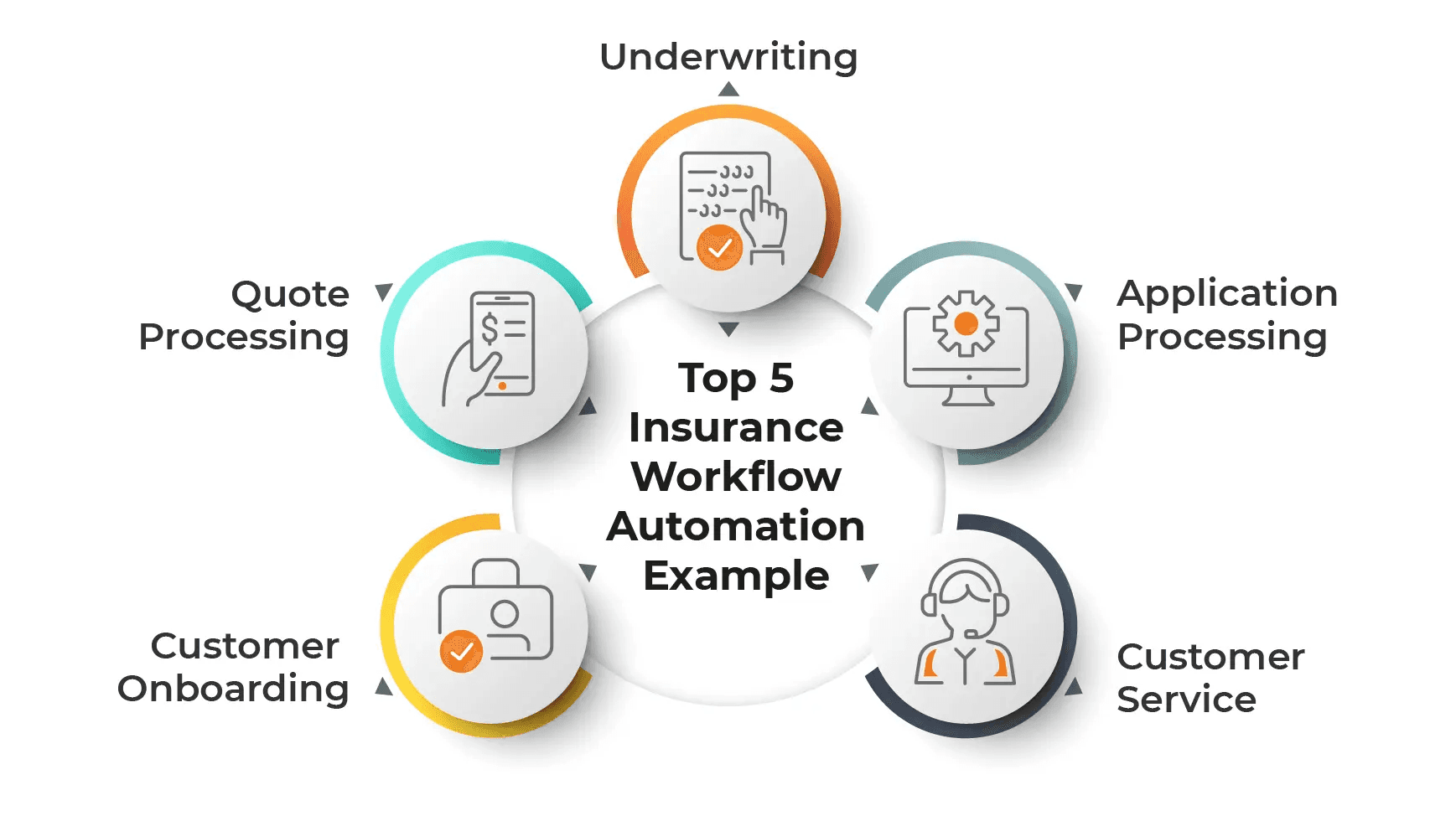
Six workflows account for the majority of manual labor inside a typical independent agency. The problem is that most agency owners treat them as a single, undifferentiated mass of “stuff that needs automating” rather than a ranked list with very different deployment realities. Some of these workflows can go live this week. Others will take quarters. Knowing which is which changes everything about where you start. Agencies still running manual, legacy workflows carry meaningfully higher operating costs compared to peers on modern systems with automated workflows, a gap that makes prioritization a financial necessity.
1. Claims Intake & First Notice of Loss (FNOL) Automation
FNOL is where delays hurt most, adjusters spend 40%+ of their day re-keying data from emails, PDFs, and phone notes into core systems. Insurance workflow automation at intake uses AI-powered document extraction to capture structured claim data instantly and route it to the right adjuster. The real tradeoff: complex liability claims still need human judgment at triage, so automation works best on high-volume, straightforward loss types.
2. Policy Renewal Outreach & Expiration Tracking
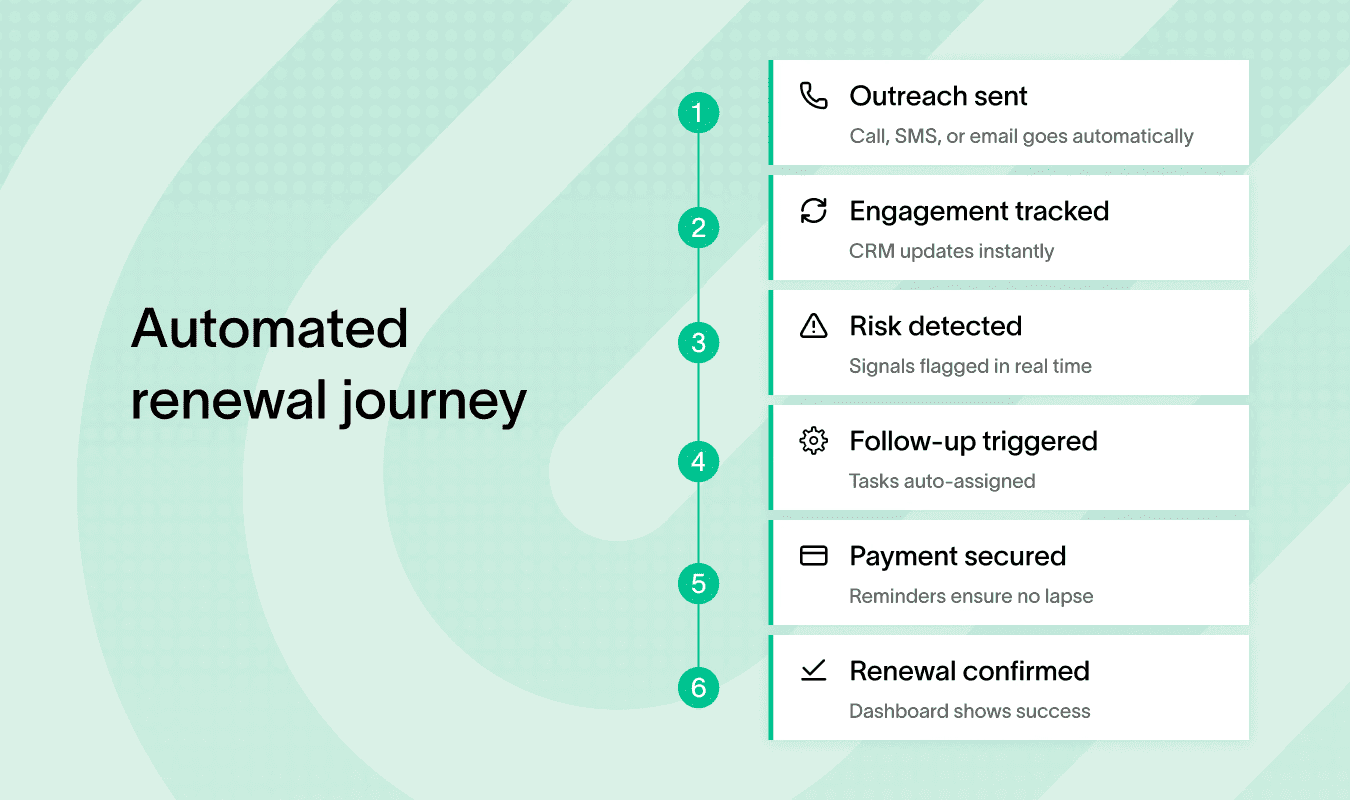
Missed renewals quietly drain revenue for agencies managing hundreds of group policies. Automated renewal workflows trigger sequenced client outreach, emails, reminders, and document requests, based on expiration dates pulled directly from the AMS. This eliminates the manual calendar-chasing that consumes producer time. The limitation: personalization quality drops if client data in the AMS is stale, so clean, current client data has to come first.
3. Certificate of Insurance (COI) Issuance at Scale
COI requests are among the highest-volume, most repetitive tasks in any commercial lines agency, and among the most error-prone when handled manually. Automating COI issuance means AI reads the underlying policy, populates the ACORD 25 form, validates coverage details, and delivers the certificate without staff intervention. Teams processing 50+ COIs daily see the clearest ROI. The tradeoff: non-standard certificate holder requirements or manuscript endorsements still require manual review.
4. New Client Onboarding & Digital Data Intake
Paper applications and email-based data collection create bottlenecks that delay policy binding and frustrate new clients before the relationship even starts. Replacing manual intake with automated digital journeys, smart forms that adapt based on coverage type, reduces incomplete submissions and accelerates time-to-quote. This workflow is especially high-impact for agencies onboarding 20+ new clients monthly. The tradeoff: building well-designed intake flows requires upfront configuration investment.
5. Manual Data Entry Elimination Across Policy Administration
Duplicate data entry across AMS, carrier portals, and spreadsheets is one of the most cited pain points crushing insurance back-office productivity. Insurance workflow automation addresses this by using RPA and API integrations to sync policy data across systems in real time, eliminating re-keying entirely. Carriers and MGAs with fragmented legacy tech stacks benefit most. The key limitation: deep integrations require IT involvement and may face resistance from carriers with closed portal ecosystems.
6. Client Communication & Touchpoint Automation Post-Bind
Most agencies go silent after binding, a missed opportunity that drives churn. Automating post-bind client interactions means scheduling check-in emails, coverage review invitations, and life-event prompts based on policy milestones rather than producer memory. This workflow is the highest-leverage retention tool for personal lines and small commercial agencies. The tradeoff: automated messages must be carefully templated to avoid feeling generic, which requires ongoing content maintenance to stay effective.
How FNOL, Underwriting, and Policy Renewal Automation Work in Practice
Three workflows dominate every automation conversation in insurance right now. The problem is that most agency owners and operations leaders picture them as one tangled system, which is exactly why they never touch any of them. The reality is simpler: FNOL intake, underwriting scoring, and policy renewal orchestration are three discrete, independently deployable modules. You can automate renewals without touching underwriting. You can stand up automated FNOL intake without rebuilding your claims stack. Each one has its own trigger logic, its own data sources, and its own ROI timeline.
The core synthesis claim here is this: independent agencies under-adopt payment automation not because the technology is unavailable or unaffordable, but because they are caught in a social proof trap. When every peer agency runs the same manual check-chasing and reconciliation grind, shared suffering gets misread as proof that no better option exists, when in reality it only proves no one in that peer group has looked outside it. Carriers and MGAs have already solved the same problems, and the tools are available to agencies today without requiring a system replacement.
1. FNOL Automation – AI-Driven Intake That Routes Claims in Minutes, Not Days

FNOL automation uses AI and OCR to ingest claims documents, extract incident details, validate data, and route the claim to the right adjuster automatically, replacing a manual intake process that previously took hours with one that completes in minutes. Modern FNOL platforms integrate directly with existing claims management systems, so the technology stacks on top of current infrastructure rather than requiring a full replacement. The real tradeoff is setup complexity. Connecting AI-driven intake to a legacy claims system still requires IT involvement, and agencies with low monthly claim volume may find the configuration cost outweighs the time recovered.
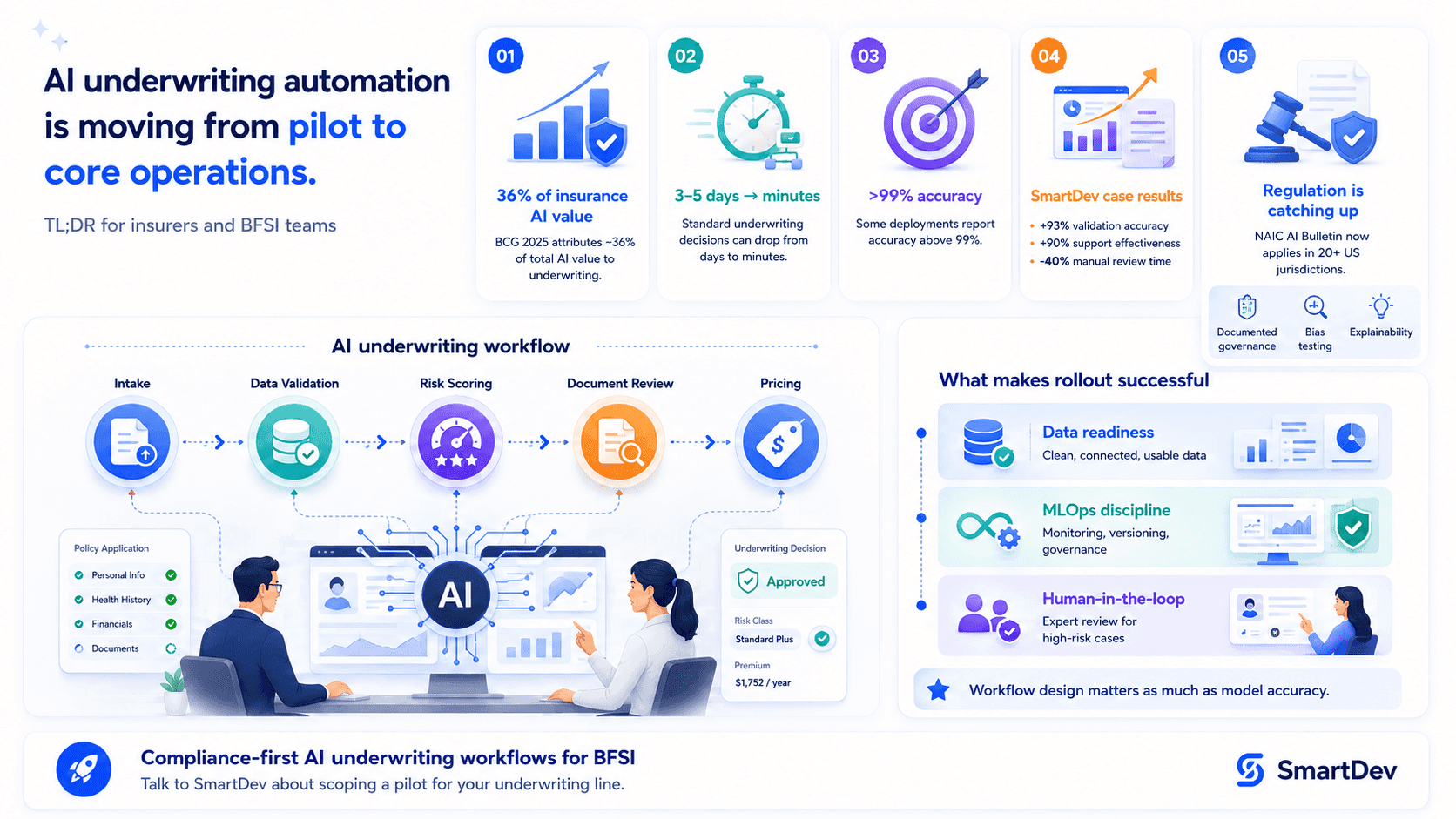
2. Underwriting Automation – ML-Powered Risk Scoring That Replaces Manual Submission Review

Underwriting automation gathers risk data from third-party sources, runs credit and loss-history scoring models, and returns a risk assessment without a human touching the submission file. The practical result is quote turnaround that drops from days to minutes for standard-risk accounts. One critical and often-skipped detail: the NAIC and several state regulators require that ML-based adverse underwriting decisions be explainable in plain language to the applicant. Agencies and MGAs adopting automated scoring tools need to confirm that the model they deploy can produce that explanation on demand. Automated scoring is most beneficial when submission volume is high enough that manual review creates a visible queue backlog; for a low-volume book, the configuration overhead can exceed the time saved.
Policy Issuance & Renewals Automation, Trigger-Based Workflow Orchestration for MGAs and Carriers. Policy renewal automation fires a trigger 45 days before expiration, generates the renewal document, and delivers it to the policyholder without agent involvement.
3. Policy Renewal Automation – Trigger-Based Workflow Orchestration for MGAs and Carriers
Policy renewal automation moves beyond reminder emails by triggering multi-step workflows, pulling loss runs, generating updated quotes, routing to underwriting review, and tracking SLA deadlines, all based on configurable renewal date triggers. This approach is best suited for MGAs and wholesalers managing large books where manual renewal chasing creates retention leakage. The tradeoff is implementation complexity: mapping existing renewal rules into workflow logic requires significant upfront process documentation and stakeholder alignment.
How Claims Processing and Billing Automation Work – Including the Payment Workflows Most Agencies Overlook
Paper checks are not a nostalgic quirk in independent agency operations. They are an active cost center, and most agency owners have simply stopped noticing.
The automation conversation in insurance almost always starts with claims. That instinct is reasonable: claims processing is visible, emotionally charged, and directly tied to policyholder satisfaction. Automation compresses the claims cycle from intake to settlement by handling FNOL intake, status updates, payment triggers, and settlement documentation through straight-through processing pipelines, reducing what previously took days to minutes for straightforward claims. The problem is that most independent agencies treat this as the only automation conversation worth having, and they wait for their carrier to lead it.
The billing and payment side sits in a different category entirely. It does not wait on a carrier or sit behind a 14-month IT implementation, and it is costing more daily staff hours than any claims workflow most independent agencies will ever touch. The mistake is one of category: agency owners lump premium collection in with carrier-level overhauls, when in reality billing and reconciliation automation is a targeted fix that runs on top of the systems you already have, without replacing any of them.
1. ePayPolicy – Best End-to-End Payment Workflow Automation for Insurance Agencies

Billing automation answers a different question: how does premium collection, remittance, commission reconciliation, and return premium processing stop consuming hours of back-office staff time every week? An agency still running monthly check-reconciliation spreadsheets is facing a workflow classification error, and the agencies we work with at ePayPolicy consistently identify chasing checks and manual payment processing as the single largest drain on staff hours they had stopped measuring.
Manual commission reconciliation is particularly costly because discrepancies compound quietly. An agency cross-referencing carrier statements against AMS records by hand will miss shortfalls that a real-time automated match would surface immediately. Return premium processing is similarly stubborn: mid-term cancellations trigger refund calculations that most agencies still complete manually, one transaction at a time.
ePayPolicy addresses this at the point where the bleed is worst. Agencies can begin accepting secure online payments and go live accepting digital payments quickly, without a multi-month implementation or changes to core infrastructure. For agencies that regularly issue high volumes of outbound checks to agents or partners, Network Payables eliminates paper-check printing and mailing entirely, replacing it with a managed digital payables workflow. For agencies whose clients have predictable recurring invoices, AutoPay is particularly effective: clients set up their account once to automatically pay due invoices as soon as they are posted from the agency’s management system, with no manual action required per invoice.
CheckMate targets the check-reconciliation problem directly, and Finance Connect converts inbound paper checks to digital, routed and reconciled in the dashboard. Agencies with a management-system integration in place can track transactions in real time and surface discrepancies before they compound, rather than discovering shortfalls weeks later during a manual statement review.
Key takeaway: Billing and premium collection automation is not a future-state initiative. For most independent agencies, it is the highest-leverage operational fix available today, and it does not require waiting on a carrier, a core system replacement, or a lengthy IT queue.
2. Straight-Through Processing (STP): Automating Claims from First Notice to Payment Disbursement
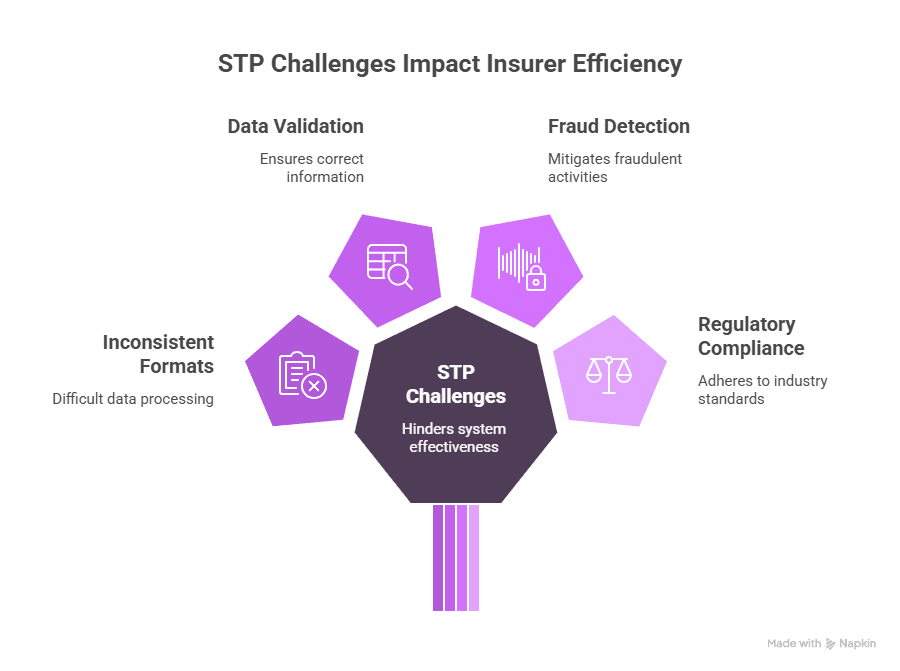
Straight-through processing eliminates every manual touchpoint between claim intake and payment issuance by routing low-complexity claims through automated decisioning rules without adjuster intervention. This insurance workflow automation approach is ideal for high-volume, low-severity claims like auto glass or minor property damage. The critical limitation: STP requires clean, structured data at intake, agencies with inconsistent FNOL data quality will see exception rates spike and negate efficiency gains.
3. Return Premium Transaction Automation – The Manual Workflow Most P&C Agencies Still Haven’t Fixed
Return premium processing, refunding unearned premium after mid-term cancellations or endorsements, remains stubbornly manual at most agencies despite broader automation investments. Automating this workflow means triggering refund calculations, carrier notifications, and client disbursements from a single policy change event. It’s the right priority for agencies with high policy churn or commercial lines books. The real tradeoff: automation logic must account for pro-rata versus short-rate cancellation rules, which vary by carrier and state.
Related Reading
- Insurance Agency Automation
- Insurance Automation Tools
- Insurance Premium Payment Automation
- Insurance Premium Collection Process
- Insurance Agency Efficiency
Key Benefits of Insurance Workflow Automation – Beyond the Obvious Time Savings
The key benefits of insurance workflow automation are concrete and measurable: faster cycle times, fewer errors, lower operational costs, and a policyholder experience that no longer depends on a staff member picking up the phone. But most independent agency owners only hear the speed argument, which is the weakest version of the case.
1. Automated Fraud Detection That Learns From Every Claim
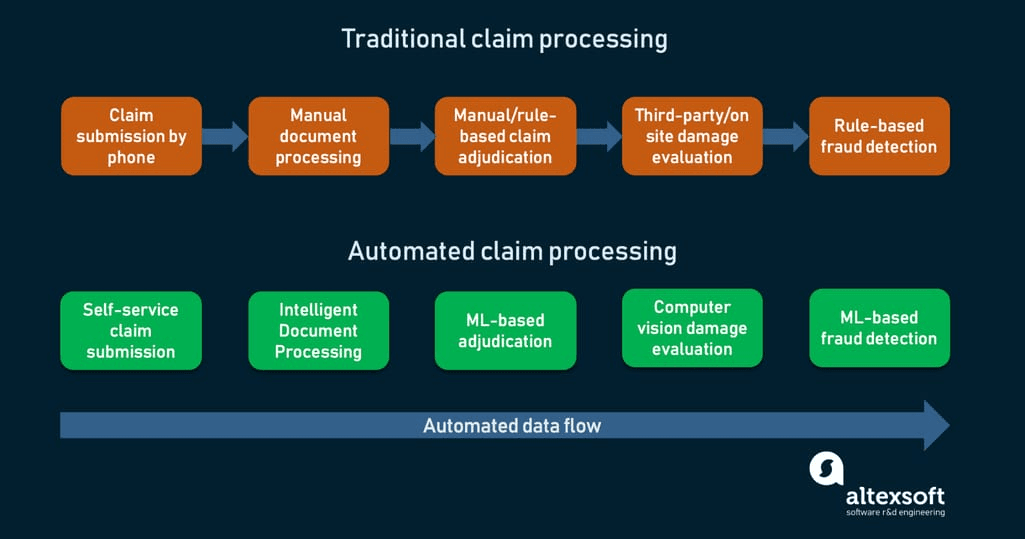
Insurance workflow automation doesn’t just speed up claims, it builds a continuously improving fraud-detection layer. AI models trained on historical claim patterns flag anomalies human adjusters routinely miss. This is the right investment for mid-to-large carriers processing high claim volumes where leakage is significant. The real tradeoff: model accuracy depends heavily on data quality and volume, making it less effective for niche or low-frequency lines.
2. Straight-Through Processing for Low-Complexity Claims
Straight-through processing (STP) routes simple, low-risk claims from first notice of loss to payment without human touchpoints. For personal auto or homeowners carriers, STP can resolve 40–60% of claims automatically, freeing adjusters for complex cases. It’s the highest-ROI entry point for insurers new to workflow automation. The limitation: STP thresholds require careful calibration, set them too broadly and you expose the carrier to unchecked payouts.
3. Intelligent Document Extraction Across Unstructured Formats
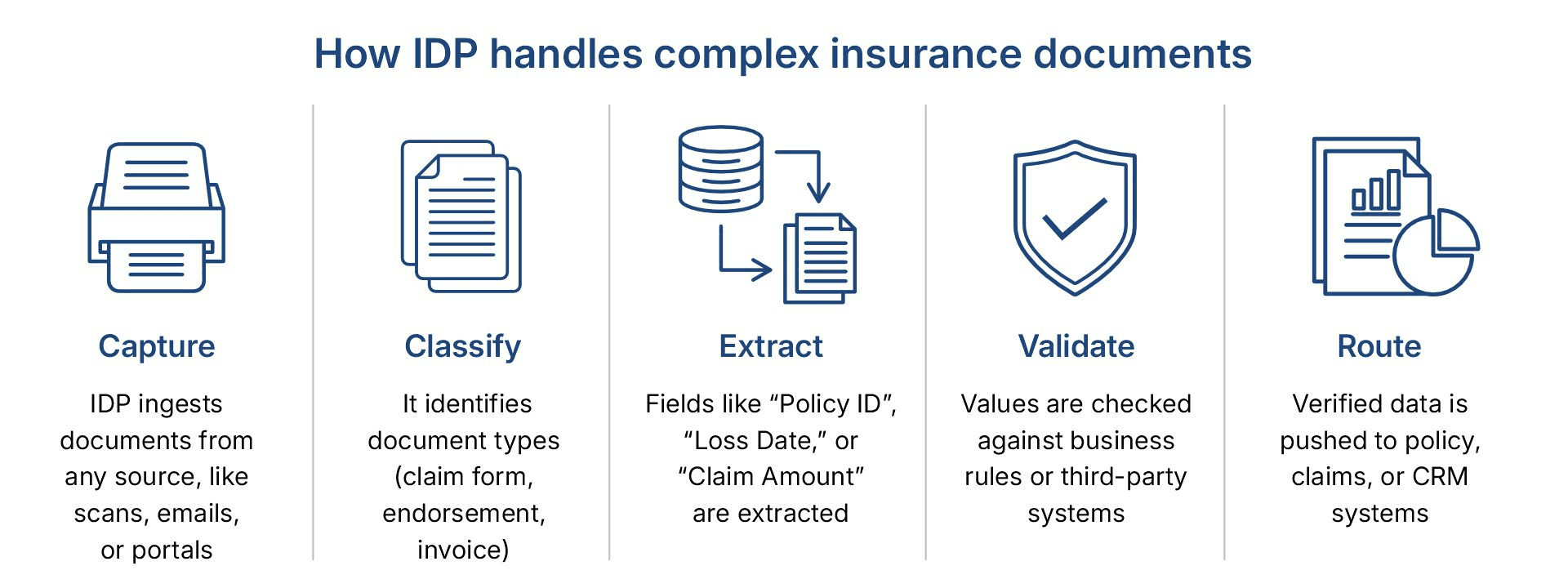
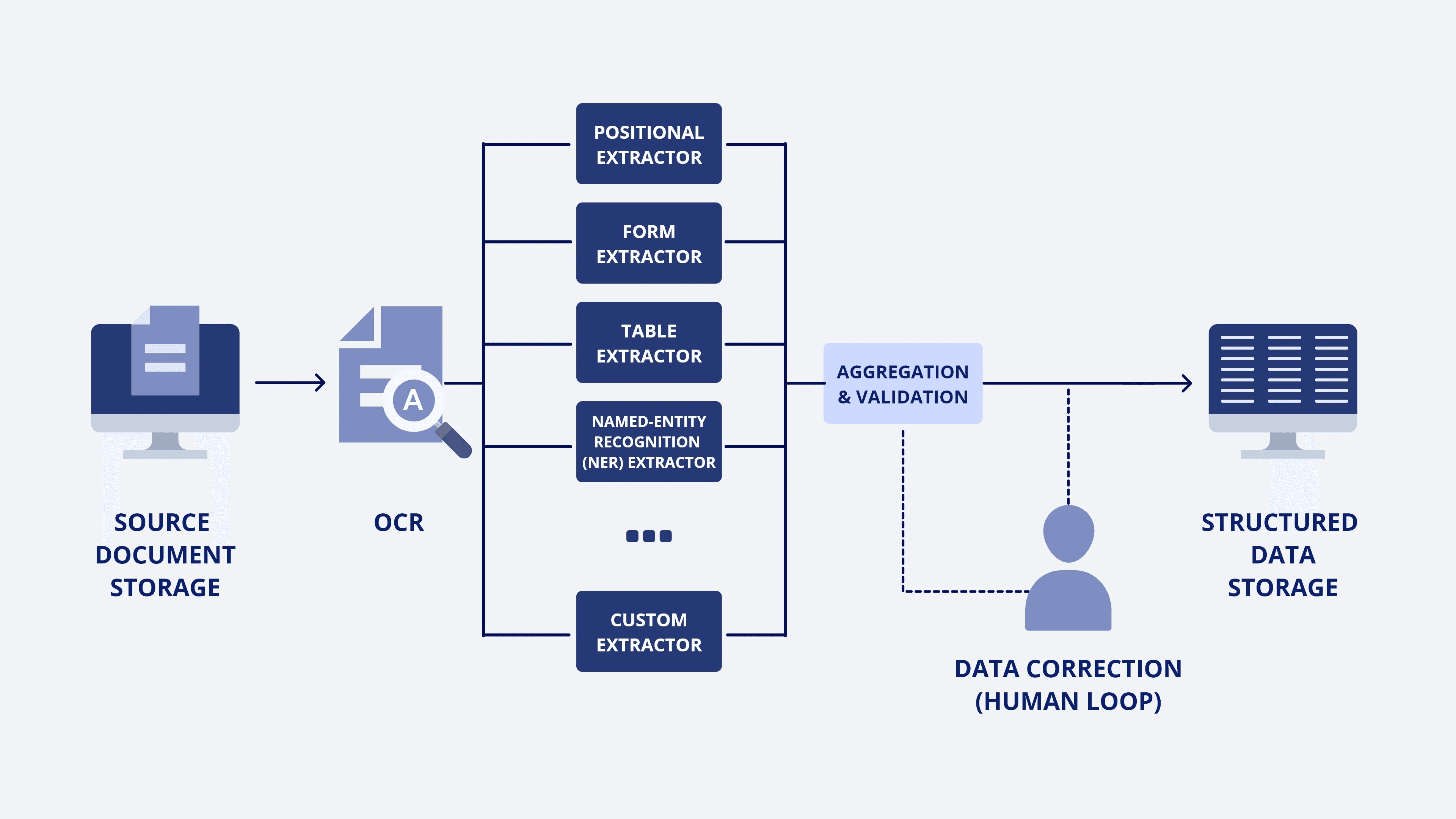
Insurance operations drown in PDFs, handwritten forms, medical records, and repair invoices. Automated document extraction using OCR and NLP pulls structured data from unstructured sources, eliminating manual re-keying and the transcription errors that follow. This benefit compounds across underwriting, claims, and compliance teams simultaneously. The tradeoff is upfront training time, models must be tuned to each document type, and edge-case formats still require human review queues.
4. Continuous Compliance Monitoring Built Into Every Workflow Step
Regulatory requirements in insurance change frequently across jurisdictions, and manual compliance checks create audit gaps. Workflow automation embeds compliance rules directly into process steps, flagging missing disclosures, incorrect policy language, or missed filing deadlines in real time rather than during an audit afterward. This is especially critical for carriers operating across multiple states. The limitation: compliance rule libraries require ongoing legal maintenance as regulations evolve.
5. Underwriting Acceleration Through Automated Risk Data Aggregation
Life and commercial underwriters spend disproportionate time gathering third-party data, credit scores, MVRs, medical records, property databases. Insurance workflow automation pulls these sources simultaneously at submission, presenting underwriters with a pre-populated risk profile rather than a blank intake form. This compresses underwriting cycle times from days to hours. The tradeoff: integrating disparate external data vendors requires robust API management and introduces dependency risk if a data source goes offline.
6. Policyholder Self-Service Portals That Reduce Inbound Call Volume
Workflow automation extends beyond back-office operations, self-service portals let policyholders file claims, update coverage, and retrieve documents without agent involvement. This directly reduces inbound call center volume, a measurable operational cost. For personal lines carriers with high policyholder-to-staff ratios, this benefit rivals back-office efficiency gains. The real limitation is adoption: older policyholder demographics often require parallel phone support, meaning carriers can’t fully retire traditional service channels.
Compliance and Auditing Automation: the Risk-Reduction Layer Independent Agencies Often Skip
Audit time has a way of revealing exactly how much invisible work your back-office processes were never doing. For independent agencies running lean teams, compliance documentation tends to pile up by accident rather than by design, and that gap only becomes visible when a regulator asks for records you have to reconstruct from memory.

What an Automated Audit Trail Actually Captures, and Why Manual Logging Cannot Replicate It
Compliance and auditing automation works by capturing a timestamped, tamper-evident record of every transaction, document action, and account movement at the moment it occurs, not hours or days later when someone remembers to log it.
Key takeaway: 58.2% of statutory financial report filings examined contained compliance or filing errors in the Notes section, the predictable output of documentation processes never designed to capture data in real time.
Those are not errors of intent. They are the predictable output of documentation processes that were never designed to capture data in real time. Manual logging introduces a lag, and in that lag, details drift, get omitted, or get reconstructed inaccurately.
That lag compounds a second problem agencies we work with feel acutely: days sales outstanding on premium receivables creeps upward when payment status lives in someone’s head or a spreadsheet that hasn’t been reconciled yet. When collection timing is opaque, float risk grows and cash flow becomes harder to forecast quarter over quarter. An automated, real-time audit trail fixes this for regulators and for your own financial visibility.
Reconciliation Automation as a Built-in Compliance Record, the Audit Trail That Writes Itself
Most independent agencies absorb the pain of manual payment reconciliation without realizing it is also a compliance liability. Every time a staff member manually cross-references a premium payment against a bank statement and an AMS entry, they are also failing to generate the kind of defensible, timestamped record that regulators expect to see. As FBSPL noted in 2025, automation enables real-time tracking, centralized documentation, and faster audit readiness, reducing both risk and operational effort for compliance teams.
ePayPolicy’s connected accounting layer, including Finance Connect and Payables Connect, captures every transaction with a timestamped, rule-enforced record at the moment it occurs, converting reconciliation from a manual compliance task into an automated audit trail that is ready for regulatory review without additional preparation. This is most beneficial when the agency already has a management-system integration in place, because Finance Connect can write payment data directly back into the AMS, eliminating the manual re-entry step where errors and omissions typically enter the record.
For agencies that issue high volumes of outbound payments to agents or partners, Network Payables eliminates paper-check printing and mailing, replacing it with a documented digital disbursement record that is captured and centralized automatically. For clients with predictable recurring invoices, AutoPay allows clients to set up their account once to automatically pay due invoices as soon as they are posted from the agency’s management system, with no manual action required per invoice, directly reducing days sales outstanding on premium receivables so float risk shrinks and cash flow becomes more predictable quarter over quarter. Every AutoPay transaction writes its own timestamped record, so the compliance trail is a byproduct of the payment itself.
How to Implement Insurance Workflow Automation Without a Big IT Project
Choosing where to start is the decision most agency owners never actually make. They know automation would help, they’ve seen the demos, and then they open a new browser tab and go back to reconciling payments by hand because the implementation question feels too big to answer on a Tuesday afternoon.
For independent agencies, the highest-leverage entry point into automation is the payment-to-reconciliation arc, because that single workflow contains the most compressible manual touchpoints and the most invisible financial leakage, so a narrow, surgical fix to billing and collection outperforms a broad IT initiative in both speed of recovery and measurable revenue impact. That reframe changes which question you’re actually trying to answer.

Audit by Time Cost First, Not by Technology Readiness
The right starting point isn’t the workflow that looks most automatable. It’s the workflow that is consuming the most staff hours right now. Manual payment reconciliation can consume significant back-office time each week, as staff cross-reference bank records against AMS entries line by line. That is time your team is not spending on renewals, new business, or client calls.
One pressure point that often goes unspoken: broker platforms and MGA operations that are weeks away from a go-to-market launch cannot afford a prolonged IT buildout. When your back-office team is already stretched across a high volume of retail agency partners, adding a months-long implementation project to the calendar is a blocker. The practical answer is to start at the receivables layer, where a targeted fix delivers the fastest measurable relief. What most teams report, once they make the switch, is that automated reconciliation replaces a time-intensive, error-prone process with a system that automatically matches records across sources, converting an unavoidable burden into a solved tooling problem.
For agencies still collecting by paper check or phone, the first move is digitizing inbound receivables. ePayPolicy’s online Credit Card & ACH payment capability is most beneficial precisely at that moment, when the agency wants to eliminate paper-check intake quickly, without a lengthy implementation runway, and start compressing the manual touchpoints in the payment-to-reconciliation arc immediately.
Why Insurance-Native Tools Beat Generic Automation Software for Compliance-Sensitive Processes
Generic workflow software treats a payment like any other data event. Insurance payments are not that. They involve trust accounting rules, premium financing structures, and carrier remittance requirements that a general-purpose tool was never trained to handle. The cost of getting this wrong is not trivial: insurance claim processing already takes weeks to months in the best circumstances, and any errors or resubmissions compound that delay significantly, so automation mistakes inside a compliance-sensitive billing workflow carry real financial and reputational consequences.
Across the market, automation solutions built natively into the agency management system reduce errors and manual reconciliation effort more reliably than bolt-on tools, because they remove the manual step of moving data between the payment and the policy record. Insurance-built tools handle compliance as part of the everyday workflow rather than as a separate audit step scheduled later. Independent agencies that have switched from generic tools to insurance-native billing platforms commonly report eliminating the most time-intensive manual reconciliation steps, an outcome that is difficult to achieve with general-purpose automation software, which was not designed to handle trust accounting rules or carrier remittance structures natively.
That distinction matters most when your operation handles a high volume of outbound disbursements alongside inbound premiums. ePayPolicy’s Network Payables and Payables Connect features address exactly that side of the ledger: they are most beneficial when the business regularly issues high volumes of outbound checks to agents or partners and wants to eliminate paper-check printing and mailing, which is precisely where back-office teams working with large retail agency networks tend to drown in manual reconciliation effort.
On the inbound side, the configuration that unlocks the greatest efficiency is straightforward: when a management-system integration is already in place and clients have predictable recurring invoices, ePayPolicy’s AutoPay feature can be activated directly inside the existing AMS workflow. Clients set up their account once to automatically pay due invoices as soon as they are posted from the agency’s management system, no manual action required per invoice. The result is a streamlined premium collection and disbursement process across a high volume of retail agency partners that does not require adding headcount or tolerating reconciliation backlogs to sustain it.
Related Reading
- Payment Processing For Insurance Companies
- Insurance Payment Processing Companies
- Insurance Remittance Processing Systems
Next steps
If your agency is still absorbing the daily cost of chasing checks, reconciling transactions by hand, and waiting on paper payments that never seem to arrive on time, the path forward starts with recognizing that this is a gap in your tools rather than something inherent to the industry. The gap between taking a payment and reconciling it is fixable, and it does not require touching your core AMS to fix it. Start with our insurance billing software.
The social proof trap explored earlier in this post means that most agency owners file billing automation in the same mental category as FNOL intake overhauls, assuming the implementation complexity is comparable. It is not. Billing and reconciliation automation is categorically closer to a targeted workflow fix, one that can go live in days on top of existing systems. That distinction matters because it changes the decision in front of you from “do we have the IT bandwidth for this” to “when do we start.”
Start with insurance billing software built specifically for independent agencies. Connect your existing AMS, enroll policyholders in digital payments, and let the reconciliation layer run automatically from the first billing cycle forward.
Frequently Asked Questions
Do I have to replace my agency management system to start automating workflows?
No. Insurance workflow automation is specifically designed to run on top of your existing systems without touching core infrastructure. The scope of the fix matches the scope of the problem, a targeted automation touches one workflow and can go live within days.
Which workflow should an independent agency automate first?
For most independent agencies, billing and premium collection is the best starting point, ahead of claims. It has high daily friction, low technical complexity, and is fast to fix without waiting on a carrier or a lengthy IT queue.
How does AI actually fit into insurance workflow automation, what does it do?
AI and OCR handle one job extremely well: reading documents so humans don’t have to. In practice, this means ingesting claims documents or payment records, extracting relevant details, validating data, and routing files automatically, replacing steps that previously took hours with ones that complete in minutes.
How does underwriting automation actually work, and when does it make sense to use it?
Underwriting automation gathers risk data from third-party sources, runs credit and loss-history scoring models, and returns a risk assessment without a human touching the submission file, dropping quote turnaround from days to minutes for standard-risk accounts. It makes the most sense when submission volume is high enough that manual review creates a visible queue backlog; for a low-volume book, the configuration overhead can exceed the time saved. One important compliance note: the NAIC and several state regulators require that ML-based adverse underwriting decisions be explainable in plain language to the applicant, so any automated scoring tool you adopt needs to produce that explanation on demand.
How does policy renewal automation work, and what does the agency actually have to set up?
Renewal automation fires an expiration-based trigger automatically, runs outreach sequences without manual initiation, and generates and delivers the policy document on its own schedule. Most agency management systems support expiration-based triggers natively, so the lift is configuration rather than deep integration, making this one of the faster wins available, especially for agencies with a management-system integration already in place and clients on predictable recurring invoices.
12 Insurance Agency Efficiency Tips to Boost Productivity
Independent agents, reclaim lost hours with 13 insurance agency efficiency tips, including AutoPay to cut billing busywork and boost productivity.
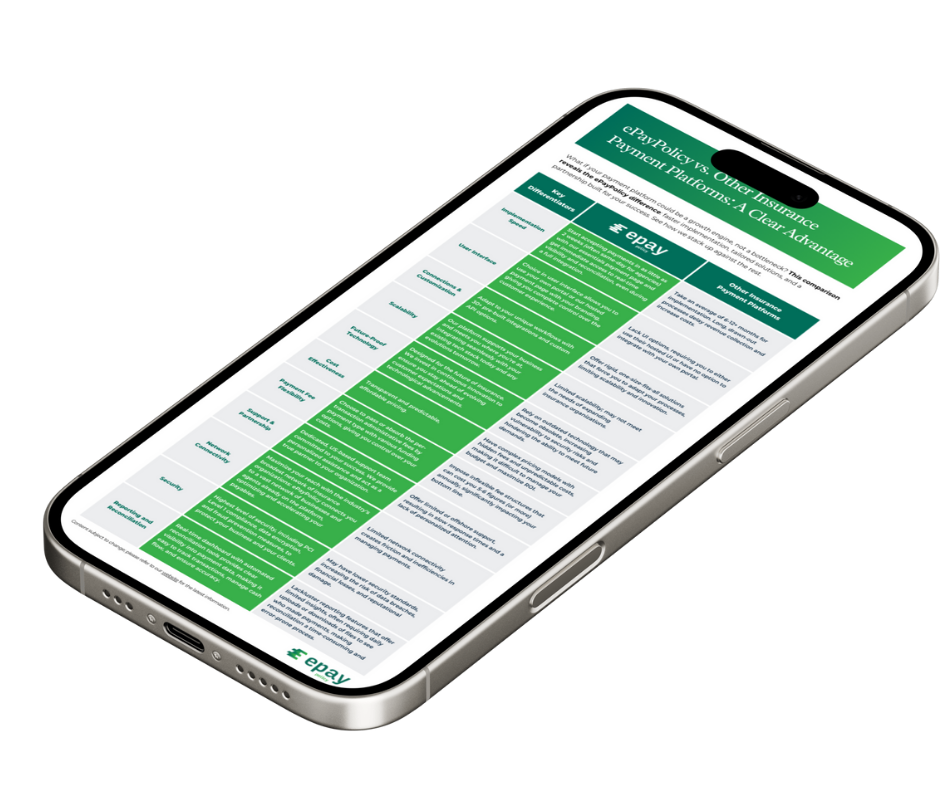
Comparing ePayPolicy vs. Insurance Payments Platforms
This overview explores how ePayPolicy compares to other popular digital payments platforms in the insurance industry.
Insurance Premium Payment Automation Software & Solutions
Sending a payment link is not automation. Here is what true AutoPay actually means, why the gap costs agencies more than they track, and how to close it without adding headcount.
Most agencies believe they have premium payment automation in place. They have a system that sends reminders, a portal where clients can pay, and a management system that tracks what is owed. That feels like automation.
It’s not. The gap between “we send a payment link” and “the invoice pays itself” is where missed premiums accumulate, policies lapse, and staff hours quietly disappear. Understanding what genuine AutoPay means, at the operational level, is the first step toward closing that gap.

For agencies ready to move past the workaround, payment tools built for insurance handle this without adding headcount or complexity. See our insurance billing software for how this works in practice.
Insurance premium payment automation means exactly one thing in practice: an invoice posts from the agency management system, and the enrolled policyholder’s payment clears automatically, with no staff member initiating, approving, or following up on that transaction. The trigger is the invoice post itself. The outcome is a confirmed payment. Nothing in between requires a human decision. This is meaningfully different from a payment link or a scheduled reminder. Those tools move information toward a person. True AutoPay moves money without one.
Second, the payment platform reads that posted invoice directly, without any data re-entry or manual export. Third, the enrolled policyholder’s stored payment method is charged automatically, and a confirmation posts back to the record.
No staff member reconciles the result afterward. A missed premium is rarely intentional; it’s usually a forgotten due date or an expired card. AutoPay removes the dependency entirely, and delivers the greatest operational lift when the agency already has a management-system integration in place and policyholders carry predictable, recurring invoices. Without that foundation, AutoPay still reduces manual work, but the full zero-touch benefit materializes only when the AMS is the authoritative source the payment platform reads from directly.
In Indio Technologies’ 2019 research, up to 25% of an agency’s energy and productivity can be wasted on application and renewal process tasks, a share that manual premium chasing meaningfully contributes to, and that AutoPay is designed to recover.
25% of agency energy wasted on renewal process tasks
Key takeaways
- Most insurance agencies have payment reminders and a client portal, that’s not automation, and the staff hours lost to the gap between those two things are real and measurable.
- The fully-loaded cost of manual premium collection, follow-up calls, deposit reconciliation, cross-system matching, crosses the cost of native payment automation at a threshold most growing agencies hit before they realize it.
- Premium funds are not agency revenue, and generic payment processors are architected as if they are; that mismatch creates compliance exposure the moment a transaction is initiated.
- Billing friction drives most accidental policy lapses, not relationship problems, and the fix is a better process rather than a better conversation.
- Native AMS integration means the invoice posts and the payment follows without a person opening two systems to match them, anything short of that is still a manual workflow.
- Unlogged billing communications and unmatched payment exceptions are not just reconciliation headaches; they are E&O exposure hiding in the space between payment events and posted receivables.
- ePayPolicy’s AutoPay closes the loop: policyholders set up their account once, and every invoice posted from the agency’s management system pays automatically, no manual action required per invoice, and the platform is live in as little as 24 hours.
Payment Automation and Operational Efficiency – The Real Cost of Manual Premium Collection
The Hidden Salary Drain – How Many Staff Hours Does Manual Premium Chasing Actually Consume?
Most insurance agency operations managers and office managers believe that more policyholders inevitably means more manual payment work, that the chase, the reconciliation, and the coordination overhead are fixed costs of running a bigger agency, not symptoms of the wrong tools. That belief is worth testing. According to the Reagan Consulting Best Practices Study, agencies that fail to track and act on operational metrics, including payment velocity and reconciliation rates, consistently end up reacting to problems instead of preventing them, absorbing coordination work that compounds billing cycle after billing cycle.

What most teams report reinforces this pattern, noting that accounting and support staff routinely lose a significant share of their working week to payment follow-up activity, a burden that grows heavier in agencies still relying on paper checks or phone-collected payments.
For a mid-size agency with ten accounting and support staff at a median salary near $55,000, that translates to hundreds of staff-hours annually, consumed entirely by payment follow-up. Client service and retention calls go unworked. The cost hides inside salary lines, distributed across everyone who has ever stopped real work to send a “just checking in on your payment” email. ePayPolicy serves both agencies that want to digitize receivables quickly and agencies already receiving paper checks, with a dedicated product called CheckMate that converts incoming paper checks into digital payments, extending its value to ongoing check handling as well as the transition away from paper.
Payment Status Fragmentation Across AMS, Email, and Spreadsheets
The breaking point is usually the same: three systems, three answers. Instead of one authoritative record, agencies are left juggling:
- The AMS, which shows an open invoice
- The spreadsheet, which shows “paid, pending confirmation”
- The email thread from last Tuesday, which says the check is in the mail
Someone on the accounting team spends twenty minutes reconciling those three sources before they can answer a single agent’s question. Across the market, payment reconciliation accuracy stands out as a core operational KPI for agencies and MGAs, and agencies without a reliable single source of payment truth routinely absorb preventable labor costs across their accounting function. Payment status fragmentation is a tooling problem. The same coordination cost repeats every billing cycle, for every policy, until the tools change.
ePayPolicy’s integrated platform, including its Payment Page and Finance Connect, is built to eliminate manual reconciliation by connecting directly to an agency’s management system. When the agency has a management-system integration in place, payment status flows back into the AMS automatically, so the spreadsheet and the email thread are no longer needed as backup sources of truth. The result is a material improvement in operational efficiency: accounting staff answer the “did they pay?” question in seconds, not minutes, because one system holds the answer.
AutoPay Prevents Late Fees and Coverage Cancellation, Not Just Inconvenience
AutoPay prevents late fees and potential coverage cancellation by removing the human dependency from the payment cycle entirely. ePayPolicy’s AutoPay feature works at the moment it matters most: during onboarding or at the payment page, a client opts in once, and thereafter payment initiates automatically each billing cycle. When a policyholder’s invoice posts from the agency management system, payment runs without a reminder to forget, a link to misplace, or a grace period to race against. AutoPay is most effective when clients have predictable recurring invoices, making it a natural fit for the majority of personal and commercial lines renewal books.
The operational gain compounds quickly. Every policy enrolled in AutoPay is one fewer manual task: no outbound call, no follow-up email, no reconciliation exception. QuoteSweep underscores that reducing manual tasks in the billing cycle is among the highest-leverage moves an agency can make to free accounting staff for retention and service work. ePayPolicy’s AutoPay and its broader integrated platform are designed with exactly that shift in mind: reduce the chase, and redirect the hours toward activity that actually grows the agency.
How to Set Up AutoPay for Insurance Premiums – Through Your Provider, Your Bank, or a Third-Party App
Three AutoPay paths exist for insurance premiums. Knowing which one your policyholders are actually using determines whether your staff spends Tuesday morning on strategy or on deposit-hunting. The core synthesis here is this: there is a measurable inflection point, invisible to most growing agencies, at which the fully-loaded cost of manual payment processing crosses the cost of insurance-native automation. Because manual overhead scales linearly with every new policyholder while native automation does not, the question for operations managers is how far past the breakeven point they have already drifted without measuring it. That drift has a direct financial signature: longer days sales outstanding (DSO) on premium receivables, unpredictable float risk, and a back-office team absorbing reconciliation volume that grows with every new retail agency partner you onboard.
1. ePayPolicy – Best for Direct Insurance Premium AutoPay Through Your Provider
Setting up AutoPay directly through an insurer’s online portal or mobile app is the most operationally clean path when it works cleanly, and that qualifier matters. Carriers like State Farm offer this through portals where a policyholder links a bank account via ACH or a credit card, sets a billing frequency, and confirms enrollment once. After that, payments trigger automatically on the due date. ACH transfers typically carry lower processing fees than card payments and settle within a few business days, while card payments process faster but introduce chargeback risk, a trade-off agencies should communicate to policyholders at enrollment.
One recurring confusion worth flagging to policyholders before enrollment: insureds who pay their premium in full upfront sometimes receive an autopay discount at binding, only to have that discount reversed months later when the carrier determines they no longer meet autopay-eligibility criteria, generating an unexpected charge the policyholder never anticipated. Catching this mismatch at enrollment, rather than after the reversal, is part of the counseling value a well-run agency provides.
The real limitation surfaces at scale: most insurer portals stop at enrollment and do nothing to close the reconciliation gap inside your agency management system. A payment arrives; your AMS still shows the invoice open until someone manually matches it. ePayPolicy’s AutoPay feature, available through its connected Payment Page and Dashboard, closes that gap by embedding AutoPay directly inside the agency’s billing workflow.
When a policyholder opts in during onboarding or at the payment page, enrollment is captured once; thereafter, each billing cycle runs automatically. The enrolled policyholder’s payment triggers the moment an invoice posts from the management system, with no manual matching required. That automation compresses DSO on premium receivables, so cash flow becomes more predictable quarter over quarter rather than subject to the lag of manual deposit-hunting.
Most beneficial when the agency has a management-system integration in place and clients have predictable recurring invoices, precisely the condition ePayPolicy’s AMS integrations are designed to serve.
For agencies distributing premiums across a high volume of retail agency partners, ePayPolicy’s Payables Connect and Network Payables features extend that same zero-touch logic to outbound disbursements, eliminating paper-check printing and mailing and keeping the back-office team from drowning in manual reconciliation as partner volume scales. Fees can also be passed through to insureds at the payment page, preserving agency margin without requiring a separate billing conversation.
2. Bank Bill Pay AutoPay – Best for Multi-Policy Premium Scheduling Through Your Checking Account
Bank bill pay is a legitimate AutoPay path, and a meaningful share of policyholders prefer it precisely because the insurer never receives or stores their payment credentials, a genuine privacy advantage for security-conscious policyholders, and one worth acknowledging rather than dismissing. The policyholder logs into their bank, such as Chase or Bank of America, schedules a recurring payment to the carrier, and the bank pushes funds on the chosen date.
The problem for operations managers is that bank bill pay runs entirely outside the insurer’s billing system. Payments arrive as untagged deposits. If a mid-term premium change occurs, the bank sends the original fixed amount, not the revised one, creating an underpayment that looks like a lapse until someone investigates, exactly the kind of manual clean-up work that stretches out days sales outstanding and pulls staff away from higher-value tasks. Industry research on billing automation confirms that the credibility of any recurring-payment program depends on policyholders trusting that the amount collected will match what they actually owe, a condition bank bill pay cannot guarantee when endorsements occur mid-term. This path suits security-conscious policyholders with stable, flat-rate premiums, but it is a poor fit for commercial lines or any policy with mid-term endorsements.
3. Third-Party Bill Management Apps – Best for Tracking and Automating Premiums Across All Insurers in One View
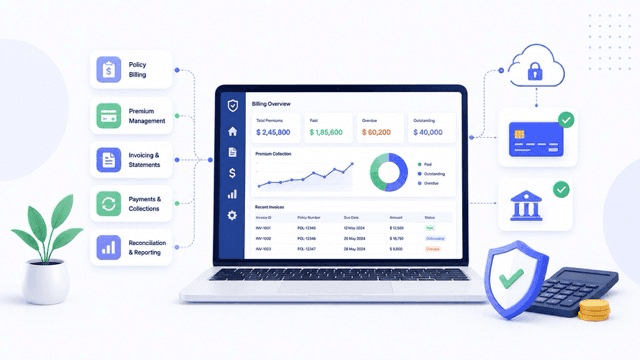
AutoPay Path Selection – Quick-Decision Framework for Agency Operations Managers
| AutoPay Path | Best Fit | Key Limitation | AMS Reconciliation? |
| Agency-Native AutoPay (ePayPolicy) | Agencies with AMS integration + predictable recurring invoices; agencies passing fees through to insureds | Delivers full zero-touch reconciliation only when management-system integration is in place | ✅ Automatic when AMS-integrated |
| Bank Bill Pay | Security-conscious policyholders with flat-rate, stable premiums | Fixed payment amount; breaks on mid-term endorsements; no agency visibility into enrollment | ❌ Manual match required |
| Third-Party Bill App | Policyholders self-managing multi-carrier bills | Fully outside agency’s billing stack; no agency visibility | ❌ No reconciliation path |
Use this table to pre-qualify which path to recommend to each policyholder segment before their next renewal conversation.
Related Reading
- Insurance Workflow Automation
- Insurance Automation Tools
- Insurance Premium Payment Automation
- Insurance Premium Collection Process
- Insurance Agency Efficiency
Compliance, Security, and Audit Readiness in Insurance Payment Automation
Premium funds are not the agency’s money, and the payment infrastructure handling them has to reflect that legal reality from the moment a transaction is initiated. Generic processors, the same platforms built to move revenue into a merchant’s operating account, are architected around a fundamentally different assumption: that the entity receiving the payment owns it. Insurance premiums collected on behalf of a carrier do not meet that assumption, and the mismatch creates compliance exposure that no reconciliation workaround can fully close.
Regulators do not announce examinations with much warning. When a state Department of Insurance examiner or an E&O carrier asks for a timestamped ledger of every premium collected in the past 18 months, the agency that built its records inside a generic processor discovers a hard truth: date-stamped transaction logs are not the same thing as an audit trail.

$50,000–$200,000+ Annual PCI-DSS audit cost for non-integrated agencies
Trust accounting requires that premium funds collected on behalf of a carrier never commingle with the agency’s operating funds. Generic payment processors have no concept of this distinction.
At a glance
| Platform Type | Trust Accounting Enforcement | PCI-DSS Compliance | Audit Trail | Commingling Risk |
| Generic Payment Processor | No concept of trust accounting distinction; deposits everything into whichever bank account the merchant specifies, leaving separation burden on agency accounting staff | Agencies handling card data outside a natively integrated, PCI-compliant platform absorb the full audit burden ($50,000–$200,000+ annually) plus exposure to card-network fines ($5,000–$100,000/month) | Date-stamped transaction logs are not the same thing as an audit trail | High, commingling treated as serious violation by state Departments of Insurance; enforcement actions have resulted in fines, license suspensions, and personal liability |
| Insurance-Native Payment Platform (PCI Level 1 / SOC 2 Type II) | Enforces premium/operating fund separation at the transaction level, not as an afterthought reconciled at month-end | Outsourcing to a PCI Level 1 compliant platform collapses the audit cost center because the agency never directly handles raw card data; SOC 2 Type II adds independent verification that security controls operate continuously | Timestamped ledger of every premium collected available on demand for regulators | Low, because separation is enforced at the transaction level |
Generic processors deposit everything into whichever bank account the merchant specifies, leaving the separation burden entirely on the agency’s accounting staff. State Departments of Insurance treat commingling as a serious violation, and enforcement actions have resulted in fines, license suspensions, and personal liability for agency principals. An insurance-built payment platform enforces the separation at the transaction level rather than at month-end.
Security Floor – PCI-DSS, SOC 2, and Encryption
The real cost of running payment processing through disconnected, bolt-on tools isn’t the subscription fee; it’s the hidden compliance exposure. Businesses that handle cardholder data directly can spend $50,000 to $200,000 or more annually on PCI-DSS audit programs, plus exposure to card-network fines ranging from $5,000 to $100,000 per month for non-compliance. Agencies that handle card data outside a natively integrated, PCI-compliant platform absorb both that audit burden and the full manual reconciliation overhead; moving payment processing to a PCI Level 1 compliant platform built for insurance removes both costs at once. SOC 2 Type II certification adds a second layer, requiring independent verification that security controls operate continuously and as designed, not merely that they exist on paper at the time of audit.
Policyholder and Customer Experience – How Payment Automation Reduces Lapses and Builds Retention
Billing friction is the silent driver behind most accidental policy lapses, and most agencies never connect those two things. The lapse call feels like a relationship problem. In practice, it is a payment system problem, and that matters because a system problem can actually be fixed.

AutoPay Enrollment Converts Every Due Invoice From a Lapse Risk Into a Non-Event
A policy lapses the moment a policyholder fails to pay by the end of the grace period, and most grace periods run only 30 days. That is a narrow window. When a due invoice requires a policyholder to remember the bill, log in, locate a saved card, and manually submit payment, every one of those steps is a place the transaction can stall. AutoPay removes every step after enrollment. The invoice posts from the agency management system; payment follows automatically. No reminder needed, no action required, no lapse.
Same-Day Binding – How Digital Payment Collection Closes the Gap Between Quote and Coverage
A new commercial lines client who completes an application, sets up ACH AutoPay, and submits payment digitally can be bound the same day. A client paying by check cannot.
How Insurance Premium Payment Automation Reduces Lapses and Builds Retention
| Payment Method / Scenario | Binding Speed | Lapse Risk | Float / Clearing Delay |
| Digital Payment / ACH AutoPay | Same-day binding, agency can issue binder the moment funds are verified | Removed, AutoPay removes every step after enrollment; no reminder, no action, no lapse | None, digital payment confirmation is immediate |
| Check Payment | Delayed, check clearing introduces a float window that delays binding | Higher, manual steps (remember bill, log in, locate card, submit) each represent a place the transaction can stall | Yes, float window delays binding and exposes agency to coverage-gap risk |
Check clearing introduces a float window that delays binding and exposes the agency to coverage-gap risk. Digital payment confirmation is immediate, so the agency can issue the binder the moment funds are verified rather than waiting on the mail.
The AutoPay Discount Incentive – Why Many Insurers Pay Policyholders to Enroll
Many insurers offer paperless or automatic payment discounts, commonly in the 3 to 5 percent range on annual premium, to shift policyholders onto AutoPay. Communicating that discount at binding, before the first invoice posts, is the highest-leverage moment to drive enrollment.
Integration with Insurance Systems – How Premium Payment Software Connects to Your AMS and Eliminates Reconciliation
Most payment tools stop at processing the transaction and leave your team to handle everything that comes after. What determines whether reconciliation disappears or just moves off-screen is whether your payment platform talks directly to your AMS, closing the loop inside your system of record rather than creating parallel work outside it. This section breaks down what native integration looks like in practice, how ePayPolicy’s Finance Connect, Payables Connect, and AutoPay each fit into that model, and what conditions need to be in place for the full reconciliation benefit to materialize.

What “Native AMS Integration” Actually Means – Invoice-to-Payment Without a Human in the Middle
The assumption seems reasonable on its surface: if your AMS generates the invoice and your bank processes the payment, the hard work is done. What gets left out of that logic is the step in between, where a real person opens two systems, matches a payment to a posted invoice, and manually updates the record. That step does not disappear with generic payment tools. It becomes invisible overhead, repeated hundreds of times a month, scaling in direct proportion to your policy count.
Native integration means the payment platform reads directly from your agency management system. When an invoice posts, the payment fires. When the payment settles, the status writes back, with no one exporting a file, copying an account number, or opening a second screen. The reconciliation closes inside the AMS itself. ePayPolicy’s Finance Connect and Payables Connect are built around exactly this approach, putting payment automation inside the management-system workflow instead of alongside it.
This setup matters most when two conditions are already in place: the agency has a management-system integration active, and clients have predictable recurring invoices. Without both, AutoPay still reduces manual work, clients opt in during onboarding or at the payment page, and thereafter payments run automatically each billing cycle, but the full reconciliation benefit only arrives when the payment platform reads directly from the AMS.
The same logic extends to outbound money movement. ePayPolicy’s Network Payables feature eliminates the volume that once required manual check printing, stuffing, and mailing in a single automated run, the same “no human in the middle” principle applied to the payables side of the ledger.
The AMS Landscape and Where Payment Software Plugs In
It connects to agency management systems (AMS360, Applied, BindHQ, AIM, NowCerts) plus custom API, and each handles invoice posting differently. A payment platform that is not purpose-built for insurance typically connects to none of them natively. It lives outside the management system entirely, which means every transaction still requires a manual hand-off to close.
The integration question is whether a processor can read a posted invoice from your specific AMS, trigger payment automatically, and write the confirmation back, without a human touching it. That is a different technical relationship, and it is the standard ePayPolicy’s integrated platform is built to meet, folding payments into the agency workflows already in use instead of running a separate process beside them.
How Premium Payment Software Integrates with Your AMS and Cuts Reconciliation
| Integration Type | Reconciliation Method | Human Touchpoints | Error Risk | AMS Connectivity |
| Native AMS Integration (e.g. ePayPolicy Finance Connect / AMS integrations) | Closed-loop: payment status writes back to AMS automatically when payment settles; reconciliation is continuous, not a scheduled batch correction | Zero, no exporting a file, copying an account number, or opening a second screen required | Prevented outright, because native integration removes manual re-entry | Connects natively to AMS360, Applied, BindHQ, AIM, NowCerts plus custom API |
| Bolt-On / Generic Processor | CSV export someone has to import, map, and match by hand; payment collected in one system, recorded in another | High, every transaction requires a manual hand-off; person opens two systems, matches payment to posted invoice, manually updates record | Manual re-entry introduces billing error rates; mismatched payment past grace period can trigger lapse notice for policyholder who already paid | Not purpose-built for insurance; typically connects to none of the standard AMS platforms natively; lives outside the management system entirely |
Why Bolt-On Processors Break at Reconciliation – The CSV Export Problem
The failure point is always the same. A payment is collected in one system and recorded in another, and the only bridge between them is a CSV export someone has to import, map, and match by hand. Applied Systems has documented that disconnected payment platforms require manual data exports, imports, and matching steps that embedded finance automation eliminates entirely. Industry reconciliation research consistently shows that manual re-entry introduces billing error rates that native integration prevents outright, and each compounding error becomes harder to unwind the longer it sits unmatched in the AMS.
A mismatched payment that goes unresolved past the grace period can trigger a lapse notice for a policyholder who already paid, creating both a client-experience failure and an E&O exposure that a native, closed-loop integration prevents from the start. ePayPolicy’s CheckMate and Quotes & Invoices tools address this at the source, automating reconciliation so that the payment record and the invoice record stay synchronized inside the AMS itself. When the management-system integration is active, that synchronization runs continuously rather than as a scheduled batch correction. The agencies we work with that send the highest invoice volumes are precisely the ones where this distinction, automated reconciliation versus manual CSV matching, compounds most visibly on the bottom line.
Data Insights, Reporting, and Receivables Visibility Across Your Insurance Payment Automation Platform
Payment data doesn’t lie. It just hides in the wrong place.
“Our insurance teams rely on fragmented tools that create gaps in visibility across the claims and payment lifecycle, making it difficult to get a unified view of receivables and processing status.”

The reporting gap most agency operations managers don’t know they have sits in the space between payment events and posted receivables, where every exception becomes invisible and every unlogged billing communication becomes E&O exposure. A native, integrated payment platform closes both gaps simultaneously, turning payment data from an afterthought into a record you can defend in an audit.
Insurance teams running fragmented tools, paper checks, phone payments, disconnected processors, face a compounding visibility problem: there is no single place where payment status, receivables aging, and transaction history converge. Every exception, a failed ACH, a misapplied premium, a delayed carrier posting, lands in a blind spot that no single dashboard surfaces. The result is an operational risk that grows quietly with every new policy you write, and it’s precisely the environment where ePayPolicy’s integrated platform is most beneficial: agencies currently collecting by paper check or phone that need to digitize receivables quickly and reduce the time staff spend chasing down manual payments.
Your Real-Time Receivables Dashboard, Without Calling Accounting
The familiar pattern is an agent pinging accounting to ask whether a client paid, accounting checking a spreadsheet that was last updated Thursday, and nobody quite sure which version is current. Retail agents stop calling about slow or bounced checks only when the payment experience is modernized enough that those events no longer occur, and that modernization starts with a connected Payment Page and Dashboard that surfaces real-time status without the back-and-forth. Because AutoPay triggers fire directly from the AMS invoice, and AutoPay is most powerful when clients have predictable recurring invoices and a management-system integration is already in place, every settlement posts against the originating record automatically. An operations manager pulling a same-day aging report sees zero unmatched payments: not because someone reconciled overnight, but because reconciliation already happened. Agencies can onboard new clients faster precisely because that coordination overhead has been eliminated.
Daily Settlement Reports That Match AMS Records
The spreadsheet layer between your payment processor and your AMS isn’t just tedious. It’s where errors live. Manual reconciliation overhead grows with book size rather than shrinking, a pattern corroborated by agency-reported estimates that put payment follow-up at 15 to 20 percent of accounting staff time in agencies that have not yet automated their billing workflow.
ePayPolicy’s Finance Connect and connected accounting approach matches settlement data directly to AMS records through Quotes & Invoices, removing the export-import cycle that creates mismatches. For agencies that also issue high volumes of outbound payments, Payables Connect and Network Payables eliminate paper-check printing and mailing on the payables side, so the same disconnect that affects receivables doesn’t reappear on the outbound side. Across the market, modern billing software purpose-built for insurance agencies addresses exactly this full-cycle visibility gap that legacy, bolt-on processors cannot.
Full Audit Trail as a Compliance Baseline
E&O risk management best practice holds that every billing-related client communication should be logged with timestamp, content, and delivery confirmation to create a defensible audit trail. AutoPay events, ACH initiations, failed attempts, and retry outcomes are all captured automatically inside ePayPolicy’s connected platform, so when a Department of Insurance examiner or E&O carrier requests a transaction history, the agency can produce a complete, timestamped ledger without reconstructing it from email threads or spreadsheet notes. CheckMate extends that trail further by capturing check-payment events that would otherwise exist only as paper records, giving agencies that are mid-transition away from paper checks a bridge to a fully digital, auditable receivables record, without losing continuity on policies that haven’t yet converted to electronic payment.
Related Reading
- Payment Processing For Insurance Companies
- Insurance Remittance Processing Systems
- Insurance Payment Processing Companies
Next steps
If your accounting staff are losing a measurable share of every week to payment follow-up, reconciliation mismatches, and lapse-prevention calls, the path forward starts with accepting that payment volume and manual effort are only coupled when the tools were never built for insurance. Start with our insurance billing software.
The PCI compliance burden insight makes this concrete: agencies running card payments through bolt-on processors absorb both the audit overhead and the reconciliation labor, potentially spending $50,000 to $200,000 annually while also eating the staff hours that native integration would eliminate. The lapse-window insight makes it urgent: because most grace periods run only 30 days, and because manual follow-up workflows consume 15 to 20 percent of accounting staff time each week, that window of lapse risk widens with every new policy added to the book. Together, they point to the same next step: reading deeper on what insurance-native billing infrastructure actually does differently.
For a closer look at how purpose-built billing software closes both gaps at once, see insurance billing software. From there, how the full reconciliation cycle fits together becomes clear.
Frequently Asked Questions
Does AutoPay actually prevent policy lapses, or does it just send reminders faster?
AutoPay prevents lapses by removing the human dependency from the payment cycle entirely, there is no reminder to forget, no link to misplace, and no grace period to race against. When a policyholder’s invoice posts from the agency management system, payment runs automatically without any staff member initiating or approving it.
How is agency-native AutoPay different from my policyholders just setting up bill pay through their bank?
Bank bill pay sends a fixed amount on a scheduled date and operates entirely outside your agency’s billing stack, meaning payments arrive as untagged deposits that still require manual matching in your AMS. It also breaks on mid-term endorsements, because the bank sends the original amount rather than the revised one, creating underpayments that look like lapses until someone investigates.
At what point does manual premium collection actually start costing more than automating it?
The post describes a measurable inflection point, invisible to most growing agencies, at which the fully-loaded cost of manual payment processing crosses the cost of insurance-native automation. Because manual overhead scales linearly with every new policyholder while native automation does not, the longer an agency waits to measure this drift, the more it shows up as longer days sales outstanding on premium receivables and a back-office team absorbing growing reconciliation volume.
Will AutoPay work well for all of my policyholders, or only certain ones?
AutoPay delivers the greatest operational lift for policyholders who have predictable, recurring invoices, making it a natural fit for the majority of personal and commercial lines renewal books. The full zero-touch benefit also materializes most completely when the agency already has a management-system integration in place, so the payment platform reads posted invoices directly from the AMS without any manual data re-entry.
How does automating premium payments free up my accounting staff, and what can they do with that time instead?
Every policy enrolled in AutoPay eliminates one manual task, no outbound call, no follow-up email, and no reconciliation exception for that billing cycle. Reducing the manual chase is described as one of the highest-leverage moves an agency can make, with the recovered hours intended to be redirected toward retention and service work that actually grows the agency.