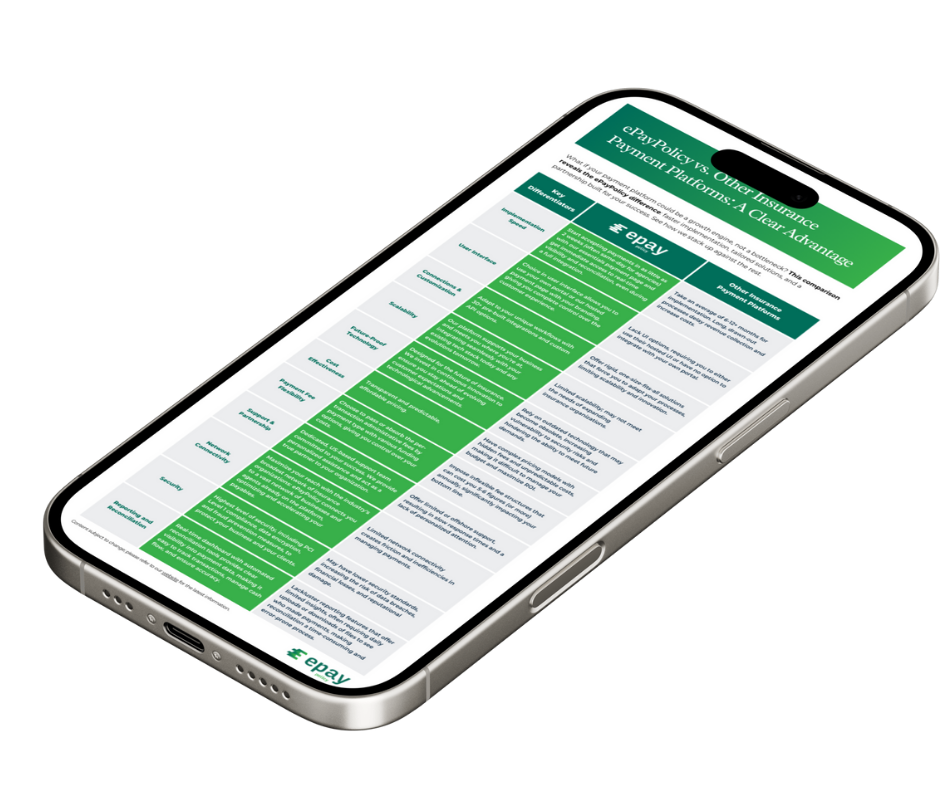

Sending a payment link is not automation. Here is what true AutoPay actually means, why the gap costs agencies more than they track, and how to close it without adding headcount.
Most agencies believe they have premium payment automation in place. They have a system that sends reminders, a portal where clients can pay, and a management system that tracks what is owed. That feels like automation.
It’s not. The gap between “we send a payment link” and “the invoice pays itself” is where missed premiums accumulate, policies lapse, and staff hours quietly disappear. Understanding what genuine AutoPay means, at the operational level, is the first step toward closing that gap.

For agencies ready to move past the workaround, payment tools built for insurance handle this without adding headcount or complexity. See our insurance billing software for how this works in practice.
Insurance premium payment automation means exactly one thing in practice: an invoice posts from the agency management system, and the enrolled policyholder’s payment clears automatically, with no staff member initiating, approving, or following up on that transaction. The trigger is the invoice post itself. The outcome is a confirmed payment. Nothing in between requires a human decision. This is meaningfully different from a payment link or a scheduled reminder. Those tools move information toward a person. True AutoPay moves money without one.
Second, the payment platform reads that posted invoice directly, without any data re-entry or manual export. Third, the enrolled policyholder’s stored payment method is charged automatically, and a confirmation posts back to the record.
No staff member reconciles the result afterward. A missed premium is rarely intentional; it’s usually a forgotten due date or an expired card. AutoPay removes the dependency entirely, and delivers the greatest operational lift when the agency already has a management-system integration in place and policyholders carry predictable, recurring invoices. Without that foundation, AutoPay still reduces manual work, but the full zero-touch benefit materializes only when the AMS is the authoritative source the payment platform reads from directly.
In Indio Technologies’ 2019 research, up to 25% of an agency’s energy and productivity can be wasted on application and renewal process tasks, a share that manual premium chasing meaningfully contributes to, and that AutoPay is designed to recover.
25% of agency energy wasted on renewal process tasks
Key takeaways
- Most insurance agencies have payment reminders and a client portal, that’s not automation, and the staff hours lost to the gap between those two things are real and measurable.
- The fully-loaded cost of manual premium collection, follow-up calls, deposit reconciliation, cross-system matching, crosses the cost of native payment automation at a threshold most growing agencies hit before they realize it.
- Premium funds are not agency revenue, and generic payment processors are architected as if they are; that mismatch creates compliance exposure the moment a transaction is initiated.
- Billing friction drives most accidental policy lapses, not relationship problems, and the fix is a better process rather than a better conversation.
- Native AMS integration means the invoice posts and the payment follows without a person opening two systems to match them, anything short of that is still a manual workflow.
- Unlogged billing communications and unmatched payment exceptions are not just reconciliation headaches; they are E&O exposure hiding in the space between payment events and posted receivables.
- ePayPolicy’s AutoPay closes the loop: policyholders set up their account once, and every invoice posted from the agency’s management system pays automatically, no manual action required per invoice, and the platform is live in as little as 24 hours.
Payment Automation and Operational Efficiency – The Real Cost of Manual Premium Collection
The Hidden Salary Drain – How Many Staff Hours Does Manual Premium Chasing Actually Consume?
Most insurance agency operations managers and office managers believe that more policyholders inevitably means more manual payment work, that the chase, the reconciliation, and the coordination overhead are fixed costs of running a bigger agency, not symptoms of the wrong tools. That belief is worth testing. According to the Reagan Consulting Best Practices Study, agencies that fail to track and act on operational metrics, including payment velocity and reconciliation rates, consistently end up reacting to problems instead of preventing them, absorbing coordination work that compounds billing cycle after billing cycle.

What most teams report reinforces this pattern, noting that accounting and support staff routinely lose a significant share of their working week to payment follow-up activity, a burden that grows heavier in agencies still relying on paper checks or phone-collected payments.
For a mid-size agency with ten accounting and support staff at a median salary near $55,000, that translates to hundreds of staff-hours annually, consumed entirely by payment follow-up. Client service and retention calls go unworked. The cost hides inside salary lines, distributed across everyone who has ever stopped real work to send a “just checking in on your payment” email. ePayPolicy serves both agencies that want to digitize receivables quickly and agencies already receiving paper checks, with a dedicated product called CheckMate that converts incoming paper checks into digital payments, extending its value to ongoing check handling as well as the transition away from paper.
Payment Status Fragmentation Across AMS, Email, and Spreadsheets
The breaking point is usually the same: three systems, three answers. Instead of one authoritative record, agencies are left juggling:
- The AMS, which shows an open invoice
- The spreadsheet, which shows “paid, pending confirmation”
- The email thread from last Tuesday, which says the check is in the mail
Someone on the accounting team spends twenty minutes reconciling those three sources before they can answer a single agent’s question. Across the market, payment reconciliation accuracy stands out as a core operational KPI for agencies and MGAs, and agencies without a reliable single source of payment truth routinely absorb preventable labor costs across their accounting function. Payment status fragmentation is a tooling problem. The same coordination cost repeats every billing cycle, for every policy, until the tools change.
ePayPolicy’s integrated platform, including its Payment Page and Finance Connect, is built to eliminate manual reconciliation by connecting directly to an agency’s management system. When the agency has a management-system integration in place, payment status flows back into the AMS automatically, so the spreadsheet and the email thread are no longer needed as backup sources of truth. The result is a material improvement in operational efficiency: accounting staff answer the “did they pay?” question in seconds, not minutes, because one system holds the answer.
AutoPay Prevents Late Fees and Coverage Cancellation, Not Just Inconvenience
AutoPay prevents late fees and potential coverage cancellation by removing the human dependency from the payment cycle entirely. ePayPolicy’s AutoPay feature works at the moment it matters most: during onboarding or at the payment page, a client opts in once, and thereafter payment initiates automatically each billing cycle. When a policyholder’s invoice posts from the agency management system, payment runs without a reminder to forget, a link to misplace, or a grace period to race against. AutoPay is most effective when clients have predictable recurring invoices, making it a natural fit for the majority of personal and commercial lines renewal books.
The operational gain compounds quickly. Every policy enrolled in AutoPay is one fewer manual task: no outbound call, no follow-up email, no reconciliation exception. QuoteSweep underscores that reducing manual tasks in the billing cycle is among the highest-leverage moves an agency can make to free accounting staff for retention and service work. ePayPolicy’s AutoPay and its broader integrated platform are designed with exactly that shift in mind: reduce the chase, and redirect the hours toward activity that actually grows the agency.
How to Set Up AutoPay for Insurance Premiums – Through Your Provider, Your Bank, or a Third-Party App
Three AutoPay paths exist for insurance premiums. Knowing which one your policyholders are actually using determines whether your staff spends Tuesday morning on strategy or on deposit-hunting. The core synthesis here is this: there is a measurable inflection point, invisible to most growing agencies, at which the fully-loaded cost of manual payment processing crosses the cost of insurance-native automation. Because manual overhead scales linearly with every new policyholder while native automation does not, the question for operations managers is how far past the breakeven point they have already drifted without measuring it. That drift has a direct financial signature: longer days sales outstanding (DSO) on premium receivables, unpredictable float risk, and a back-office team absorbing reconciliation volume that grows with every new retail agency partner you onboard.
1. ePayPolicy – Best for Direct Insurance Premium AutoPay Through Your Provider
Setting up AutoPay directly through an insurer’s online portal or mobile app is the most operationally clean path when it works cleanly, and that qualifier matters. Carriers like State Farm offer this through portals where a policyholder links a bank account via ACH or a credit card, sets a billing frequency, and confirms enrollment once. After that, payments trigger automatically on the due date. ACH transfers typically carry lower processing fees than card payments and settle within a few business days, while card payments process faster but introduce chargeback risk, a trade-off agencies should communicate to policyholders at enrollment.
One recurring confusion worth flagging to policyholders before enrollment: insureds who pay their premium in full upfront sometimes receive an autopay discount at binding, only to have that discount reversed months later when the carrier determines they no longer meet autopay-eligibility criteria, generating an unexpected charge the policyholder never anticipated. Catching this mismatch at enrollment, rather than after the reversal, is part of the counseling value a well-run agency provides.
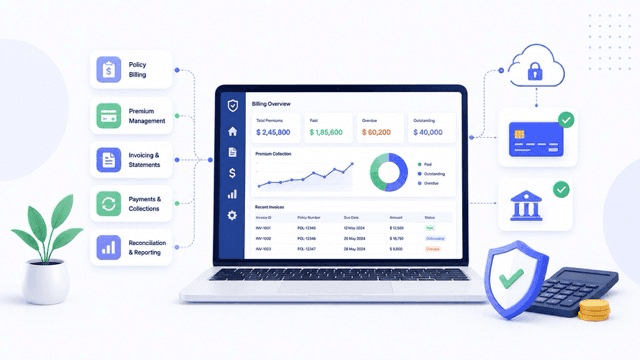
The real limitation surfaces at scale: most insurer portals stop at enrollment and do nothing to close the reconciliation gap inside your agency management system. A payment arrives; your AMS still shows the invoice open until someone manually matches it. ePayPolicy’s AutoPay feature, available through its connected Payment Page and Dashboard, closes that gap by embedding AutoPay directly inside the agency’s billing workflow.
When a policyholder opts in during onboarding or at the payment page, enrollment is captured once; thereafter, each billing cycle runs automatically. The enrolled policyholder’s payment triggers the moment an invoice posts from the management system, with no manual matching required. That automation compresses DSO on premium receivables, so cash flow becomes more predictable quarter over quarter rather than subject to the lag of manual deposit-hunting.
Most beneficial when the agency has a management-system integration in place and clients have predictable recurring invoices, precisely the condition ePayPolicy’s AMS integrations are designed to serve.
For agencies distributing premiums across a high volume of retail agency partners, ePayPolicy’s Payables Connect and Network Payables features extend that same zero-touch logic to outbound disbursements, eliminating paper-check printing and mailing and keeping the back-office team from drowning in manual reconciliation as partner volume scales. Fees can also be passed through to insureds at the payment page, preserving agency margin without requiring a separate billing conversation.
2. Bank Bill Pay AutoPay – Best for Multi-Policy Premium Scheduling Through Your Checking Account
Bank bill pay is a legitimate AutoPay path, and a meaningful share of policyholders prefer it precisely because the insurer never receives or stores their payment credentials, a genuine privacy advantage for security-conscious policyholders, and one worth acknowledging rather than dismissing. The policyholder logs into their bank, such as Chase or Bank of America, schedules a recurring payment to the carrier, and the bank pushes funds on the chosen date.
The problem for operations managers is that bank bill pay runs entirely outside the insurer’s billing system. Payments arrive as untagged deposits. If a mid-term premium change occurs, the bank sends the original fixed amount, not the revised one, creating an underpayment that looks like a lapse until someone investigates, exactly the kind of manual clean-up work that stretches out days sales outstanding and pulls staff away from higher-value tasks. Industry research on billing automation confirms that the credibility of any recurring-payment program depends on policyholders trusting that the amount collected will match what they actually owe, a condition bank bill pay cannot guarantee when endorsements occur mid-term. This path suits security-conscious policyholders with stable, flat-rate premiums, but it is a poor fit for commercial lines or any policy with mid-term endorsements.
3. Third-Party Bill Management Apps – Best for Tracking and Automating Premiums Across All Insurers in One View
AutoPay Path Selection – Quick-Decision Framework for Agency Operations Managers
| AutoPay Path | Best Fit | Key Limitation | AMS Reconciliation? |
| Agency-Native AutoPay (ePayPolicy) | Agencies with AMS integration + predictable recurring invoices; agencies passing fees through to insureds | Delivers full zero-touch reconciliation only when management-system integration is in place | ✅ Automatic when AMS-integrated |
| Bank Bill Pay | Security-conscious policyholders with flat-rate, stable premiums | Fixed payment amount; breaks on mid-term endorsements; no agency visibility into enrollment | ❌ Manual match required |
| Third-Party Bill App | Policyholders self-managing multi-carrier bills | Fully outside agency’s billing stack; no agency visibility | ❌ No reconciliation path |
Use this table to pre-qualify which path to recommend to each policyholder segment before their next renewal conversation.
Related Reading
- Insurance Workflow Automation
- Insurance Automation Tools
- Insurance Premium Payment Automation
- Insurance Premium Collection Process
- Insurance Agency Efficiency
Compliance, Security, and Audit Readiness in Insurance Payment Automation
Premium funds are not the agency’s money, and the payment infrastructure handling them has to reflect that legal reality from the moment a transaction is initiated. Generic processors, the same platforms built to move revenue into a merchant’s operating account, are architected around a fundamentally different assumption: that the entity receiving the payment owns it. Insurance premiums collected on behalf of a carrier do not meet that assumption, and the mismatch creates compliance exposure that no reconciliation workaround can fully close.
Regulators do not announce examinations with much warning. When a state Department of Insurance examiner or an E&O carrier asks for a timestamped ledger of every premium collected in the past 18 months, the agency that built its records inside a generic processor discovers a hard truth: date-stamped transaction logs are not the same thing as an audit trail.

$50,000–$200,000+ Annual PCI-DSS audit cost for non-integrated agencies
Trust accounting requires that premium funds collected on behalf of a carrier never commingle with the agency’s operating funds. Generic payment processors have no concept of this distinction.
At a glance
| Platform Type | Trust Accounting Enforcement | PCI-DSS Compliance | Audit Trail | Commingling Risk |
| Generic Payment Processor | No concept of trust accounting distinction; deposits everything into whichever bank account the merchant specifies, leaving separation burden on agency accounting staff | Agencies handling card data outside a natively integrated, PCI-compliant platform absorb the full audit burden ($50,000–$200,000+ annually) plus exposure to card-network fines ($5,000–$100,000/month) | Date-stamped transaction logs are not the same thing as an audit trail | High, commingling treated as serious violation by state Departments of Insurance; enforcement actions have resulted in fines, license suspensions, and personal liability |
| Insurance-Native Payment Platform (PCI Level 1 / SOC 2 Type II) | Enforces premium/operating fund separation at the transaction level, not as an afterthought reconciled at month-end | Outsourcing to a PCI Level 1 compliant platform collapses the audit cost center because the agency never directly handles raw card data; SOC 2 Type II adds independent verification that security controls operate continuously | Timestamped ledger of every premium collected available on demand for regulators | Low, because separation is enforced at the transaction level |
Generic processors deposit everything into whichever bank account the merchant specifies, leaving the separation burden entirely on the agency’s accounting staff. State Departments of Insurance treat commingling as a serious violation, and enforcement actions have resulted in fines, license suspensions, and personal liability for agency principals. An insurance-built payment platform enforces the separation at the transaction level rather than at month-end.
Security Floor – PCI-DSS, SOC 2, and Encryption
The real cost of running payment processing through disconnected, bolt-on tools isn’t the subscription fee; it’s the hidden compliance exposure. Businesses that handle cardholder data directly can spend $50,000 to $200,000 or more annually on PCI-DSS audit programs, plus exposure to card-network fines ranging from $5,000 to $100,000 per month for non-compliance. Agencies that handle card data outside a natively integrated, PCI-compliant platform absorb both that audit burden and the full manual reconciliation overhead; moving payment processing to a PCI Level 1 compliant platform built for insurance removes both costs at once. SOC 2 Type II certification adds a second layer, requiring independent verification that security controls operate continuously and as designed, not merely that they exist on paper at the time of audit.
Policyholder and Customer Experience – How Payment Automation Reduces Lapses and Builds Retention
Billing friction is the silent driver behind most accidental policy lapses, and most agencies never connect those two things. The lapse call feels like a relationship problem. In practice, it is a payment system problem, and that matters because a system problem can actually be fixed.

AutoPay Enrollment Converts Every Due Invoice From a Lapse Risk Into a Non-Event
A policy lapses the moment a policyholder fails to pay by the end of the grace period, and most grace periods run only 30 days. That is a narrow window. When a due invoice requires a policyholder to remember the bill, log in, locate a saved card, and manually submit payment, every one of those steps is a place the transaction can stall. AutoPay removes every step after enrollment. The invoice posts from the agency management system; payment follows automatically. No reminder needed, no action required, no lapse.
Same-Day Binding – How Digital Payment Collection Closes the Gap Between Quote and Coverage
A new commercial lines client who completes an application, sets up ACH AutoPay, and submits payment digitally can be bound the same day. A client paying by check cannot.
How Insurance Premium Payment Automation Reduces Lapses and Builds Retention
| Payment Method / Scenario | Binding Speed | Lapse Risk | Float / Clearing Delay |
| Digital Payment / ACH AutoPay | Same-day binding, agency can issue binder the moment funds are verified | Removed, AutoPay removes every step after enrollment; no reminder, no action, no lapse | None, digital payment confirmation is immediate |
| Check Payment | Delayed, check clearing introduces a float window that delays binding | Higher, manual steps (remember bill, log in, locate card, submit) each represent a place the transaction can stall | Yes, float window delays binding and exposes agency to coverage-gap risk |
Check clearing introduces a float window that delays binding and exposes the agency to coverage-gap risk. Digital payment confirmation is immediate, so the agency can issue the binder the moment funds are verified rather than waiting on the mail.
The AutoPay Discount Incentive – Why Many Insurers Pay Policyholders to Enroll
Many insurers offer paperless or automatic payment discounts, commonly in the 3 to 5 percent range on annual premium, to shift policyholders onto AutoPay. Communicating that discount at binding, before the first invoice posts, is the highest-leverage moment to drive enrollment.
Integration with Insurance Systems – How Premium Payment Software Connects to Your AMS and Eliminates Reconciliation
Most payment tools stop at processing the transaction and leave your team to handle everything that comes after. What determines whether reconciliation disappears or just moves off-screen is whether your payment platform talks directly to your AMS, closing the loop inside your system of record rather than creating parallel work outside it. This section breaks down what native integration looks like in practice, how ePayPolicy’s Finance Connect, Payables Connect, and AutoPay each fit into that model, and what conditions need to be in place for the full reconciliation benefit to materialize.

What “Native AMS Integration” Actually Means – Invoice-to-Payment Without a Human in the Middle
The assumption seems reasonable on its surface: if your AMS generates the invoice and your bank processes the payment, the hard work is done. What gets left out of that logic is the step in between, where a real person opens two systems, matches a payment to a posted invoice, and manually updates the record. That step does not disappear with generic payment tools. It becomes invisible overhead, repeated hundreds of times a month, scaling in direct proportion to your policy count.
Native integration means the payment platform reads directly from your agency management system. When an invoice posts, the payment fires. When the payment settles, the status writes back, with no one exporting a file, copying an account number, or opening a second screen. The reconciliation closes inside the AMS itself. ePayPolicy’s Finance Connect and Payables Connect are built around exactly this approach, putting payment automation inside the management-system workflow instead of alongside it.
This setup matters most when two conditions are already in place: the agency has a management-system integration active, and clients have predictable recurring invoices. Without both, AutoPay still reduces manual work, clients opt in during onboarding or at the payment page, and thereafter payments run automatically each billing cycle, but the full reconciliation benefit only arrives when the payment platform reads directly from the AMS.
The same logic extends to outbound money movement. ePayPolicy’s Network Payables feature eliminates the volume that once required manual check printing, stuffing, and mailing in a single automated run, the same “no human in the middle” principle applied to the payables side of the ledger.
The AMS Landscape and Where Payment Software Plugs In
It connects to agency management systems (AMS360, Applied, BindHQ, AIM, NowCerts) plus custom API, and each handles invoice posting differently. A payment platform that is not purpose-built for insurance typically connects to none of them natively. It lives outside the management system entirely, which means every transaction still requires a manual hand-off to close.
The integration question is whether a processor can read a posted invoice from your specific AMS, trigger payment automatically, and write the confirmation back, without a human touching it. That is a different technical relationship, and it is the standard ePayPolicy’s integrated platform is built to meet, folding payments into the agency workflows already in use instead of running a separate process beside them.
How Premium Payment Software Integrates with Your AMS and Cuts Reconciliation
| Integration Type | Reconciliation Method | Human Touchpoints | Error Risk | AMS Connectivity |
| Native AMS Integration (e.g. ePayPolicy Finance Connect / AMS integrations) | Closed-loop: payment status writes back to AMS automatically when payment settles; reconciliation is continuous, not a scheduled batch correction | Zero, no exporting a file, copying an account number, or opening a second screen required | Prevented outright, because native integration removes manual re-entry | Connects natively to AMS360, Applied, BindHQ, AIM, NowCerts plus custom API |
| Bolt-On / Generic Processor | CSV export someone has to import, map, and match by hand; payment collected in one system, recorded in another | High, every transaction requires a manual hand-off; person opens two systems, matches payment to posted invoice, manually updates record | Manual re-entry introduces billing error rates; mismatched payment past grace period can trigger lapse notice for policyholder who already paid | Not purpose-built for insurance; typically connects to none of the standard AMS platforms natively; lives outside the management system entirely |
Why Bolt-On Processors Break at Reconciliation – The CSV Export Problem
The failure point is always the same. A payment is collected in one system and recorded in another, and the only bridge between them is a CSV export someone has to import, map, and match by hand. Applied Systems has documented that disconnected payment platforms require manual data exports, imports, and matching steps that embedded finance automation eliminates entirely. Industry reconciliation research consistently shows that manual re-entry introduces billing error rates that native integration prevents outright, and each compounding error becomes harder to unwind the longer it sits unmatched in the AMS.
A mismatched payment that goes unresolved past the grace period can trigger a lapse notice for a policyholder who already paid, creating both a client-experience failure and an E&O exposure that a native, closed-loop integration prevents from the start. ePayPolicy’s CheckMate and Quotes & Invoices tools address this at the source, automating reconciliation so that the payment record and the invoice record stay synchronized inside the AMS itself. When the management-system integration is active, that synchronization runs continuously rather than as a scheduled batch correction. The agencies we work with that send the highest invoice volumes are precisely the ones where this distinction, automated reconciliation versus manual CSV matching, compounds most visibly on the bottom line.
Data Insights, Reporting, and Receivables Visibility Across Your Insurance Payment Automation Platform
Payment data doesn’t lie. It just hides in the wrong place.
“Our insurance teams rely on fragmented tools that create gaps in visibility across the claims and payment lifecycle, making it difficult to get a unified view of receivables and processing status.”

The reporting gap most agency operations managers don’t know they have sits in the space between payment events and posted receivables, where every exception becomes invisible and every unlogged billing communication becomes E&O exposure. A native, integrated payment platform closes both gaps simultaneously, turning payment data from an afterthought into a record you can defend in an audit.
Insurance teams running fragmented tools, paper checks, phone payments, disconnected processors, face a compounding visibility problem: there is no single place where payment status, receivables aging, and transaction history converge. Every exception, a failed ACH, a misapplied premium, a delayed carrier posting, lands in a blind spot that no single dashboard surfaces. The result is an operational risk that grows quietly with every new policy you write, and it’s precisely the environment where ePayPolicy’s integrated platform is most beneficial: agencies currently collecting by paper check or phone that need to digitize receivables quickly and reduce the time staff spend chasing down manual payments.
Your Real-Time Receivables Dashboard, Without Calling Accounting
The familiar pattern is an agent pinging accounting to ask whether a client paid, accounting checking a spreadsheet that was last updated Thursday, and nobody quite sure which version is current. Retail agents stop calling about slow or bounced checks only when the payment experience is modernized enough that those events no longer occur, and that modernization starts with a connected Payment Page and Dashboard that surfaces real-time status without the back-and-forth. Because AutoPay triggers fire directly from the AMS invoice, and AutoPay is most powerful when clients have predictable recurring invoices and a management-system integration is already in place, every settlement posts against the originating record automatically. An operations manager pulling a same-day aging report sees zero unmatched payments: not because someone reconciled overnight, but because reconciliation already happened. Agencies can onboard new clients faster precisely because that coordination overhead has been eliminated.
Daily Settlement Reports That Match AMS Records
The spreadsheet layer between your payment processor and your AMS isn’t just tedious. It’s where errors live. Manual reconciliation overhead grows with book size rather than shrinking, a pattern corroborated by agency-reported estimates that put payment follow-up at 15 to 20 percent of accounting staff time in agencies that have not yet automated their billing workflow.
ePayPolicy’s Finance Connect and connected accounting approach matches settlement data directly to AMS records through Quotes & Invoices, removing the export-import cycle that creates mismatches. For agencies that also issue high volumes of outbound payments, Payables Connect and Network Payables eliminate paper-check printing and mailing on the payables side, so the same disconnect that affects receivables doesn’t reappear on the outbound side. Across the market, modern billing software purpose-built for insurance agencies addresses exactly this full-cycle visibility gap that legacy, bolt-on processors cannot.
Full Audit Trail as a Compliance Baseline
E&O risk management best practice holds that every billing-related client communication should be logged with timestamp, content, and delivery confirmation to create a defensible audit trail. AutoPay events, ACH initiations, failed attempts, and retry outcomes are all captured automatically inside ePayPolicy’s connected platform, so when a Department of Insurance examiner or E&O carrier requests a transaction history, the agency can produce a complete, timestamped ledger without reconstructing it from email threads or spreadsheet notes. CheckMate extends that trail further by capturing check-payment events that would otherwise exist only as paper records, giving agencies that are mid-transition away from paper checks a bridge to a fully digital, auditable receivables record, without losing continuity on policies that haven’t yet converted to electronic payment.
Related Reading
- Payment Processing For Insurance Companies
- Insurance Remittance Processing Systems
- Insurance Payment Processing Companies
Next steps
If your accounting staff are losing a measurable share of every week to payment follow-up, reconciliation mismatches, and lapse-prevention calls, the path forward starts with accepting that payment volume and manual effort are only coupled when the tools were never built for insurance. Start with our insurance billing software.
The PCI compliance burden insight makes this concrete: agencies running card payments through bolt-on processors absorb both the audit overhead and the reconciliation labor, potentially spending $50,000 to $200,000 annually while also eating the staff hours that native integration would eliminate. The lapse-window insight makes it urgent: because most grace periods run only 30 days, and because manual follow-up workflows consume 15 to 20 percent of accounting staff time each week, that window of lapse risk widens with every new policy added to the book. Together, they point to the same next step: reading deeper on what insurance-native billing infrastructure actually does differently.
For a closer look at how purpose-built billing software closes both gaps at once, see insurance billing software. From there, how the full reconciliation cycle fits together becomes clear.
Frequently Asked Questions
Does AutoPay actually prevent policy lapses, or does it just send reminders faster?
AutoPay prevents lapses by removing the human dependency from the payment cycle entirely, there is no reminder to forget, no link to misplace, and no grace period to race against. When a policyholder’s invoice posts from the agency management system, payment runs automatically without any staff member initiating or approving it.
How is agency-native AutoPay different from my policyholders just setting up bill pay through their bank?
Bank bill pay sends a fixed amount on a scheduled date and operates entirely outside your agency’s billing stack, meaning payments arrive as untagged deposits that still require manual matching in your AMS. It also breaks on mid-term endorsements, because the bank sends the original amount rather than the revised one, creating underpayments that look like lapses until someone investigates.
At what point does manual premium collection actually start costing more than automating it?
The post describes a measurable inflection point, invisible to most growing agencies, at which the fully-loaded cost of manual payment processing crosses the cost of insurance-native automation. Because manual overhead scales linearly with every new policyholder while native automation does not, the longer an agency waits to measure this drift, the more it shows up as longer days sales outstanding on premium receivables and a back-office team absorbing growing reconciliation volume.
Will AutoPay work well for all of my policyholders, or only certain ones?
AutoPay delivers the greatest operational lift for policyholders who have predictable, recurring invoices, making it a natural fit for the majority of personal and commercial lines renewal books. The full zero-touch benefit also materializes most completely when the agency already has a management-system integration in place, so the payment platform reads posted invoices directly from the AMS without any manual data re-entry.
How does automating premium payments free up my accounting staff, and what can they do with that time instead?
Every policy enrolled in AutoPay eliminates one manual task, no outbound call, no follow-up email, and no reconciliation exception for that billing cycle. Reducing the manual chase is described as one of the highest-leverage moves an agency can make, with the recovered hours intended to be redirected toward retention and service work that actually grows the agency.