​​Built In Honors ePayPolicy in 2025 Best Places To Work Awards

Built In today announced that ePayPolicy was honored in its 2025 Best Places To Work Awards. ePayPolicy earned a place among 100 other mid-size companies in the Austin area, for the 4th straight year.

The annual awards program includes companies of all sizes, from startups to those in the enterprise, and honors both remote-first employers as well as companies in large tech markets across the U.S. 

“Awards like this mean so much because you can’t just apply for them. They’re earned,” said ePayPolicy CEO Mark Engels. “We’re building something special, and I’m proud of our entire organization for their contribution in making this an incredible place to work.” 

Built In determines Best Places to Work winners based on an algorithm, using company data about compensation and benefits. To reflect the benefits candidates are searching for more frequently on Built In, the program also weighs criteria like remote and flexible work opportunities, programs for DEI and other cultural offerings. 

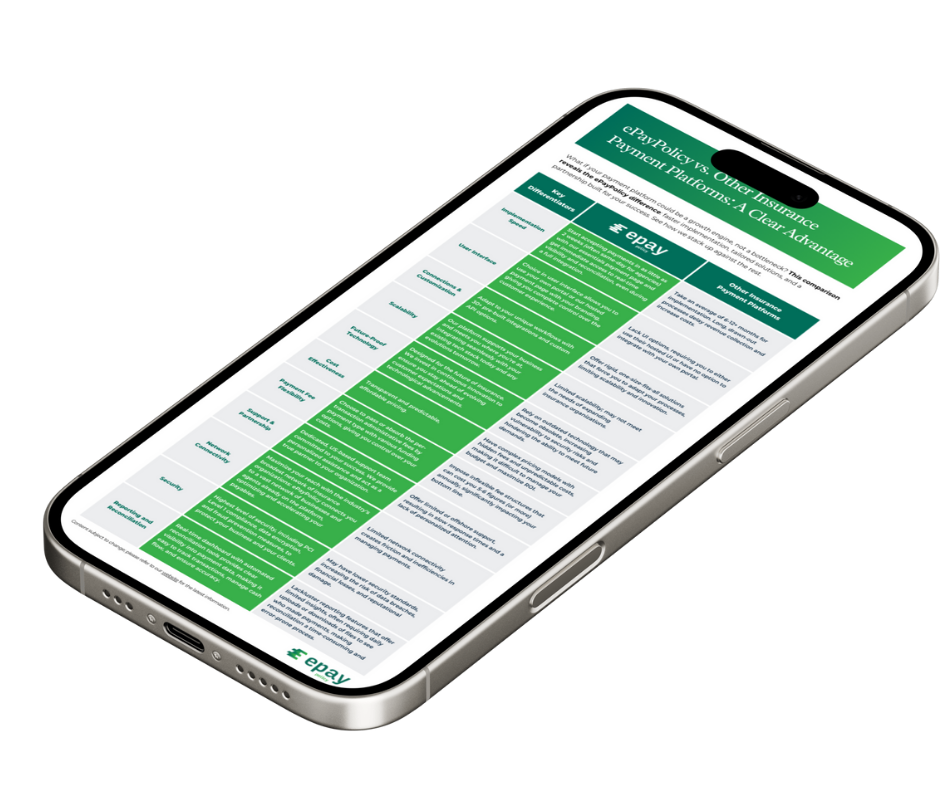
ePayPolicy was recently recognized by Gartner Digital Markets as a top digital payments platform, joining other tools like Venmo, PayPal, Stripe and Square, as the only insurance-centric payments platform on the list

Here’s what one customer had to say about the benefits of working with ePayPolicy:

“The amount of time we save equals more than 150 hours per year. Not to mention the savings of cc fees charged by the banks and card companies of approximately 5k per year.”

“Being recognized as a Best Place to Work is a testament to these companies’ commitment to building a workplace where individuals and innovation thrive,” said Built In CEO and Founder, Maria Christopoulos Katris. “Congratulations on this well-deserved honor.” 

About BuiltIn’ Best Places to Work

Built In’s annual Best Places to Work program honors companies with the best total rewards packages across the U.S. and in the following tech hubs: Atlanta, Austin, Boston, Chicago, Colorado, Dallas, Houston, Los Angeles, Miami, New York, San Diego, San Francisco, Seattle and Washington DC. Best Places to Work is distinct because its algorithm selects tech companies that build their offerings specifically around what tech professionals value in a workplace.  

About ePayPolicy

ePayPolicy offers easier payment tools, built just for insurance. ePayPolicy’s products bring insurance payments up to speed for agencies, carriers, MGAs and PFCs, with secure online payment pages, automated check processing, payables reconciliation and more. 7,500+ insurance companies trust ePayPolicy to handle their payments every day. Learn more: ePayPolicy.com

ePayPolicy Makes Inc. 5000 List for 3rd Straight Year

Austin, TX Aug 14, 2024 – Inc. magazine announced that ePayPolicy is No. 1639 on its annual Inc. 5000 list, one of the most well-known rankings of the nation’s fastest-growing private companies. The data-driven rankings highlight successful entrepreneurial companies, and has featured companies like Microsoft, Meta, Oracle, Patagonia in previous years. This was both ePayPolicy’s third year to apply and make the list.

“We’re honored to be included among the country’s most dynamic and growing companies once again,” said CEO Mark Engels. “It’s a testament to the value that our products bring to our customers, and the incredible team we have here building them.”

ePayPolicy was built to serve the insurance industry, founded on the belief that payments should be the easiest thing that agencies, brokers, MGAs, premium finance companies and carriers manage. The insurance industry has lagged behind most other verticals when it comes to modern, efficient digital payments and money movement. ePayPolicy’s suite of tools are changing that.

“We’ve made significant investments  over these last 3 years to bring new products and features to our platform, in direct partnership with our customers,” said Engels. “We have more integrated tools than ever before to make their payment processes the simplest thing that they do.”

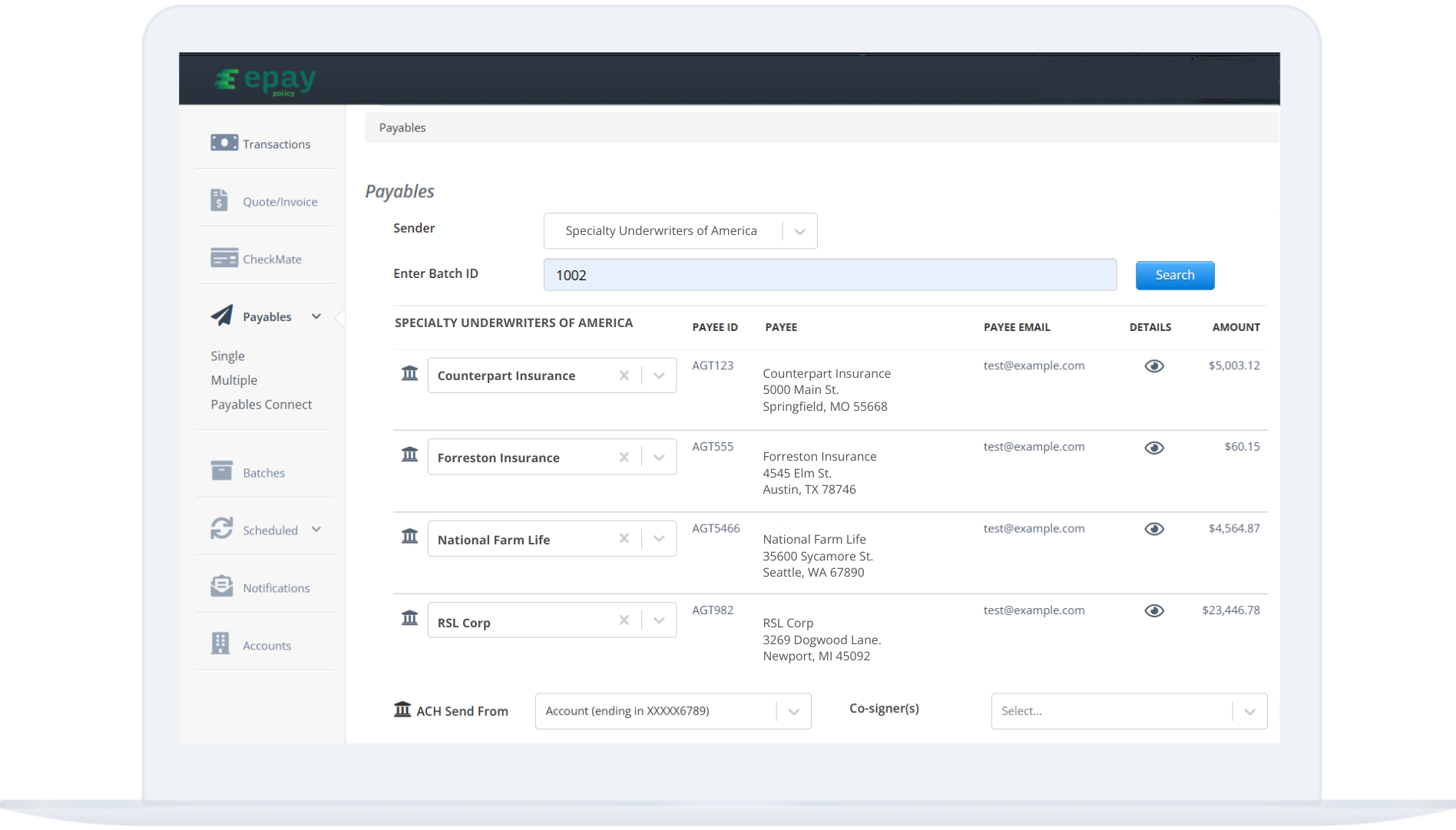
The company, which began with efficient online payment pages, has since added dozens of integrations into popular management and accounting systems, as well as features like Payables Connect for faster accounting reconciliation, and CheckMate, a modern lockbox solution for insurance companies still managing paper checks.

ePayPolicy’s latest enhancement, Finance Connect allows insurance companies to offer faster access to financing for their insureds, while maintaining existing relationships with their PFC partners.

“We never want to build products in a vacuum, without our customer’s feedback,” said Engels. “More than anything, we’re passionate about making business easier for them. This recognition  affirms that we’re still on the right track.”

About ePayPolicy

ePayPolicy offers easier payment tools, built just for insurance. ePayPolicy’s products bring insurance payments up to speed for agencies, carriers, MGAs and PFCs, with secure online payment pages, automated check processing, payables reconciliation and more. 7,500+ insurance companies trust ePayPolicy and their expert, live support team to handle their payments every day. Learn more: ePayPolicy.com

More about Inc. and the Inc. 5000 

The Inc. 5000 class of 2024 represents companies that have driven rapid revenue growth while navigating inflationary pressure, the rising costs of capital, and seemingly intractable hiring challenges. Among this year’s top 500 companies, the average median three-year revenue growth rate is 1,637 percent. In all, this year’s Inc. 5000 companies have added 874,458 jobs to the economy over the past three years.

Methodology

Companies on the 2024 Inc. 5000 are ranked according to percentage revenue growth from 2020 to 2023. To qualify, companies must have been founded and generating revenue by March 31, 2020. They must be U.S.-based, privately held, for-profit, and independent—not subsidiaries or divisions of other companies—as of December 31, 2023. (Since then, some on the list may have gone public or been acquired.) The minimum revenue required for 2020 is $100,000; the minimum for 2023 is $2 million. As always, Inc. reserves the right to decline applicants for subjective reasons. Growth rates used to determine company rankings were calculated to four decimal places.

The Paper Check Problem: Why Paper Checks Persist in Insurance

Despite living in an era dominated by digital technology, the insurance industry remains one of the last strongholds of paper checks. This persistence of paper checks in insurance is perplexing, given the operational inefficiencies and manual reconciliation issues they introduce. 

Annual use of check payments for the average American has been in decline for decades, but this trend doesn’t hold true for the insurance industry. According to data from CB Insights, check payments make up 55% of transactions for insurance companies, which is more than double the average for other industries, which stands at 22%.

Why Paper Checks Persist in Insurance

The continued use of paper checks in insurance can be attributed to several factors:

  1. Historical Precedence and Legacy Systems: Insurance companies have long relied on paper checks as a payment method. These entrenched practices are deeply embedded in the industry’s operations. Transitioning to digital alternatives can sound daunting and costly. Human behavioral changes – even those that make sense – are hard to change.
  2. Regulatory and Compliance Requirements: Insurance is a heavily regulated industry. Some small businesses would rather not worry about PCI (payment card industry) compliance, paying credit card fees, and/or finding a payment service provider that may increase their operational costs.
  3. Consumer Preference: A segment of the population, particularly older clients, seem to prefer paper checks. They trust the tangible nature of checks over digital transactions. Companies may feel that their clients are satisfied with check payments if they have not voiced otherwise. However, the graph below shows the decline in check payments and increase in credit card and debit card payments for both business and personal use.
Checks over the years

4. Perceived Security: For some, paper checks seem more secure than digital payments. The physical aspect of checks provides a sense of security, especially if the company has not yet encountered a bad experience with checks in the past.

Operational Pains of Check Collection and Manual Reconciliation

The reliance on paper checks introduces numerous operational challenges for insurance companies:

  1. Processing Delays: Paper checks require manual processing, from the moment they are received until they are deposited and cleared. This can lead to significant delays, affecting cash flow and financial management. 
  2. High Administrative Costs: The handling, processing, and reconciliation of paper checks involve substantial administrative resources. This includes the manpower needed to open mail, endorse checks, enter data, and resolve discrepancies.According to a Bank of America study, the costs of processing one business check ranges from $4 to $20, when taking into account stamps, envelopes, reconciliation, labor, etc. 
  3. Risk of Errors and Fraud: Manual processing increases the likelihood of human error, which can lead to incorrect entries and misallocations. Additionally, paper checks are susceptible to fraud through check alteration or forgery.
  4. Storage and Security Concerns: Physical checks need secure storage, which incurs additional costs. There is also the risk of checks being lost, stolen, or damaged before they are processed.

Benefits of Modernizing Payment Processing

Transitioning to digital payment solutions can significantly alleviate the operational pains associated with paper checks and offer numerous benefits:

  1. Efficiency and Speed: Digital payments are processed much faster than paper checks. This enhances cash flow and reduces the time insurers spend on administrative tasks. Automated systems can handle thousands of transactions in the time it takes to manually process a few checks.
  2. Cost Savings: Digital payment solutions can dramatically reduce administrative costs. The resources currently dedicated to handling, processing, and reconciling paper checks can be reallocated to more strategic initiatives. Furthermore, electronic payments minimize the risk of errors and fraud, reducing the costs associated with resolving such issues.
  3. Enhanced Security: Modern payment processing technologies incorporate advanced security features such as encryption and multi-factor authentication. This ensures transactions are secure, reducing the risk of fraud and increasing trust among consumers.
  4. Improved Customer Experience: Digital payments offer greater convenience for customers. They can receive payments faster and track transactions in real-time. This enhances customer satisfaction, as policyholders appreciate the ease and reliability of digital transactions.
  5. Data Integration and Analytics: Digital payment systems can be seamlessly integrated with other financial and operational systems, like insurance management systems. This facilitates real-time data analytics. It also makes it easy for consumers to pay within your online portal or website.

Overcoming Barriers to Adoption

To fully reap the benefits of modern payment processing, insurance companies must search for a payment processor that best fits their brand and needs. Utilizing an insurance-specific payment processor helps streamline operations for your team. Having the ability to enter invoice/account numbers, add notes, and select policies due for payment, can make work much easier for your business.

Shifting to digital payments also requires insurers to educate and train their workforce on the new systems and processes. Moreover, they need to address customer concerns and guide them through the transition. Companies must also ensure that the payment processor complies with industry regulations to make sure their data as well as that of customers’ is secure.

While the insurance industry’s reliance on paper checks may be rooted in historical precedence and regulatory requirements, the operational inefficiencies they introduce are undeniable. Modernizing payment processing offers significant benefits, including increased efficiency, cost savings, enhanced security, and improved customer experience.

How Broker RK Tongue Uses Finance Connect

Insurance brokers are finding innovative ways to boost efficiency and client satisfaction in an industry where every percentage point of margin can mean the difference between profitability or missing revenue goals.

RK Tongue has significantly streamlined its operations by leveraging Buy Now, Pay Later (BNPL) services and integrating advanced payment solutions. 

Why Buy Now, Pay Later for Insurance Premiums?

The Buy Now, Pay Later (BNPL) model, originally popularized in retail, is now making significant inroads into the insurance sector. This innovative payment solution offers several compelling benefits for managing insurance premiums, making it an attractive option for many policyholders.

  • Convenience: With 45% of users choosing BNPL for its ease of payment, it simplifies the process of managing insurance premiums by breaking them into smaller, more manageable installments.

  • Adaptability: 44% of BNPL users appreciate the flexibility it offers. This flexibility is particularly beneficial for insurance premiums, allowing policyholders to align payments with their cash flow and financial planning.

  • Cost-Effectiveness: BNPL services often come with lower interest rates compared to traditional credit options. With 36% of users favoring BNPL for this reason, policyholders can benefit from more affordable financing options for their insurance needs.

  • Accessibility: The straightforward approval process of BNPL services appeals to 33% of users. This ease of access means more people can secure the insurance coverage they need without the stringent requirements of traditional financing.

Embracing Digital Payments for Insurance

RK Tongue has a history of embracing digital payment solutions to enhance operational efficiency and client satisfaction. The company’s journey with digital payments began during the Covid-19 pandemic, prompting a reevaluation of policies and procedures to adapt to the rapidly changing digital landscape.

RK Tongue started working with ePayPolicy as part of a strategy to streamline processes and increase efficiency. This transition allowed the company to make payment procedures more compatible with the new digital environment that emerged during the pandemic. 

RK Tongue’s decision to implement Finance Connect was driven by the dual goals of enhancing client experience and increasing internal efficiencies. 

We were extremely interested in adopting Finance Connect for both internal and external reasons,” said Sarah Goldbach, Director of Operations at RK Tongue. “We are finding that more and more of our clients appreciate the ability to handle their payments and paperwork in more of a self-service function at their own discretion. By implementing Finance Connect, clients can choose their payment option or choose to finance at their own discretion.”

What Concerns Did They Have Implementing Finance Connect?

Initially, RK Tongue had concerns regarding the accuracy and seamlessness of data mapping from their agency management system to ePay. Ensuring that client agreements would correctly reflect all necessary information was crucial to maintaining high standards of service. However, these concerns were addressed through careful planning and testing, ensuring a smooth transition to the new system.

The existing integration between AMS360 and ePay was a major factor in the decision to implement Finance Connect. This integration ensured that clients could continue to finance as usual while significantly improving internal efficiencies. By leveraging this integration, RK Tongue was able to streamline the renewal billing process, eliminating the need for manual finance agreement quotes and reducing the steps involved in managing client payments. This not only enhanced operational workflow but also provided clients with a more efficient and user-friendly payment experience.

Results of Finance Connect Implementation

The implementation of Finance Connect at RK Tongue has yielded significant positive results, enhancing both operational efficiency and client satisfaction. Since the transition, the company has experienced a substantial improvement in its renewal billing process, particularly during the busiest seasons.

Changing over to Finance Connect via ePay has allowed for a large lift in our efficiencies just in time for our heavy season where we tend to fall behind our billing goals,” said Goldbach. “This was a game changer for our billing team to manage our volume without the need to add any staff or support where in the past we have usually needed to pull in extra resources.”

To read more about RK Tongue’s Finance Connect experience, read the full case study here.

About RK Tongue

R.K. Tongue is an insurance broker that has been serving the Baltimore area since 1911.  We are a full service broker that specializes in complex risk profiles, especially in professional and management liability for healthcare, professional services, tech, government contracting, and nonprofits.  In addition to P&C, we also provide L&H products that go beyond typical benefits distribution.  We partner with certain groups within the federal, state, and municipal employee sector to provide voluntary benefits through payroll deduction.   We strive to be a trusted advisor to our clients to educate and empower them to make the right decisions to protect their businesses or families.

About ePayPolicy

ePayPolicy offers easier payment tools, built just for insurance. ePayPolicy’s products bring insurance payments up to speed for agencies, carriers, MGAs and PFCs, with secure online payment pages, automated check processing, payables reconciliation and more. ePayPolicy is built for integration with the insurance industry’s most popular systems, and 8,000+ insurance companies trust ePayPolicy and their expert, live support team to handle their payments every day.

How to Boost Your Agency’s Online Presence

Not long ago, insurance customers turned to the yellow pages in phone books. Today, most searches start online. If your agency isn’t ranking high on search engines, you might be missing out on valuable business.

Here are some essential tips to help your insurance agency improve its online visibility and attract more customers.

1. Optimize Your Website for SEO

Search Engine Optimization (SEO) is the practice of enhancing your website so that it ranks higher on search engine pages like Google. This is vital because most people do not look beyond the first page of search results. Here are a few SEO strategies to consider:

  • Keyword Research: Identify and use relevant keywords that potential customers are likely to search for. Tools like Google Keyword Planner or SEMrush can help you find the right keywords for your niche.
  • Quality Content: Create informative and engaging content that addresses the needs and concerns of your target audience. Regularly update your blog with articles, FAQs, and guides related to insurance.
  • Mobile Optimization: With more people using smartphones to access the internet, having a mobile-friendly website is essential. Use responsive design to ensure your site looks good on all devices.

2. Claim and Optimize Your Google Business Profile

A Google Business Profile (formerly Google My Business) is a free tool that allows you to manage how your business appears on Google Search and Maps. Here’s how to make the most of it:

  • Complete Your Profile: Fill out all the information, including your business name, address, phone number, website, hours of operation, and services offered.
  • Add Photos and Videos: High-quality images and videos can make your profile more appealing. Show pictures of your office, team, and any community events you participate in.
  • Collect Reviews: Encourage satisfied customers to leave positive reviews on your profile. Respond to reviews, both positive and negative, to show that you value customer feedback.

3. Leverage Social Media

Social media platforms are excellent for reaching a broader audience and building relationships with potential clients. Here’s how to effectively use social media:

  • Choose the Right Platforms: Focus on the platforms where your target audience is most active. Facebook and LinkedIn are popular choices for insurance agencies.
  • Consistent Posting: Post regularly to keep your audience engaged. Share informative content, industry news, client testimonials, and behind-the-scenes glimpses of your agency.
  • Engage with Your Audience: Respond to comments and messages promptly. Engaging with your followers helps build trust and a sense of community.
  • Run Ads: Consider running targeted ads to reach potential clients. Social media platforms offer sophisticated targeting options that can help you reach the right audience.

4. Ensure Your Website is User-Friendly

A user-friendly website can significantly improve your chances of converting visitors into clients. According to Stanford Web Credibility Research, 75% of online consumers judge an agency or brand by its website. Here are some tips to enhance user experience:

  • Clear Navigation: Make sure your website is easy to navigate. Use clear headings, concise text, and a logical layout.
  • Fast Loading Speed: A slow website can drive visitors away. Use tools like Google PageSpeed Insights to test and improve your site’s loading speed.
  • Contact Information: Make it easy for visitors to contact you by displaying your phone number, email address, and a contact form prominently on your site.
  • Secure and Reliable: Ensure your website is secure by using HTTPS and keeping all software up to date. A secure site builds trust with your visitors.

5. Utilize Online Directories

Listing your insurance agency in online directories can improve your visibility and SEO. Make sure your information is consistent across all listings. Some popular directories include:

  • Yelp
  • Yellow Pages
  • Better Business Bureau
  • Insurance-specific directories, like NASBP’s Surety Pro Locator

Why It’s Important

Improving your online presence is not just about attracting more traffic; it’s about staying competitive in a digital-first world. Enhancing your online visibility will attract more clients and ultimately help you grow your business.